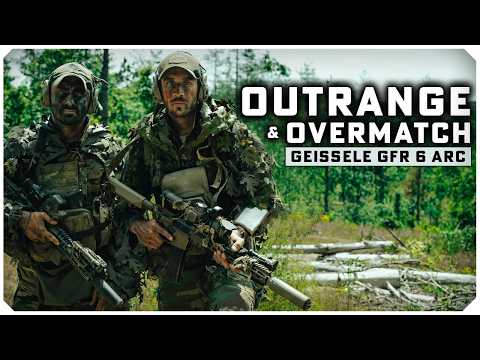
Shooting a 5.56 To ONE MILE!

Published on September 15, 2024
Duration: 27:12

This video details an advanced attempt to engage targets at extreme long range (up to 1 mile) using 5.56 NATO ammunition. The instructor emphasizes the challenges of wind calls, ballistic calculations at high altitudes, and the limitations of optic turrets, necessitating significant holdovers. The session highlights the importance of accurate muzzle velocity, ballistic solvers, and spotting for confirmation, ultimately serving as a trial run for future attempts.

Quick Summary

Shooting 5.56 NATO to one mile presents significant challenges, including the round's ballistic limitations, high-altitude effects causing early subsonic transition, and optic turret constraints. Precise muzzle velocity, accurate ballistic calculations, and effective spotting (often with drones) are crucial for compensating for wind and trajectory, with holdovers becoming essential.

Chapters

  1. 00:37Target Size and Drone Deployment
  2. 01:36Initial Group Analysis
  3. 02:23Welcome and Channel Intro
  4. 02:37Mission: 5.56 to 1 Mile
  5. 03:02Engaging Intermediate Targets
  6. 03:21Spotting Challenges at a Mile
  7. 04:13First Target Engagement (733 Yards)
  8. 06:22Second Target Engagement (885 Yards)
  9. 09:30Third Target Engagement (1247 Yards)
  10. 10:36Ballistics at Altitude (5.56)
  11. 11:35Preparing for Extreme Range Shot
  12. 13:43Impact Confirmation and Adjustments
  13. 14:17Distance Update: 1247 Yards
  14. 14:33Preparing for 1384 Yards Shot
  15. 17:04Final Adjustments for 1388 Yards
  16. 18:32Moving to 1 Mile (1760 Yards)
  17. 19:35Holdover Strategy for 1 Mile
  18. 20:291 Mile Engagement Attempt
  19. 21:56Reload and Further Attempts
  20. 22:02Storm Forces Abort
  21. 22:25Part Two Announcement
  22. 23:23Colorado Location and Studio Update
  23. 24:02Colorado Training Events
  24. 25:39Mental Health Tip: Reading Body Language

Frequently Asked Questions

What are the main challenges when shooting 5.56 NATO at extreme long ranges like one mile?

Key challenges include the 5.56 NATO round's ballistic limitations, transitioning to subsonic speeds around 1470 yards at high altitudes, optic turret limitations requiring significant holdovers, and the difficulty of spotting small impacts over such vast distances.

How does altitude affect 5.56 NATO ballistics for long-range shooting?

At high altitudes, like the 7,700 feet mentioned, the thinner air affects bullet trajectory and velocity. It also causes the round to become subsonic at shorter distances (around 1470 yards in this case), impacting accuracy and trace visibility.

Why is a drone useful for extreme long-range shooting?

Drones are invaluable for extreme long-range shooting as they can provide aerial observation to spot impacts, confirm hits or misses, and assist in spotting difficult targets that are hard to see from the ground, especially with small caliber rounds.

What is the significance of re-zeroing and checking muzzle velocity for long-range shots?

Re-zeroing and confirming muzzle velocity are critical for extreme long-range accuracy. These steps ensure that ballistic calculations are based on precise data for the specific rifle and ammunition combination, minimizing errors caused by outdated or inaccurate information.

Related News

All News →

More Training & Techniques Videos You Might Like

More from Weapon Snatcher

View all →