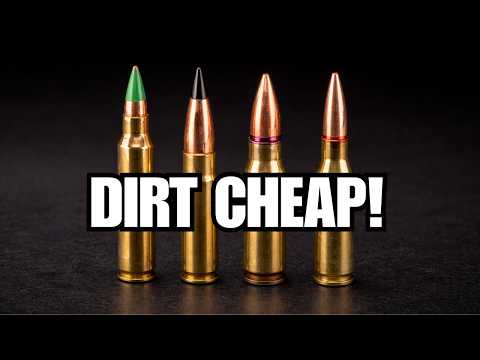
Smyth Busters: Does a 5.56 NATO Bullet Tumble in Flight?

Published on April 19, 2022
Duration: 3:50

This video debunks the myth that 5.56 NATO bullets tumble end-over-end in flight, explaining that tumbling is primarily an effect that occurs upon impact, especially with older rifling twist rates and lighter bullets. The discussion highlights how rifling twist rates, such as 1:12, 1:7, and 1:8, affect bullet stability in flight and upon impact, particularly with different bullet weights like 55, 62, and 77 grains. It clarifies that while a slow twist rate (1:12) with lighter bullets might lead to yawing or keyholing upon impact, the bullet itself does not tumble in the air.

Quick Summary

The myth that 5.56 NATO bullets tumble in flight is inaccurate. Tumbling is primarily an effect observed upon impact with a target, not during aerodynamic flight. This perception often arose from older firearms with slow twist rates (like 1:12) and lighter bullets, which would yaw or tumble significantly when hitting a surface.

Chapters

  1. 00:00Introduction: Smith Busters
  2. 00:10The 5.56 NATO Bullet Tumble Myth
  3. 00:37Origin of the Myth: Old Twist Rates and Bullets
  4. 01:02Comparison to 5.45x39
  5. 01:14Modern Twist Rates (1:7, 1:8)
  6. 01:19Heavier Bullets and Slow Twist Rates
  7. 01:37Understanding Yaw vs. Tumble
  8. 01:54Effective Range for Unstable Rounds
  9. 02:28Barrel Twist and Ammo Compatibility
  10. 02:44Historical Context: M15s in Vietnam
  11. 02:58Myth Debunked: Bullet Does Not Tumble in Air
  12. 03:25Viewer Engagement and Outro

Frequently Asked Questions

Does a 5.56 NATO bullet tumble in flight?

No, the 5.56 NATO bullet does not tumble end-over-end in flight. The myth of tumbling likely stems from how bullets, especially older designs with lighter weights and slower twist rates, behave upon impact with a target, causing them to tumble or yaw.

What causes a bullet to tumble?

A bullet typically tumbles upon impact with a target, not during its aerodynamic flight. This effect is more pronounced with unstable projectiles, often caused by a mismatch between the rifling twist rate of the barrel and the bullet's weight or design.

How does rifling twist rate affect bullet stability?

The rifling twist rate determines how fast a bullet spins. A faster twist rate (e.g., 1:7 or 1:8) provides more spin, stabilizing heavier bullets for flight. A slower twist rate (e.g., 1:12) may not adequately stabilize heavier bullets, leading to instability and yawing.

Why did older 5.56 NATO rounds seem to tumble?

Older 5.56 NATO rounds, often paired with 1:12 twist barrels and 55-grain bullets, could appear to tumble because they would yaw or tumble significantly upon impact with a target, not because they tumbled in the air during flight.

Related News

All News →

More Training & Techniques Videos You Might Like

More from Brownells, Inc.

View all →