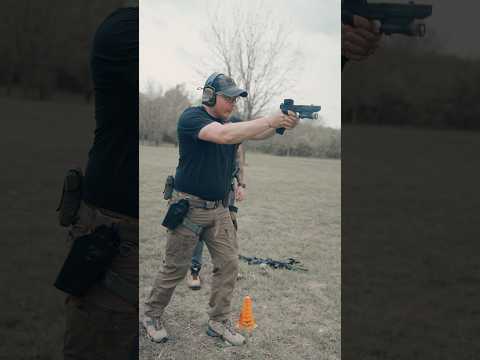
Springfield Echelon Comp vs Non Comp: 5-10yards

Published on September 26, 2025
Duration: 2:55

This video demonstrates a modified Bill Drill exercise at 5-10 yards comparing the Springfield Echelon with and without a compensator. The instructor focuses on rapid fire, movement (forward and backward), and the felt difference in recoil and shot control between the two configurations. The compensated version showed tighter groups and a softer shooting experience.


Quick Summary

The compensated Springfield Echelon showed tighter shot groups and a softer shooting experience compared to the non-compensated model during a 5-10 yard dynamic drill. This recoil reduction aids in faster sight recovery and improved accuracy during rapid fire.

Chapters

  1. 00:00Introduction to Close Range Drill
  2. 00:08Bill Drill Simulation Setup
  3. 00:47Non-Comp Echelon: Moving Backwards
  4. 00:53Non-Comp Echelon: Moving Forwards
  5. 01:13Compensated Echelon: Drill Start
  6. 01:30Compensated Echelon: First Shots
  7. 01:41Compensated Echelon: Moving Backwards
  8. 01:48Performance Comparison & Fragging Warning
  9. 02:00Instructor's Thoughts on Compensator
  10. 02:11Demonstrating Soft Shooting

Frequently Asked Questions

What is the main difference observed between the compensated and non-compensated Springfield Echelon at 5-10 yards?

The compensated Springfield Echelon demonstrated significantly tighter shot groups and a softer shooting experience. This made it easier to manage recoil and maintain sight alignment for faster follow-up shots during dynamic drills.

What is a 'Bill Drill' and how was it simulated in this video?

A Bill Drill is a shooting drill typically involving firing six rounds at a target as quickly as possible. In this video, it was simulated at 5-10 yards, including moving backward and forward while shooting, to test the firearms' performance under dynamic conditions.

What safety concerns are highlighted when shooting at very close distances?

Shooting at very close distances, like 5-10 yards, can lead to 'fragging,' where hot brass or debris from the firearm or ammunition hits the shooter. It's important to be aware of this and wear appropriate protective gear.

Does a compensator on a pistol significantly improve accuracy?

While a compensator's primary function is to reduce muzzle rise by redirecting gas, this can indirectly improve accuracy during rapid fire by allowing for quicker sight recovery and follow-up shots, as observed with the Springfield Echelon.

Related News

All News →

More Training & Techniques Videos You Might Like

More from Colion Noir

View all →