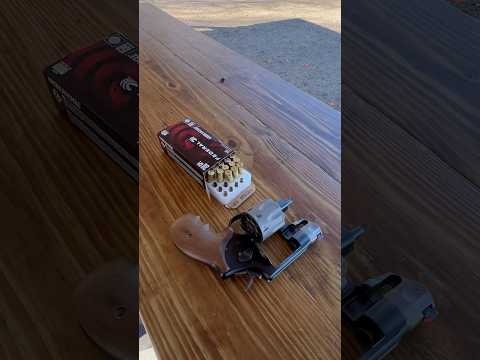
Striker Fired VS Hammer Fired Handgun!!!

Published on April 19, 2024
Duration: 4:36

This video contrasts striker-fired and hammer-fired handgun mechanisms, explaining their operational differences and implications for concealed carry and malfunction handling. It highlights how striker-fired systems use a spring-loaded striker, while hammer-fired systems utilize internal or external hammers. The presenter notes that striker-fired guns are often preferred for concealed carry due to their snag-free profile, while hammer-fired guns offer the option of a second-strike capability for potential malfunctions.

Quick Summary

Hammer-fired handguns use an external or internal hammer to strike a firing pin, while striker-fired handguns use a spring-loaded striker. Striker-fired designs are often preferred for concealed carry due to their snag-free profile, while hammer-fired guns offer a 'second strike' capability for potential malfunctions.

Chapters

  1. 00:00Introduction: Striker vs Hammer Fired
  2. 00:33Hammer Fired Mechanism Explained
  3. 00:53Striker Fired Mechanism Explained
  4. 01:34Advantages of Hammer Fired (Visuals, Decocker)
  5. 01:58CZ Shadow 2 Example (Hammer Fired)
  6. 02:12Sig P320 Example (Striker Fired)
  7. 02:44Double Action Only (DAO) Example (Revolver)
  8. 03:00Glock 43 Example (Striker Fired)
  9. 03:32Key Differences & Concealed Carry
  10. 03:51Malfunction Handling: Hammer vs Striker

Frequently Asked Questions

What is the primary mechanical difference between striker-fired and hammer-fired handguns?

Hammer-fired handguns use an external or internal hammer to strike a firing pin, while striker-fired handguns use a spring-loaded striker that moves forward to hit the firing pin. This difference affects trigger pull characteristics and the visual confirmation of the firearm's state.

Why are striker-fired handguns often preferred for concealed carry?

Striker-fired handguns are often preferred for concealed carry because they lack an external hammer. This design reduces the likelihood of the firearm snagging on clothing or holsters when drawing or re-holstering, leading to a smoother and faster presentation.

What is the 'second strike' capability in hammer-fired firearms?

The 'second strike' capability refers to the ability of a hammer-fired firearm, particularly a double-action/single-action (DA/SA) model, to attempt to fire a round again by pulling the trigger a second time if the initial primer strike fails. This can be done without cycling the action.

How does a malfunction (failure to fire) differ between striker-fired and hammer-fired handguns?

If a round fails to fire in a striker-fired handgun, the user must cycle the slide to eject the faulty round and chamber a new one. In a hammer-fired handgun (especially DA/SA), the user can simply pull the trigger again to attempt a second strike before resorting to cycling the action.

More Training & Techniques Videos You Might Like

More from Mr. Madness

View all →