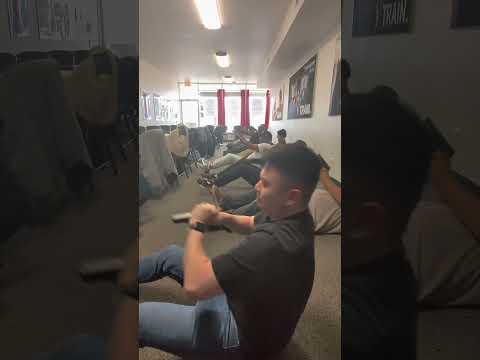
The Action Versus Reaction Drill Break Down

Published on January 19, 2024
Duration: 4:39

This video breaks down the 'Action Versus Reaction' drill, a fun yet effective training exercise for CCW holders and firearm enthusiasts. It emphasizes that 'action is faster than reaction' and teaches participants to improve their draw speed and target acquisition by reacting to an opponent's movement. The drill involves one shooter starting drawn (action) and the other holstered (reaction), with differing target sizes to balance the challenge.


Quick Summary

The Action Versus Reaction drill is a firearm training exercise emphasizing that 'action is faster than reaction.' One shooter starts with a drawn firearm (action) and engages a small target, while the other starts holstered (reaction) and must wait to see the action shooter move before drawing to engage a larger target.

Chapters

  1. 00:00Introduction to Fun Drills
  2. 00:14Sponsor: Veter Holsters
  3. 00:31Action Versus Reaction Drill Explained
  4. 01:15Target Size Differences
  5. 01:38Drill Distance and Variables
  6. 02:06Drill Setup and Demonstration
  7. 02:33First Round of Action vs. Reaction
  8. 02:54Second Round and Analysis
  9. 03:07Switching Roles and Targets
  10. 03:23Second Round (Roles Reversed)
  11. 03:39Drill Recap and Benefits
  12. 04:04Call to Action: Like, Subscribe, Comment
  13. 04:24Closing Remarks

Frequently Asked Questions

What is the Action Versus Reaction drill?

The Action Versus Reaction drill is a training exercise where one shooter starts with their firearm already drawn (action), while the other starts with their firearm holstered (reaction). The reaction shooter must wait to visually perceive the action shooter move before drawing and engaging their target.

Why is the target size different in the Action Versus Reaction drill?

The shooter starting with a drawn firearm uses a smaller target (e.g., 3x5 inch card), while the shooter drawing from a holster uses a larger target (e.g., 8.5x11 inch paper). This compensates for the reaction shooter's delayed start, making the drill more competitive.

What is the main principle behind the Action Versus Reaction drill?

The drill emphasizes the principle that 'action is faster than reaction.' It highlights that a proactive movement or engagement with a ready firearm will always have a speed advantage over a reactive draw from a holster.

How can the difficulty of the Action Versus Reaction drill be adjusted?

The difficulty can be adjusted by changing the engagement distance, which can range from 3 meters up to 10 meters. Participants can also adjust target sizes or add other constraints based on their skill level and training goals.

More Training & Techniques Videos You Might Like

More from Tactical Hyve

View all →