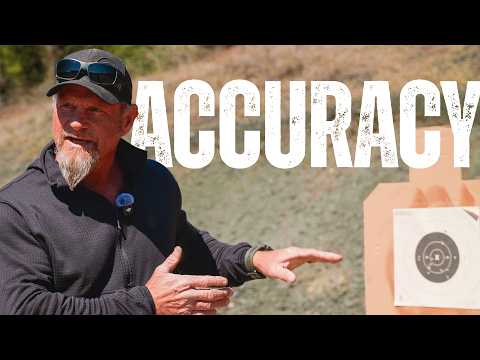
The basics! Sighting in your gun (scopes & sights) adjustments

Published on January 30, 2014
Duration: 6:48

This video provides a beginner-friendly guide to sighting in firearms, covering both scopes and iron sights. It explains the core principle of zeroing by moving the reticle to the point of impact and how to adjust iron sights by 'following the hit'. The concept of 'hold' for compensating bullet drop at different distances is also introduced as an alternative to mechanical adjustments.

Quick Summary

To zero a rifle scope, keep the firearm steady on a rest and adjust the crosshairs to match the point of impact (where the bullet hits). For iron sights, use the 'follow the hit' rule: move the rear sight in the same direction as the impact. 'Hold' is used to compensate for bullet drop at different ranges.

Chapters

  1. 00:00Introduction to Sight Adjustments
  2. 01:04How to Zero a Scope
  3. 03:45Adjusting Iron Sights
  4. 05:29Understanding 'Hold'

Frequently Asked Questions

What is the fundamental principle for zeroing a rifle scope?

The key principle for zeroing a scope is to adjust the reticle (crosshairs) to match the point where the bullet is impacting the target. You achieve this by keeping the rifle steady on a rest and moving the crosshairs to the bullet hole, not by trying to move the bullet hole to the crosshairs.

How do you adjust iron sights correctly?

When adjusting iron sights, follow the 'follow the hit' rule. This means you move the rear sight in the same direction as the point of impact. If your shots are hitting low, move the rear sight up; if they're hitting left, move the rear sight left.

What does 'hold' mean when shooting a rifle?

'Hold' refers to aiming slightly above or below the intended point of impact to compensate for bullet drop at different distances. For example, if zeroed at 100 yards but shooting at 150 yards, you would 'hold high' on the target.

Why is a steady rest important for sighting in a gun?

A steady rest, like a shooting vice or sandbags, is crucial for sighting in because it eliminates shooter error from the equation. This allows you to accurately determine where the firearm itself is shooting, ensuring your adjustments are based on the gun's performance, not your movement.

Related News

All News โ†’

More Training & Techniques Videos You Might Like

More from Copper Jacket TV

View all โ†’