Winchester 1873 & 1911 - DB2020 - Day 2 & Finale - Classic Manual

Published on February 26, 2020
Duration: 22:21

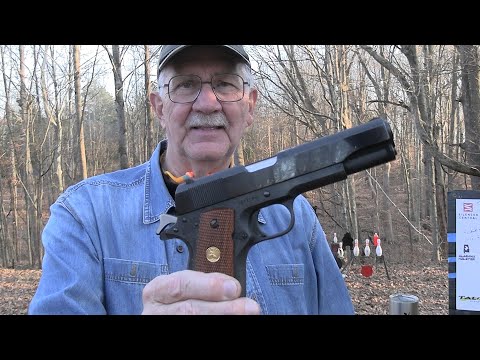
This video details participation in the Classic Manual division of Desert Brutality 2020, focusing on the use of a Winchester 1873 lever-action rifle and a Colt 1911 pistol. It highlights techniques for muzzle discipline, target acquisition with aperture sights, managing black powder fouling, and efficient reloading under pressure. The content emphasizes the capability of historical firearms in modern competitive shooting scenarios.

Quick Summary

The Winchester 1873 rifle, when used with black powder ammunition, presents accuracy challenges due to fouling after the first shot. Maintaining muzzle discipline is crucial even in competition, and efficient reloading techniques like the 'tactical shimmy-shamy' are vital for continuous firing capability.

Chapters

  1. 00:07Introduction to Desert Brutality 2020 & Sponsors
  2. 00:09Interview with Gary Hughes of MoD Outfitters
  3. 00:30About MoD Outfitters and 3C Medical
  4. 01:443C Medical: Reality-Based Trauma Med Kits
  5. 02:36Finding MoD Outfitters and 3C Medical Online
  6. 03:10Day 2: Winchester 1873 & Colt 1911 at Desert Brutality
  7. 03:37Stage 1: Rifle and Rocket Launcher (Confusing Concept)
  8. 03:57Pistol Presentation with Colt 1911
  9. 06:061911 Malfunction and Holster Review
  10. 06:51Running to the First Trench and Aperture Sights
  11. 07:02Maintaining 180 Rule While Moving
  12. 07:36Mental Challenge of Muzzle Discipline
  13. 08:05Stage 2: Crawling Under Tank Traps
  14. 08:27Challenge of Getting Up to Position
  15. 08:39Shooting Mini Poppers with Lead Ball & Black Powder
  16. 10:40Accuracy Challenges with Black Powder Fouling
  17. 11:35Reloading Technique: Tactical Shimmy-Shamy
  18. 12:22Stage 3: Corona Fire For Party (Mini Mozambique)
  19. 12:37Difficult Pistol Presentation: MOA Targets
  20. 13:14Pistol Dump Bucket and Moving to Truck
  21. 13:17Armor Plate Targets: Aiming Low and Bouncing Rounds
  22. 13:54Classic Manual Rules: Action Closed on Fired Round
  23. 14:00Unload and Crawl to Roof
  24. 14:04Small Targets at 140-150 Yards
  25. 14:26Bead Sight vs. Precision with Fouling
  26. 14:34Impact of Black Powder Fouling on Accuracy
  27. 14:53Calling Shots on Small Targets
  28. 17:47Wind Conditions and Shot Placement
  29. 18:16Prone Stuffing and Penalties
  30. 18:29Overall Match Performance and Penalties
  31. 18:34Reflections on Classic Manual with Historical Firearms
  32. 18:50Underestimating Lever-Action Rifles
  33. 19:04Military Adoption vs. Civilian Embrace of Lever Guns
  34. 19:30Historical Context: Winchester 66 and Turks
  35. 19:52Lever Guns in the Old West: Exaggeration vs. Reality
  36. 20:27Historical Instances of Lever-Action Use
  37. 20:48Military Resupply and Ammunition Waste Concerns
  38. 21:26Firepower and Fire Supremacy Potential
  39. 21:35Hopes for Competition Results
  40. 21:52Desert Brutality Wrap-up and Future Divisions
  41. 22:02Other InRangeTV Videos to Watch

Frequently Asked Questions

What are the main challenges when shooting a Winchester 1873 with black powder ammunition?

The primary challenge is black powder fouling, which significantly degrades accuracy after the first shot. This residue accumulates in the barrel's lands and grooves, causing groups to open up. Managing this fouling is critical for consistent performance in historical firearms.

How important is muzzle discipline in competitive shooting, according to this video?

Muzzle discipline is presented as paramount, even in artificial competition environments. The video stresses that the ability to maintain safe muzzle direction under pressure in a match directly correlates to safe practices in real-world situations.

What techniques are discussed for efficient reloading with historical firearms?

The video highlights the 'tactical shimmy-shamy' for moving between positions while reloading, ensuring a continuous firing capability. It also emphasizes keeping the gun loaded and utilizing a good belt for fast magazine access to avoid delays.

What is the significance of the 'mini Mozambique' drill in this context?

The mini Mozambique drill, involving chest and head shots on small targets, tests pistol presentation and accuracy under pressure. It's used to assess a shooter's proficiency with their sidearm, which is crucial even when the primary focus is on a rifle.

Related News

All News →

More Training & Techniques Videos You Might Like

More from InRangeTV

View all →