Would This be YOUR Choice for a Go-To-War Revolver?

Published on June 27, 2025
Duration: 10:43

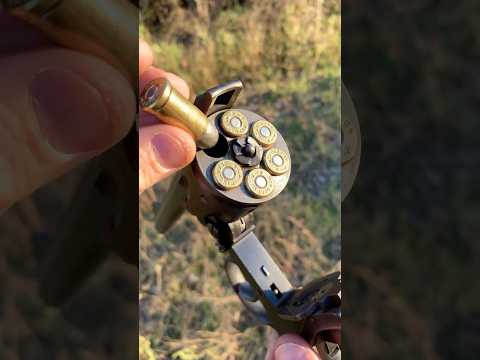
This guide details the operation of the Smith & Wesson Model 1917 revolver, focusing on its use with .45 ACP cartridges and moon clips. It covers loading, firing in both double-action and single-action modes, and unloading procedures. The information is presented with an expert-led tone, drawing on historical context and practical firearm handling knowledge.

Quick Summary

The Smith & Wesson Model 1917 revolver, chambered in .45 ACP, was a vital sidearm during WWI and WWII due to M1911 production shortfalls. It uses moon clips for reliable extraction of rimless cartridges and was favored by soldiers for its intuitive operation compared to early semi-automatics.

Chapters

  1. 00:00Introduction: Go-To-War Revolver?
  2. 00:39Technical Overview: .45 ACP & Moon Clips
  3. 01:21Historical Context: Revolver vs. M1911
  4. 03:51Range Demonstration
  5. 05:22Ergonomics and Training
  6. 07:39Pop Culture and Legacy

Frequently Asked Questions

What makes the Smith & Wesson Model 1917 suitable for combat use?

The S&W Model 1917, chambered in .45 ACP, was adopted during WWI and WWII due to production demands for the M1911. Its heavy frame and manageable recoil, combined with the intuitive nature of revolvers for soldiers, made it a reliable auxiliary sidearm.

How does the S&W Model 1917 handle rimless cartridges like .45 ACP?

The Model 1917 utilizes moon clips (half or full) to properly extract rimless .45 ACP cartridges from its cylinder. These clips hold the cartridges together, ensuring reliable ejection after firing.

Why were revolvers like the Model 1917 still used when semi-automatics existed?

Many soldiers were already familiar with revolver mechanics, making them more intuitive than the newer semi-automatic pistols. This familiarity, coupled with production needs, ensured revolvers remained relevant as combat sidearms.

What historical significance does the Smith & Wesson Model 1917 hold?

The Model 1917 played a crucial role in arming U.S. troops during World War I and World War II when semi-automatic pistol production couldn't meet demand. It's a testament to the adaptability of firearms design during wartime.

Related News

All News →

More Training & Techniques Videos You Might Like

More from hickok45

View all →