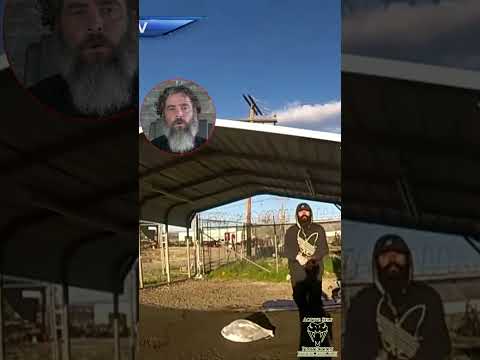
This video analyzes a critical incident where a Bay County Sheriff's Deputy faced an immediate threat from a machete-wielding suspect during a domestic call. The analysis, led by John Correia and Mike Willever of Active Self Protection, highlights crucial tactical considerations including scene approach, the use of high-candela flashlights, one-handed shooting under duress, and the importance of creating distance based on the 21-foot rule. The expert commentary emphasizes the volatility of domestic calls and the mental health context of the suspect.
This video tests the '21-foot rule' in a civilian self-defense context using an airsoft gun and a simulated knife attack. The experiment suggests that 21 feet may not be sufficient distance to safely disarm an attacker, as the defender was 'killed' (shot with airsoft) but also 'stabbed' (simulated). The takeaway is that maintaining greater distance than 21 feet from a violent aggressor is advisable.
This entry analyzes a viral incident where a man used a Galil rifle to confront car thieves. It covers tactical observations like the suspect's 'bladed stance,' critiques the victim's one-handed grip on the heavy rifle, and discusses the appropriateness of rifle vs. handgun for close-quarters defense. Legal aspects specific to Texas property defense are also highlighted, emphasizing the importance of legal protection services like USCCA.
This analysis from Active Self Protection breaks down a critical incident where Reno PD officers were forced to immediately neutralize a knife-wielding suspect. The video, featuring John Correia and Mike Willever, highlights crucial tactical concepts including maintaining distance, effective use of lighting, marksmanship under stress, and tactical movement. It emphasizes the importance of mental preparation for first responders and the realities of body-worn camera perspectives versus actual threat perception.
This video demonstrates the challenges and techniques of drawing a concealed firearm from an off-body bag under extreme stress, simulating attacks like the 21-foot rule and snatch-and-grab scenarios. It emphasizes the critical importance of creating space through fighting and movement before attempting to access the weapon, highlighting that relying solely on the firearm is insufficient without defensive skills. The testing of two specific Eal Stock bags, the Fade Brief and Fade Sling Bag, reveals differences in draw speed and accessibility under duress.
This video details an experiment testing the efficacy of the 21-foot rule (Tueller Drill) in a Jiu-Jitsu gym setting. Featuring expert shooters and martial artists, the drill simulates a knife attack scenario to evaluate reaction times and defensive strategies. Key takeaways emphasize the significant impact of distractions, the importance of situational awareness, and the necessity of training in both firearms proficiency and basic grappling for effective self-defense.
This video tests the effectiveness of the 21-foot rule, also known as the Tueller Drill, using an airsoft pistol and a simulated knife. The drill involves a defender drawing and firing before an attacker can cover the 21-foot distance. The analysis suggests that while the airsoft BB hit its mark, the attacker still reached the defender, prompting a discussion on the rule's applicability in real-world civilian defense scenarios. The content is presented in an informative and experimental tone by Civilian Tactical.
This video demonstrates the '21 Foot Rule' concept, explaining the time it takes to draw and fire a weapon before an attacker can close the distance. The demonstration uses an airsoft Glock 19X for safety, highlighting the importance of speed and readiness in a self-defense scenario. The content is presented by firearms enthusiasts and content creators, offering practical insights into tactical response.
This video discusses the '21-foot rule' in self-defense, highlighting the critical distance at which an attacker with a knife or similar weapon can cover ground and pose an immediate threat. It emphasizes that untrained individuals often hesitate to drop their phones when drawing a firearm, leading to a compromised draw and ineffective defense. The instructors stress the importance of recognizing and reacting to rapidly escalating threats.
This video explores the critical '21 Foot Rule' for gun owners, a common guideline related to self-defense scenarios. It aims to help viewers understand the distances at which a person armed with a knife or other close-quarters weapon can pose a threat and how quickly a firearm might need to be drawn. The content focuses on practical application and tactical considerations for responsible gun ownership.
This video demonstrates critical self-defense techniques related to the 21-foot rule for concealed carriers. It emphasizes the importance of immediate action, evasive circular movement, and discarding distractions like cell phones during a threat. The instruction highlights the time cost of drawing from an unchambered state and the benefits of 'prepping' your draw for faster deployment.
This short emphasizes the critical importance of understanding the Tueller Drill and the 21-foot rule in self-defense scenarios. It highlights the fatal mistake of backing straight up when faced with a knife threat, as this can lead to tripping and insufficient time to draw a weapon. Instead, the video advocates for lateral movement to force the attacker to change direction, creating a crucial window for drawing and engaging.
Gun Laws by State
Read firearms regulations for all 50 states + D.C.
Find Gun Dealers
Search licensed FFL dealers near you.