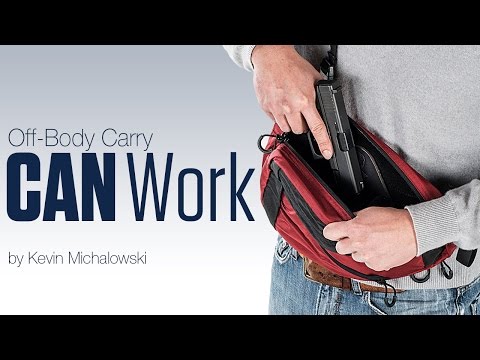
Concealed Carry Bags vs Black Belt Attacker

Published on March 10, 2025
Duration: 22:16

This video demonstrates the challenges and techniques of drawing a concealed firearm from an off-body bag under extreme stress, simulating attacks like the 21-foot rule and snatch-and-grab scenarios. It emphasizes the critical importance of creating space through fighting and movement before attempting to access the weapon, highlighting that relying solely on the firearm is insufficient without defensive skills. The testing of two specific Eal Stock bags, the Fade Brief and Fade Sling Bag, reveals differences in draw speed and accessibility under duress.

Quick Summary

Carrying a concealed firearm in an off-body bag presents unique challenges, primarily the risk of the attacker fighting for the bag itself. Experts emphasize the critical need to create space through defensive movement and striking before attempting to access your weapon. Relying solely on the firearm is insufficient; you must possess the skills to defend yourself and your weapon until it can be deployed effectively.

Chapters

  1. 00:41Introduction & Bag Overview
  2. 01:30Importance of Training & Professional Disclaimer
  3. 02:08Challenges of Off-Body Carry & Creating Space
  4. 03:35Fighting to Create Space for Your Gun
  5. 04:06Personal Carry Habits & Jiu-Jitsu vs. Striking
  6. 05:09The Gun is Useless If You Can't Use It
  7. 05:48Addressing Criticisms of Off-Body Bags
  8. 06:09Testing: Snatch and Grab & Pinning Scenarios
  9. 06:4221 Foot Rule Test & Bag Accessibility
  10. 07:36Testing the Eal Stock Fade Brief: 21 Foot Rule
  11. 09:09Fade Brief Test Results: Bag Taken
  12. 10:05Fade Brief Test: Primed Hand vs. Relaxed
  13. 10:51Fade Brief Test Results: Successful Draw
  14. 11:32Defensive Tactics During Draw
  15. 12:12Scenario: Exiting a Vehicle Under Attack
  16. 13:32Vehicle Exit Scenario: Ignition Off, Grab Bag
  17. 14:08Vehicle Exit Scenario Results: Pinning & Fighting
  18. 15:01Testing the Eal Stock Fade Sling Bag
  19. 15:35Fade Sling Bag Draw Test Results
  20. 16:20Fade Sling Bag: Faster Draw & Movement
  21. 17:09Scenario: Close Quarters Battle from Vehicle Exit
  22. 18:06Fade Sling Bag: Close Quarters Battle Results
  23. 19:17Overall Bag Performance & Attacker's Preference
  24. 20:07Key Takeaways: Training, Awareness, Practice
  25. 21:37Shout Out to Cabrina Jiu-Jitsu & Final Thoughts

Frequently Asked Questions

What are the main challenges of carrying a concealed firearm in an off-body bag?

The primary challenges include the attacker potentially fighting for the bag itself, making weapon retrieval difficult, and the need to create significant space through movement and defensive skills before accessing the firearm. Unlike on-body carry, the bag can be easily snatched or controlled by an assailant.

How important is creating space when drawing from a concealed carry bag under attack?

Creating space is critically important. It allows you the time and distance needed to properly open the bag, access your weapon, and present it safely. Without adequate space, an attacker can easily gain control of the bag or your weapon, rendering it useless.

What defensive skills are essential for concealed carry, especially with off-body bags?

Essential skills include the ability to fight, move your body and hips effectively, and strike to create distance. Relying solely on the firearm is insufficient; you must be able to defend yourself and your weapon until you can deploy it successfully.

Which type of concealed carry bag draw mechanism is generally better under stress?

Bags with gross motor skill access, such as oversized macro pull straps or magnetic releases, tend to be faster and more reliable for drawing a weapon under stress compared to those with small, fiddly zippers that can be difficult to locate and operate quickly.

Related News

All News →

More Self Defense Videos You Might Like

More from USCCA

View all →