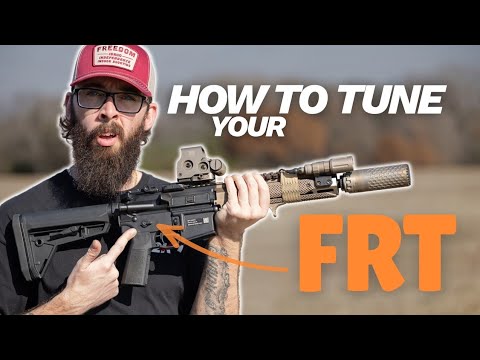
This video provides an in-depth guide to understanding and optimizing Forced Reset Triggers (FRTs) for enhanced reliability and potential real-world application. It emphasizes the critical roles of gas system tuning, buffer weight selection, and component compatibility, moving beyond the 'range toy' perception. The instructor, with apparent expertise in firearm mechanics and modification, details how to troubleshoot common issues like bolt bounce and light strikes, and compares different FRT designs.
This guide details the disassembly and inspection of the Colt CK-901's proprietary bolt carrier group, a critical component for its reliable function with 7.62x39mm ammunition. The video emphasizes the importance of checking the beefed-up bolt lugs and redesigned firing pin, key features developed to overcome common failure points in AR-15 conversions of this caliber. Proper cleaning and reassembly are crucial for maintaining the rifle's performance.
This guide from 704 Tactical provides essential knowledge for suppressing AR-15 platforms. It details various suppressor types, including direct thread, hub mount, and low back pressure options, and explains how to diagnose and tune an AR-15's gas system for reliable suppressed operation. Key tuning methods involve adjusting buffer weights, recoil springs, and utilizing specialized BCGs and charging handles to mitigate excess gas.
This guide details how to tune an AR-15 gas system for optimal suppressed performance, drawing on expert instruction. It emphasizes understanding dwell time and managing bolt carrier speed through adjustments to gas blocks and buffer systems. The video highlights the importance of fine-tuning for suppressed semi-automatic rifles.
This guide details how to troubleshoot and tune an AR-15 equipped with a Forced Reset Trigger (FRT) that experiences a 'one click' failure. Expert instructor Brody from Juicey Media explains the importance of BCG velocity and dwell time, demonstrating how buffer weights, springs, and buffer systems like the VLTOR A5 can resolve cycling issues, especially when using suppressors. The video emphasizes that each rifle requires individual tuning to find its optimal 'sweet spot' for reliable FRT operation.
This guide explains the critical role of the AR-15 buffer system in rifle function, covering its components, history, and tuning capabilities. It details how buffer weight and advanced upgrades like hydraulic or captured spring systems can optimize performance, mitigate malfunctions like bolt bounce, and reduce felt recoil. Instruction is provided by an expert with high technical knowledge of AR-15 mechanics.
This review from Fit'n Fire, presented by an experienced firearms reviewer, details the accuracy potential of the Aero Precision M4E1 PRO rifle. The build, estimated between $800-$1100, demonstrated that sub-MOA accuracy is achievable with specific ammunition, although initial reliability issues like overgassing were noted and addressed with an H3 buffer. Future plans include barrel lapping for enhanced performance.
This video explains how buffer weights are used to tune commercial rifles, particularly when dealing with ammunition variables and overgassed systems. The instructor details how different buffer weights (H1, H2, H3) can mitigate issues like bolt carrier bounce and fast cycling caused by higher-pressure ammunition, by slowing down the action. He emphasizes that military rifles are designed with known variables, while commercial rifles must accommodate a wider range of ammunition, making buffer tuning a common adjustment.
This review of the Rare Breed 15L3 trigger kit after 6,000 rounds emphasizes its reliability and effectiveness when paired with appropriate rifle configurations, specifically carbine-length gas systems and H2 buffers. The instructor details advanced shooting techniques for enhanced semi-automatic fire, focusing on tactical applications like psychological impact, area denial, and drawing fire. He stresses the importance of proper weapon manipulation, recoil control, and seamless transitions between firing modes for effective use in dynamic scenarios.
This guide, presented by an experienced firearms instructor, details how to diagnose and fix AR-15 gas system issues. It covers identifying overgassed and undergassed symptoms through brass ejection patterns and provides mechanical solutions like adjustable gas blocks, buffer swaps, and BCG upgrades. The instruction emphasizes understanding dwell time and unlock angles for optimal performance, especially with suppressors.
This video demonstrates the functionality of the Deznuts Tactical 'Super Safety' for an AR-15 platform, emphasizing its compatibility with full-auto capable trigger groups like the FRT. The presenter highlights the importance of using a full-auto rated bolt, such as the Walker Defense bolt, and notes that buffer weight adjustment may be necessary for optimal performance. The Super Safety is presented as a method to enhance safety features on certain AR-15 configurations.
This video provides a physical inspection of an IWI Zion-15 AR-15 rifle donated for the School of the American Rifle's 10-year anniversary. The inspection revealed the rifle is well-gassed for commercial and NATO ammunition, with a mid-length system and a 0.078-inch gas port. Minor modifications were made, including replacing the extractor spring with a Sprinco 4-coil and adding Rocksett thread locker to the barrel nut screws, which were torqued but lacked initial thread locker.
Gun Laws by State
Read firearms regulations for all 50 states + D.C.
Find Gun Dealers
Search licensed FFL dealers near you.