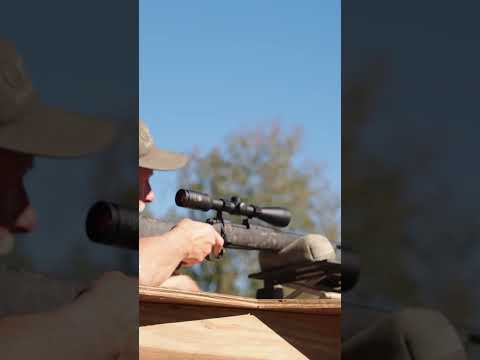
This episode of the Gunwerks Long Range Pursuits Podcast features a deep dive into the 'Tiny A.F.' rifle, part of the Skunkwerks Project. The discussion, led by industry experts, focuses on the rifle's impressive ballistic performance despite its compact 11-inch barrel. They analyze bullet weight testing, powder combinations, and the cartridge's ability to maintain supersonic velocity at extended ranges.
This video focuses on a practical technique for firearm enthusiasts: how to achieve clear ballistics gel. Ballistics gel is crucial for understanding bullet performance and terminal ballistics, often used in reviews and testing. The video likely covers the process and materials needed to create transparent gel, which enhances visibility during testing and analysis of projectile impact. This is a valuable DIY technique for those who conduct their own testing or are interested in the scientific aspects of ammunition performance.
This video investigates the ballistic resistance of chalk, specifically examining whether it can stop a bullet. While the exact firearm and caliber used are not detailed in the provided information, the core premise is a ballistic test comparing a common material to projectile penetration. The content likely involves firing a projectile at a chalk block to observe the outcome and determine its effectiveness as a protective barrier.
This video features a dramatic return for Edwin Sarkissian and Jasperito, showcasing a unique TV penetration test. They systematically test various calibers, from .22 LR to .50 BMG, against a stack of LG televisions to determine stopping power. The results highlight significant differences in penetration capabilities across handgun and rifle rounds, culminating in an impressive .50 BMG test.
This video demonstrates the ballistic performance of various calibers (.22 LR, 9mm Hollow Point, .45 Hollow Point, .44 Magnum) against a Stretch Armstrong toy. The experiment, conducted at an outdoor range by an experienced host, shows increasing penetration and expansion with larger calibers, culminating in the .44 Magnum completely destroying the toy and a cinder block. Proper firearm handling and range safety were observed throughout the test.
This YouTube video appears to be a behind-the-scenes (BTS) teaser focused on Bill Wilson and what's next for him. The title mentions "Craftsmanship" and "Bullet Testing," suggesting a focus on the quality of firearm manufacturing and potentially live-fire testing. Given the involvement of "Bill Wilson," a prominent figure in the firearms industry, and the mention of "Wilson Combat," a well-known firearm manufacturer, the content is highly likely to be related to high-end pistols, custom firearms, and the meticulous processes involved in their creation and testing.
This video performs a ballistic test on Armored Republic's A3 armor plate using a variety of rifle calibers. The testing is conducted at 50 yards and features 5.56mm, .308 Win, and .300 Win Mag rounds fired at two new A3 plates mounted in an AR Veritas Lite Plate Carrier. The video highlights the surprising resilience of the plate carrier. It also includes a disclaimer emphasizing the entertainment and educational nature of the tests and warns against attempting them at home due to the inherent dangers of shooting hard targets.
This video details the development and testing process of Lehigh Defense bullets, featuring insights from Bill Wilson, who acquired Lehigh Defense in 2022, and Mike Cyrus, an employee since Lehigh's inception. They discuss how Lehigh Defense designs high-performance bullets and aims to become a dominant force in the bullet industry, akin to Wilson Combat's success in firearms. The discussion focuses on the technical aspects of bullet design and rigorous testing methodologies.
This video details the development and testing process of Lehigh Defense bullets, featuring insights from Bill Wilson, who acquired Lehigh Defense assets in 2022 and aims to elevate the brand similarly to Wilson Combat, and Mike Cyrus, an original Lehigh Defense employee with extensive product knowledge. They discuss their methods for designing and testing bullets to ensure they are the best available on the market.
This YouTube video, titled 'Target Vs Armor SCIENCE!', delves into the scientific aspects of projectile impact against various armor types. Although specific firearms and calibers are not explicitly detailed in the provided title and description, the context strongly suggests a ballistic testing or comparative analysis scenario. The inclusion of hashtags like '#gun' and '#tactical' indicates a focus on firearms and their performance characteristics in relation to protective gear. The '#science' tag emphasizes an analytical and potentially experimental approach to the subject matter.
This video focuses on the preparation of Clear Ballistics Gel blocks, highlighting an 'oddly satisfying' process that involves adding heat to achieve crystal clear blocks. While the title and description do not directly mention firearms, the context of 'ballistics gel' strongly suggests its use in firearm-related testing, such as terminal ballistics, bullet performance, or wound channel analysis. The content appears to be a demonstration or tutorial on how to prepare this specialized testing medium.
This YouTube video, titled '.22 LR Versus Windshield', investigates the ballistic performance of the .22 Long Rifle (LR) caliber round against automotive glass. The description explicitly poses the question of whether the .22 LR can penetrate a windshield, indicating a test or demonstration focused on the terminal ballistics of this common rimfire cartridge against a specific barrier.
Gun Laws by State
Read firearms regulations for all 50 states + D.C.
Find Gun Dealers
Search licensed FFL dealers near you.