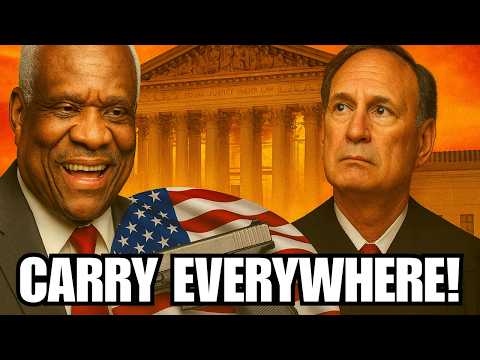
This video breaks down the Ninth Circuit's ruling in Beard v. Bonta, which overturned California's open carry ban in densely populated counties. Speaker Ted explains how the ruling applies the Bruin framework, emphasizing the 'text, history, and tradition' test, and discusses the implications for gun owners in California and potentially other states. The expert analysis highlights the legal reasoning behind the decision and clarifies what aspects of California's gun laws remain unchanged.
The Ninth Circuit Court of Appeals has overturned a long-standing California gun law that effectively banned open carry in counties with over 200,000 residents. The ruling, based on the Bruen framework, found the ban incompatible with the Second Amendment by failing to meet the text, history, and tradition test. While this is a significant victory for gun rights advocates, it does not immediately legalize open carry statewide, as the decision is subject to further legal processes.
This video provides a high-level overview of significant Second Amendment legal battles impacting gun ownership across the US. It details challenges to magazine capacity limits and assault weapon bans, referencing key Supreme Court decisions like Bruen and Heller. The discussion also touches upon felon disarmament laws and carry restrictions on private property, highlighting the complex and evolving legal landscape for firearms.
The Supreme Court case Wolford v. Lopez, originating from Hawaii's Act 52, challenges broad firearm carry restrictions. This case could significantly redefine the scope of Second Amendment rights nationwide, potentially overturning the 'sensitive places' doctrine that allows states to ban carry in most public areas. The outcome hinges on how the court interprets historical tradition in gun regulation.
This video critically examines the process and implications of obtaining a Concealed Carry Weapon (CCW) permit, particularly in California. The speaker highlights the frustration of permits being treated as government-granted privileges rather than fundamental rights, citing lengthy waiting periods, significant costs, and mandatory training requirements that can be burdensome. The discussion touches upon the historical 'good cause' requirement in California, the impact of the Bruen decision, and the current state of permitless carry versus permit-required states.
This video provides crucial updates for California CCW permit holders and applicants regarding 2025 regulations. Key changes include mandatory Live Scan for renewals starting January 1, 2026, increased minimum training hours from 4 to 8, and new carry restrictions in parks, playgrounds, restaurants, and bars. It also discusses processing delays for 'add-a-gun' requests in Orange and LA Counties and highlights a significant development allowing out-of-state/non-resident applications, potentially paving the way for national reciprocity.
The Ninth Circuit Court of Appeals has denied an en banc rehearing for the May v. Bonta case, upholding a previous three-judge panel's decision that partially restricts firearm carry in California under SB2. While some locations like hospitals and churches were restored for carry, many others including parks, playgrounds, and stadiums remain off-limits. This decision means the current sensitive location restrictions in California will stand unless further appealed to the Supreme Court or a final judgment is reached at the district court level.
This video discusses a new lawsuit filed by the Firearms Policy Coalition (FPC) in Texas challenging the state's 'sensitive places' laws. The FPC argues that these laws, which restrict firearm carry in locations like bars, racetracks, and sporting events, are unconstitutional under the Second Amendment as interpreted by the Supreme Court in Heller and Bruin. The core argument is that 'sensitive places' are only constitutionally permissible if the government provides comprehensive security, akin to taking individuals into custody, which is not the case for these private establishments.
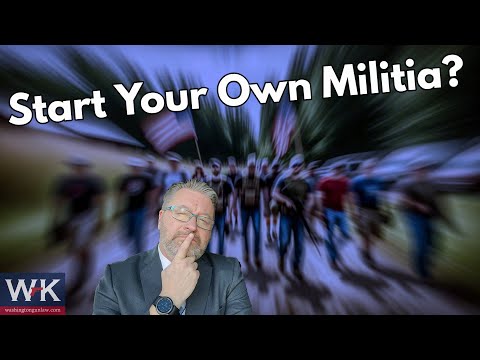
This video from Washington Gun Law TV, featuring expert William Kirk, discusses how local jurisdictions can push back against state-level gun control measures. It highlights Holton Township, Michigan's initiative to declare itself a Second Amendment Sanctuary and form a township militia as a direct response to perceived infringements on constitutional rights by Governor Gretchen Whitmer and the state legislature. The content emphasizes understanding state constitutional rights regarding militias and firearm possession.
This video discusses the passage of HR 4394, a bill that allows individuals to carry firearms for self-defense on U.S. Army Corps of Engineers public lands. The bill emphasizes compliance with state laws and does not override existing prohibitions on firearm possession for certain individuals. It is presented as a significant win for gun rights advocates, highlighting the principle that the right to bear arms extends to these public spaces funded by taxpayers.
This guide outlines the four essential steps to obtain a North Carolina Concealed Handgun Permit. It details the requirements for the mandatory firearms training course, the application process at the local sheriff's office, necessary documentation for various applicant types, and the timeline for permit issuance. The video emphasizes the applicant's responsibility to understand state gun laws.
This video discusses the postponement of a significant gun control bill (HB 4420) in Massachusetts due to infighting between Democrat-led legislative chambers. The bill proposed measures like mandatory firearm and magazine registration, bans on carrying on private property, and restrictions on semi-automatic rifle purchases for those under 21. The postponement is framed as a 'tactical retreat' by Democrats, potentially influenced by the legal landscape shaped by the Bruin decision and grassroots opposition.
Gun Laws by State
Read firearms regulations for all 50 states + D.C.
Find Gun Dealers
Search licensed FFL dealers near you.