This video provides a detailed examination of the Gwyn & Campbell carbine, also known as the Cosmopolitan or Union carbine, used during the US Civil War. It covers the carbine's history, development, operational mechanics, and the differences between Type 1 and Type 2 models. The presenter, Ian McCollum of Forgotten Weapons, highlights its role as an intermediary design between muzzleloaders and metallic cartridge firearms.
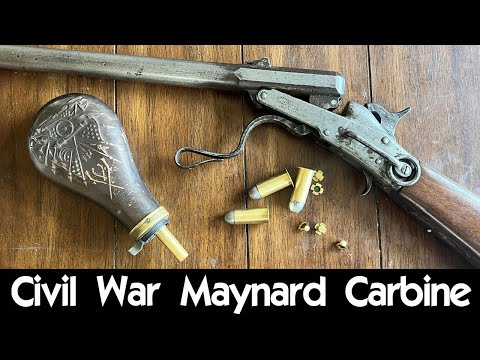
This video details the Maynard Carbine, a unique firearm from the mid-19th century. It highlights Dr. Edward Maynard's innovative tape priming system and the carbine's evolution from percussion cap ignition to metallic cartridges. The discussion covers its adoption by both Confederate and Union forces during the Civil War and its later adaptation into sporting rifles.
This video provides an in-depth look at the Gallagher carbine, a Civil War-era breach-loading firearm. It details its design, operation, and historical context, highlighting its initial use of percussion caps and later conversion to metallic cartridges. The review notes its limitations, such as the lack of an extractor and a forearm, but acknowledges its place in Civil War firearm history.
This video provides an in-depth review of the Tallassee Carbine, a rare Confederate small arm from the Civil War. Ian McCollum details its historical context, design features, and production challenges, highlighting its significance as a last-ditch effort by the Confederacy. The review emphasizes the carbine's unique captive ramrod and its limited production numbers, making surviving examples highly collectible.
This guide details the field reloading process for the Civil War-era Maynard Carbine, as demonstrated by an expert firearms instructor. It covers the steps for preparing and reloading a brass cartridge using period-appropriate tools like a powder flask and hammer. The instructor highlights the Maynard's advantages, including its breech-loading mechanism and superior gas seal, comparing it to other Civil War carbines.
This video provides an in-depth look at the Lindner Civil War carbine, a breechloading firearm from the early 1860s. It details the unique loading mechanism, which involves tipping up the breech to insert a paper cartridge, and discusses its historical context as a transitional technology between muzzleloaders and metallic cartridges. The video also touches upon the carbine's limited adoption by the U.S. government and its subsequent sale in Europe.
This guide details the operation of the Lee Single-Shot Carbine, a firearm developed by James Paris Lee. It covers the unique swing-open breech loading mechanism, the hammer-integrated locking cam, and the rear sight adjustment. The carbine's historical context, including its Civil War contract attempts and manufacturing challenges in Milwaukee, Wisconsin, is also highlighted.
This video provides a detailed look at the Spencer Carbine, focusing on its historical design and unique loading mechanism. It demonstrates the use of a Blakeslee loader for the buttstock-mounted magazine and showcases the lever-action cycling during live fire. The expert handling and demonstration highlight the carbine's functionality as a historical firearm.
This guide details the operation of the Gibbs Carbine, a Civil War-era breech-loading firearm. It covers the unique lever-action mechanism for sliding and tilting the barrel for loading single paper cartridges. The video highlights the carbine's percussion ignition and sights, emphasizing its historical context and limited production due to significant historical events like the New York City Draft Riots.
This video delves into the Merrill-Jenks Navy Carbine Conversion, a fascinating modification patented by inventor James Merrill in 1858. The patent focused on an improved locking lever designed for paper or linen cartridges. The video discusses the initial conversion of 300 Navy Jenks carbines, the subsequent issues with weak springs, and Merrill's redesign. It also touches upon the unknown loss of 60 carbines and Merrill's later production of a new-manufacture carbine for the Army during the Civil War. The content also promotes the Forgotten Weapons Patreon and merchandise.
This guide details the disassembly and operation of the SC Robinson Confederate Sharps Carbine, as demonstrated by Ian McCollum on Forgotten Weapons. It covers the falling block action, loading with paper cartridges, and the simplified design compared to original Sharps carbines. The video emphasizes the historical context of Confederate arms production and the mechanical limitations of these firearms.
This guide details the Burnside Carbine, America's first military arm with a self-contained metallic cartridge, as presented by Ian McCollum on Forgotten Weapons. It covers its historical context, design features, unique .54 caliber tapered cartridge, and operational mechanics, including the reciprocating breech block. The information is presented with high authority, drawing on detailed mechanical demonstrations and historical production knowledge.
Gun Laws by State
Read firearms regulations for all 50 states + D.C.
Find Gun Dealers
Search licensed FFL dealers near you.