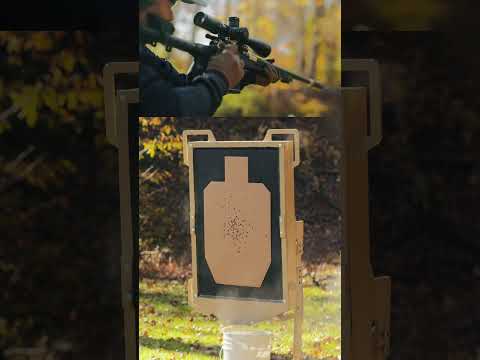
This video provides a practical tip for engaging close-range moving targets, learned from experience in Najaf. The instructor explains how to adjust bipod placement to enhance target tracking. By moving the bipod closer to the magwell, shooters can achieve greater cant with smaller elbow movements, widening their effective hunting field. Conversely, for longer distances, the bipod should be positioned further forward for increased accuracy and to mitigate human error.
This video demonstrates a budget-friendly method for creating a DIY 'infinity target' using a horse stall mat. The instructor explains how to cut a silhouette from the thick rubber mat, which is designed to self-heal from bullet impacts. The target is tested with .22LR and 9mm rounds, showcasing its durability and suitability for close-range defensive training, offering a cost-effective alternative to expensive commercial targets.
This technique focuses on optimizing bipod placement for engaging close-range moving targets. By moving the bipod closer to the magwell, shooters can achieve a wider field of fire and track targets more effectively through elbow movement. For longer distances, extending the bipod enhances accuracy by reducing shooter-induced error.
This video highlights critical firearm safety failures and explains the concept of 'height over bore.' It demonstrates how the difference in height between a firearm's optic and its barrel affects bullet impact, especially at close ranges. The content emphasizes the importance of understanding this principle and adhering to the four fundamental rules of gun safety to prevent accidents.
This video details a successful close-range coyote hunt using a suppressed 12 Gauge shotgun. The O'Neill Ops team demonstrates effective predator calling techniques, strategic positioning in snowy terrain, and the lethal application of Hornady ammunition with a suppressed firearm. The hunt highlights the importance of stealth and shot placement for predator control.
This guide, informed by hickok45's extensive experience, details the dangers of shooting certain targets at close range. It highlights the risks associated with steel targets and birdshot, emphasizing the potential for ricochets and backsplash. The information also covers less obvious dangers, such as wood, and stresses the critical importance of knowing your target and what lies beyond it for safe shooting practices.
This guide explains the concept of sight-to-bore offset, a common reason for missing close shots with rifles. Hickok45, demonstrating high authority, explains that the sights are higher than the barrel, causing bullets to impact low on very near targets. The technique involves aiming slightly above the point of aim to compensate for this mechanical offset, a crucial skill for accurate shooting at close distances.
This video features a 6.5 Creedmoor rifle being fired into a bullet trap at a distance of 20 yards. The "Outlier Backdraft" likely refers to a specific rifle model or a performance characteristic being tested. The content focuses on the ballistic performance or impact of this particular caliber and firearm setup at close range.
This video explains the concept of mechanical offset (height over bore) and its impact on accuracy at close ranges. It demonstrates how to compensate for the bullet impacting lower than the optic's aim point by aiming higher. The instructor emphasizes confirming your zero and practicing holds on paper to understand your firearm's unique ballistic characteristics.
This guide explains how optic zero distance affects point of impact at closer ranges. Instructor from MuzzleBroke demonstrates how a zero set for 15 yards can cause shots to hit low at 7 yards due to bullet trajectory. It advises shooters to consider their optic's zero before attributing misses to lack of skill.
This video tests the effectiveness of a KelTec KSG shotgun against drones. At 100 yards, no hits were registered. At 35 yards, a single shot with birdshot was sufficient to disable a drone, although it was still capable of limited flight. The test highlights that even a single pellet hit can be critical for drone incapacitation.
This video provides a practical technique for engaging moving targets at close to medium ranges. By repositioning the bipod closer to the magwell, shooters can achieve a wider tracking field with less physical effort, making it easier to follow and engage targets. The instructor emphasizes that for longer distances, the bipod should be moved further forward for maximum accuracy.
Gun Laws by State
Read firearms regulations for all 50 states + D.C.
Find Gun Dealers
Search licensed FFL dealers near you.