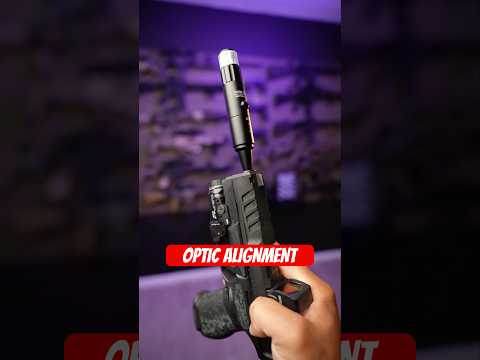
This guide explains how optic zero distance affects point of impact at closer ranges. Instructor from MuzzleBroke demonstrates how a zero set for 15 yards can cause shots to hit low at 7 yards due to bullet trajectory. It advises shooters to consider their optic's zero before attributing misses to lack of skill.
This video focuses on the practical process of zeroing in a firearm's optic. While specific firearm models and calibers are not detailed in the provided information, the core topic revolves around a fundamental aspect of firearm accuracy and aiming. The content is instructional, aiming to guide viewers through the steps necessary to ensure their sights are properly aligned with their point of impact, which is crucial for effective shooting whether for sport, hunting, or self-defense.
This video explains the critical concept of 'height over bore' (HOB) and its impact on point of aim versus point of impact, especially at close ranges. The instructor demonstrates how HOB, combined with a rifle's zero distance, creates a mechanical offset that causes shots to impact lower than the reticle at distances closer than the zero. Understanding and compensating for this offset through holdovers is presented as essential for accurate shooting under pressure.
This YouTube video focuses on a quick and efficient method for zeroing in firearm optics using a laser. The title suggests a practical tip for shooters looking to streamline the process of sighting in their scopes or red dot sights. The content likely demonstrates a technique or tool that aids in faster optic alignment, aiming to save time at the range.
This video addresses common misconceptions about sight height over bore, explaining that while it affects ballistic calculations and turret adjustments, it does not inherently change a bullet's ballistic performance or a firearm's accuracy. The instructor demonstrates how changing sight height in a ballistic calculator alters the required holdover (DOPE) but does not introduce spread or affect the rifle's inherent accuracy. The discussion emphasizes that optics enhance the shooter's capability, not the firearm's ballistics.
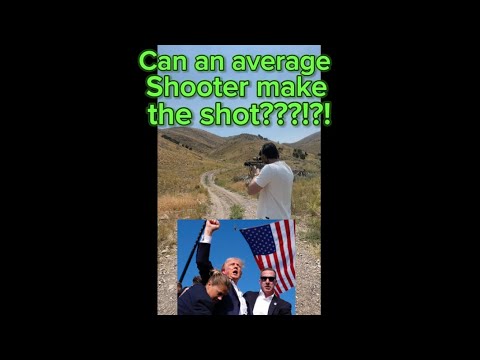
This video recreates a long-range shot similar to the Trump assassination attempt scenario, using a 5.56 AR-15 at approximately 150 yards. The instructor and a participant demonstrate the challenges of making such a shot, highlighting the importance of accurate range estimation, proper optic zeroing, and understanding bullet drop. Both individuals initially miss the target, emphasizing that even with some experience, hitting a small target at distance requires precision and potentially more practice than an average shooter might possess.
This video revisits a previous session with Mike Pannone, focusing on zeroing a pistol with a red dot optic. The title hints at valuable information being shared, encouraging viewers not to miss out on the "gold." It appears to be a follow-up or continuation of a topic previously covered on the channel.
The video emphasizes that while basic preparedness like food and water storage is crucial and relatively easy to achieve, developing skills in areas like firearms proficiency, medical aid, and using specialized gear (e.g., gas masks) requires dedicated practice and training. The speaker, lacking professional military or law enforcement background, highlights the importance of hands-on experience for these more complex skills, especially in environments with potential CBRN threats. The content focuses on the necessity of training for niche equipment and combat scenarios, contrasting it with the simpler acquisition of essential supplies.
This guide details a 100-meter barricade shooting drill as demonstrated by Lucas Botkin of T.REX ARMS. It focuses on comparing magnified optics versus red dots for accuracy and speed across multiple shooting positions. The drill emphasizes foundational marksmanship skills and optic utilization for effective long-range engagement.
This YouTube video introduces the Double Shoot app, which is presented as a revolutionary tool for zeroing firearm optics. The description emphasizes that this single app will transform the user's experience at the shooting range. A link to the Double Shoot website is provided.
Jeff Gonzalez of Trident Concepts explains mechanical offset for AR-15s, defining it as the height difference between the optic's center and the bore's center, typically around 2.5 inches for red dots. He emphasizes its importance for accurate shooting, especially at close ranges (10 yards and in), and when shooting from cover, advising shooters to measure their offset and practice adjustments to ensure effective fire and safety.
This video explains the concept of Height Over Bore (HOB) and its impact on point of aim versus point of impact, particularly at close ranges. It targets newer shooters, demonstrating how the distance between the optic and the barrel affects bullet trajectory. The instructor introduces the 'Near and Far Drill' as a practical method to train for HOB compensation.
Gun Laws by State
Read firearms regulations for all 50 states + D.C.
Find Gun Dealers
Search licensed FFL dealers near you.