This video explains the concept of mechanical offset (height over bore) and its impact on accuracy at close ranges. It demonstrates how to compensate for the bullet impacting lower than the optic's aim point by aiming higher. The instructor emphasizes confirming your zero and practicing holds on paper to understand your firearm's unique ballistic characteristics.
This guide explains how optic zero distance affects point of impact at closer ranges. Instructor from MuzzleBroke demonstrates how a zero set for 15 yards can cause shots to hit low at 7 yards due to bullet trajectory. It advises shooters to consider their optic's zero before attributing misses to lack of skill.
This video features a detailed discussion and analysis of the attempted assassination of Charlie Kirk. Experts examine footage, ballistic evidence, and witness accounts to deconstruct the event, focusing on the shooter's movements, the firearm's trajectory, and the physical evidence. The analysis delves into the complexities of ballistics, firearm concealment, and the interpretation of visual and audio evidence to understand the sequence of events and potential inconsistencies in the official narrative.
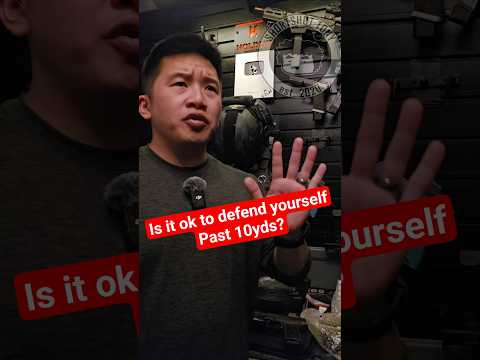
This video debunks the common '10-yard rule' in self-defense, emphasizing that handgun calibers remain lethal far beyond this distance. Instructor Shortshot Tony explains the benefits of a 15-yard zero for a flatter trajectory and better accuracy out to 50 yards. He stresses that situational context, not arbitrary rules, dictates defensive responses, especially when facing an armed aggressor at varying distances.
Colion Noir provides an expert analysis of the FN Five-seveN and its development, stemming from NATO's requirements for a new round. The video details the 5.7x28mm cartridge's advantages over 9mm in terms of trajectory, recoil, and armor penetration, highlighting its origins with the FN P90 and subsequent adaptation into the Five-seveN pistol. Noir's commentary emphasizes the historical context and the unique characteristics that made these firearms notable.
This guide, presented by Shortshot Tony, an experienced shooter and tactical content creator, explains why zeroing a red dot sight or iron sights under 10 yards is often counterproductive for self-defense. It highlights the speed of close-quarters engagements and compares sighted versus point-shooting times. The recommended zero for 9mm handguns is 15-25 yards for a flatter trajectory.
This guide details the technique for establishing a 36-yard zero on an AR-15, as demonstrated by experts from Brownells. This zero is favored for its ability to keep bullet impacts tightly stacked from 25 to 250 yards, making it ideal for competition and unknown distance shooting. The process involves bore sighting, firing initial groups, calculating necessary scope adjustments using MOA conversions, and refining the zero for optimal accuracy.
This video provides an expert-level analysis of rifle zeroing strategies, challenging the conventional wisdom of 'Battle Zeros.' The speaker, demonstrating high authority with deep familiarity in tactical shooting theory, advocates for the 100-yard zero due to its flatter trajectory and reduced deviation at critical engagement distances, especially when using modern magnified optics. The content includes detailed ballistic data and critiques common assumptions about target sizes and engagement scenarios.
This video debunks the myth that a 25-yard zero is ineffective. The speaker, demonstrating high authority, explains that a 25-yard zero can provide a point-of-aim, point-of-impact relationship out to 300 yards, making indoor ranges with 25-yard limitations perfectly suitable for achieving a reliable firearm zero.
This guide details how to quickly sight in an AR-15 optic, including red dots, LPVOs, and scopes. It emphasizes pre-sighting checks, starting at close range, and utilizing the MOA formula for precise adjustments. The video stresses the importance of consistent ammunition and a stable shooting platform for accurate results.
This video explains the concept of ballistic trajectory and how different zero distances affect the point of impact at closer ranges. It highlights that a 100-yard zero will result in a lower point of impact at 200 and 300 yards, while a 200 or 300-yard zero will cause the bullet to strike higher at 100 yards. The speaker demonstrates adjusting optics based on these principles.
This video demonstrates the critical difference between a 5-yard and a 15-yard firearm zero, emphasizing why a 15-yard zero is superior for accuracy at various distances. The instructor highlights how a 5-yard zero leads to unpredictable shot placement at longer ranges, while a 15-yard zero offers stability and predictability, making it more user-friendly for practical shooting applications.
Gun Laws by State
Read firearms regulations for all 50 states + D.C.
Find Gun Dealers
Search licensed FFL dealers near you.