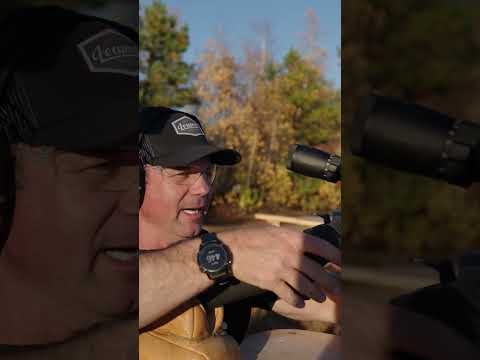
This video demonstrates the process of zeroing a new Athlon Cronus ATS50 thermal optic on a custom .223 Wylde rifle. Instructor Joel highlights techniques for target acquisition with thermal optics, including using contrasting markers, and walks through the zeroing process at 50 and 100 yards. The session concludes with attempts at longer-range shooting and a review of the optic's performance for predator hunting.
This guide details the process of zeroing a rifle scope, emphasizing the importance of a stable shooting platform and consistent point of aim. It covers analyzing impact groups, calculating necessary adjustments based on scope specifications (MOA/Mil Rad), and making incremental corrections to achieve a precise zero at 100 yards. The instruction is delivered by Mike from 6our Academy.
This video demonstrates a practical method for zeroing a rifle, focusing on a 100-yard zero, which is versatile for hunting and PRS-style shooting. The process involves initial bore sighting for a rough alignment, followed by a 25-yard group to confirm the rifle's ability to group, and finally, fine-tuning the zero at 100 yards. The instructor emphasizes the importance of ensuring the rifle groups before attempting to zero and highlights how environmental factors like wind can affect the process.
Kyle Litzy from Tactical Hive provides expert guidance on zeroing various rifle sighting systems. He details optimal distances and target sizes for red dot sights (50 yards, 6-inch target), magnified optics (100 yards, 3-inch target for lower magnification, flexible for high magnification), and iron sights (50 yards, target size matching front sight post). The instruction emphasizes shooting 10-round groups for accurate zero confirmation.
This video discusses the rationale behind choosing a 100-yard zero for firearms, implying a practical application for shooting at this distance. The inclusion of hashtags like #edcgear, #airsoftcqb, #airsoft, and #milsim suggests the content may touch upon the relevance of this zeroing technique for everyday carry (EDC), close-quarters combat (CQB) scenarios, and airsoft or milsim events, where accurate engagement at specific distances is crucial. The video likely aims to inform viewers about ballistic principles and practical firearm setup.
This video details the instructor's personal zeroing philosophy for rifles and pistols, emphasizing the practical implications of different zero distances. The instructor advocates for a 100-yard zero for rifles, citing its simplicity in managing holdovers and holdunders across various distances, particularly with scoped carbines. For pistols, a 25-yard zero is preferred to mitigate unexpected impacts at distance. The content is geared towards intermediate shooters seeking to optimize their firearms for practical application.
This guide details a method for zeroing a rifle scope without extensive live fire, utilizing tracer ammunition to visualize bullet trajectory. The process involves establishing a 100-yard distance, ensuring firearm safety, and aligning the optic with the target. Tracer rounds help identify initial shot dispersion, allowing for optic adjustments to achieve a tight group, thereby saving ammunition.
This video provides an expert-level analysis of rifle zeroing strategies, challenging the conventional wisdom of 'Battle Zeros.' The speaker, demonstrating high authority with deep familiarity in tactical shooting theory, advocates for the 100-yard zero due to its flatter trajectory and reduced deviation at critical engagement distances, especially when using modern magnified optics. The content includes detailed ballistic data and critiques common assumptions about target sizes and engagement scenarios.
This review of the EZShoot 1-6x24 LPVO highlights its budget-friendly nature, costing around $100. While offering decent turrets, an included throw lever, and daylight-bright illumination, the optical quality exhibits noticeable distortion, chromatic aberration, and softening at the edges, especially at higher magnifications. Despite these drawbacks, it held zero during live-fire testing and allowed for hitting a hog-sized target at 100 yards.
This video explains the concept of ballistic trajectory and how different zero distances affect the point of impact at closer ranges. It highlights that a 100-yard zero will result in a lower point of impact at 200 and 300 yards, while a 200 or 300-yard zero will cause the bullet to strike higher at 100 yards. The speaker demonstrates adjusting optics based on these principles.
This video compares an expensive Leupold VX-5 HD rifle scope against a budget CV Life scope. The expensive scope demonstrates excellent optical clarity, precise reticle tracking, and reliable return to zero through a box drill. It also withstands multiple drop tests without losing zero. The budget scope, while functional for basic use, exhibits significant limitations in optical clarity, tracking precision, and durability.
This video provides expert advice on zeroing rifle optics, specifically addressing the common question of how to set up an LPVO with an offset red dot. The instructor advocates for a consistent 100-yard zero for both optics, emphasizing the use of holdovers for longer distances with the LPVO. This approach simplifies target acquisition and reduces cognitive load during shooting.
Gun Laws by State
Read firearms regulations for all 50 states + D.C.
Find Gun Dealers
Search licensed FFL dealers near you.