This entry analyzes a critical incident involving an armed security guard, Josiah Armijo, whose actions led to a fatal shooting. The analysis, presented by Nikko Ortiz, highlights the critical importance of de-escalation, adherence to legal boundaries for security personnel, and the severe consequences of unjustified use of force. It emphasizes that security guards must understand their legal liabilities, particularly when engaging subjects off-property or using lethal force against unarmed individuals.
This video discusses the role and perceived advantages of federal prosecutors within the US legal system, particularly concerning Second Amendment rights and federal gun control laws. The speaker, a constitutional attorney and self-proclaimed top voice for the Second Amendment, argues that federal prosecutors have an unfair advantage due to the government's infinite resources compared to most defendants. The discussion also touches upon recent news regarding the dismissal of prosecutors involved in January 6th cases and the potential implications for legal and civil liabilities.
This video discusses the legal ramifications for gun owners in 17 specific US states if their firearm is stolen. The core message is that failing to report a stolen firearm with its serial number can result in criminal charges, including fines and potential jail time, effectively turning victims into criminals. The speaker argues this is part of a broader trend of government overreach and distrust towards law-abiding citizens.
This video features criminal defense attorney Ian Freedman discussing critical legal aspects of firearm ownership and self-defense in Ohio. He emphasizes avoiding situations, understanding the four elements of self-defense (imminence, proportionality, necessity, not being the initial aggressor), and the distinct burdens of proof in criminal versus civil cases. Freedman also covers crucial post-incident procedures, including limited communication with law enforcement and the prohibition of using deadly force solely for property defense.
This video discusses the legal ramifications of accidentally shooting a bystander during a lawful self-defense incident. It emphasizes that while the initial use of lethal force may be justified, the reasonableness of the shooter's actions, particularly in terms of shot placement and avoiding excessive force, is crucial. The 'single bullet theory' in a specific case highlights how a single projectile striking both the aggressor and a bystander can influence legal outcomes, potentially absolving the shooter if their actions are deemed reasonable and necessary.
This video discusses the increasing ATF scrutiny on gun stores for facilitating straw purchases, where one individual buys multiple firearms for others, often criminals. The speaker highlights a case in Washington D.C. where a man purchased 34 guns from three different stores, leading to potential closure and arrests for the involved businesses. The core concern is that gun stores may face federal charges even if they were unaware of the straw purchase, especially in 'blue states,' emphasizing the need for heightened vigilance and employee training.
This video provides an expert analysis from William Kirk of Washington Gun Law on the significant VanDerStock v. Garland ruling, which vacated the ATF's Frame and Receiver Rule. Kirk breaks down the legal basis, emphasizing that agencies like the ATF cannot legislate beyond the authority granted by Congress. The ruling highlights the importance of statutory interpretation and the separation of powers, asserting that only Congress can criminalize conduct.
This video, featuring USCCA and legal expert Tom Grieve, discusses critical legal concepts surrounding criminal liability in home defense scenarios. It clarifies how doctrines like felony murder rules and transferred intent might apply, while also strongly cautioning against gross negligence and the severe consequences of reckless actions. The importance of proper training and seeking legal counsel is heavily emphasized for gun owners facing potential legal challenges.
This video explains Washington State's safe storage law (RCW 9.41.360) and how to avoid criminal liability if a firearm is stolen. It emphasizes that the law does not mandate specific storage methods but holds owners accountable if negligence leads to a prohibited person accessing the firearm. Crucially, reporting the theft to local law enforcement within 5 days of discovery exempts the owner from liability, even if the storage was considered irresponsible.
Washington's safe storage laws, specifically RCW 9.41.360, do not mandate how firearms must be stored. Instead, they establish criminal liability if an unsecured firearm is accessed by an unauthorized person, leading to harm or a crime. Key exceptions exist for securely stored firearms, lawful self-defense use, and timely reporting of theft.
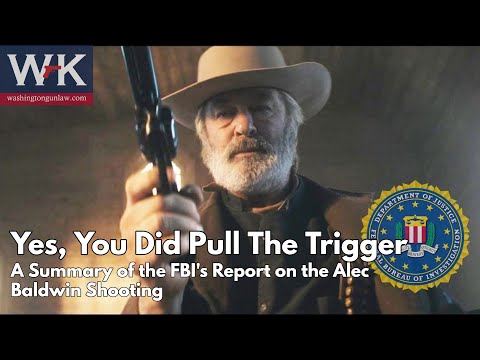
This video summarizes the FBI's forensic report on the 'Rust' movie set shooting, concluding that Alec Baldwin's firearm could not have discharged without a trigger pull. It contrasts Baldwin's claims with the FBI's findings and discusses potential civil and criminal liability, emphasizing the universal rules of firearm safety.
This video analyzes three self-defense incidents in Seattle, focusing on the legal standards of reasonable, necessary, and proportional force under Washington State law (RCW 9.16.020). It examines when displaying a firearm is lawful defense against burglary and theft, and when actions like smashing car windows or using a firearm as a blunt object may exceed legal boundaries, potentially leading to criminal liability. The analysis highlights the importance of understanding legal rights and obligations in self-defense situations.
Gun Laws by State
Read firearms regulations for all 50 states + D.C.
Find Gun Dealers
Search licensed FFL dealers near you.