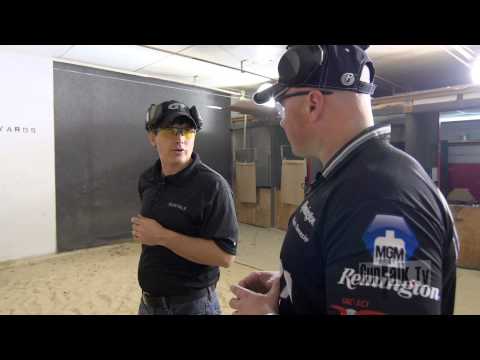
This video details an efficient method for drawing a concealed firearm from an Appendix Inside the Waistband (AIWB) holster, focusing on clearing the cover garment from a high thoracic position. It introduces the 'claw grip' technique for firearms without beavertails and explains the physics behind a successful draw, emphasizing minimal effort and maximum efficiency. The instruction is provided by an experienced firearms instructor.
This guide details an efficient handgun draw technique emphasizing minimal movement and maximum focus on the target. It advocates for a straight-line draw, coordinated hand movement, and a relaxed yet controlled execution to achieve consistent sight alignment. The instruction highlights the importance of dry-fire practice for refining this fundamental skill.
This video outlines an eight-minute daily dry-fire routine designed to build reliable performance with red dot sights, particularly for law enforcement officers transitioning from iron sights. The focus is on developing target focus, consistent grip, and precise trigger control from the holster, emphasizing efficiency over speed through effort. The routine stresses the importance of 'feel, see, do' and using dry fire to diagnose and correct mechanical flaws before live fire.
This instructional video focuses on developing an efficient and urgent draw stroke from an SLS (Serpa Lock System) holster. Key takeaways include executing the draw as a single, fluid motion driven by a mental cue of reaching for the 'triangle' of the grip, and maintaining an aggressive, high-retention support hand position throughout the process. The instructor emphasizes 'violent' out-of-holster movements and a firm 'stab' to disengage the SLS mechanism for faster presentation.
This video provides a step-by-step guide to drawing a firearm from appendix carry efficiently for speed and accuracy. Instructor Will Workman emphasizes maintaining a stable stance, clearing the garment effectively, establishing a firm two-handed grip, and driving the gun to the target with minimal body movement. The core principle for achieving 'lightning speed' is consistent dry-fire practice focused on efficiency and eliminating unnecessary movements.
This video explains that appendix carry can be faster due to increased efficiency, requiring less movement by keeping the draw directly in front of the body. The presenter, Will Workman, outlines the seven basic steps of a draw stroke: clearing the garment, grip, draw, presentation, sight picture, trigger press, and emphasizes safe re-holstering. Consistent, regular practice is highlighted as the key to achieving speed.
This video emphasizes efficiency over perceived 'tactical' movements during a firearm draw. Instructor Locslow stresses that exaggerated or wasted motions telegraph your intentions and slow you down. The core principle is to practice a smooth, direct draw stroke: lift shirt, grab gun, draw straight up, and present straight out. Speed is a byproduct of efficiency built through repetition, not flashy movements.
This video from Modern Samurai Project, presented by Scotch, details an efficient AIWB (Appendix Inside the Waistband) draw technique. The method emphasizes a smooth, unified motion where both hands apply equal pressure during presentation, leading to a straight and level gun path. Key elements include drawing to the sternum for proprioceptive indexing, marrying hands firmly, and presenting to the eyeline while simultaneously prepping the trigger for a faster shot.
This video by Scotty of Modern Samurai Project addresses the 'tactical hitch,' a common pause during the firearm draw that slows down shooters. The hitch often stems from a lack of grip confidence and inefficient grip confirmation. The instructor emphasizes integrating grip confirmation into the draw motion with a 'chop' and presentation, ensuring hands are high on the grip for better recoil control. The core principle is 'rounding out the edges' to create a fluid, continuous motion from draw to presentation, ultimately increasing speed and efficiency.
This video discusses the safety, tactical reliability, and concealability of appendix carry. The speaker, a law enforcement officer with 17 years of experience, advocates for appendix carry as a daily method, highlighting its controllability and accessibility. He emphasizes that with proper training and practice, appendix carry is a safe and effective concealed carry method.
This guide details an efficient pistol draw technique demonstrated by Travis Tomasie, a National and World Champion shooter. It emphasizes proper grip, synchronized hand movement, safety management, and target acquisition for concealed carry and competition. The technique is presented as a method to improve draw speed and accuracy.
You've reached the end! 11 videos loaded.
Gun Laws by State
Read firearms regulations for all 50 states + D.C.
Find Gun Dealers
Search licensed FFL dealers near you.