This review by Ben Stoeger, a professional shooter with extensive experience, delves into the Staccato HD 4 and 4.5 inch pistols. Stoeger highlights their 2011 platform, Glock magazine compatibility, and innovative sight block design that significantly impacts shooting dynamics, making the guns shoot flatter and softer. Despite a high price point and initial extraction issues on the 4.5 inch model (later resolved by extractor spring changes), Stoeger finds the pistols enjoyable and suitable for duty carry, praising their feel and performance after potential factory refinements.
This guide synthesizes Ben Stoeger's expert insights on running the Staccato HD 4.5 under adverse conditions. Stoeger, drawing on extensive high-round-count testing, emphasizes the importance of 'dirty' gun testing as a reliability benchmark. He compares the HD 4.5 to other platforms like Glock and Walther for duty use, discusses lubrication strategies, and details potential issues with extractor springs. The content highlights that while Staccato pistols offer excellent shooting characteristics, other platforms might offer superior reliability in high-workload, low-maintenance scenarios.
This guide details 17 habits for extending the life of an AR-15, drawing on military armorer data. Key practices include listening to the rifle for early warnings, adhering to specific cleaning intervals, inspecting critical components like bolts and springs, using appropriate lubricants, and managing heat. Following these steps can help an AR-15 exceed 20,000 rounds of reliable service.
This video provides a technical tip for AR-15 owners experiencing extractor issues. It details how to identify and correct an undersized extractor spring pocket, a common problem that prevents the use of higher-quality, stronger springs. The instructor demonstrates the use of a gauge and explains the potential consequences of forcing a good spring into a pocket that is too small, including reduced spring life.
This video provides an abbreviated autopsy of a KAK K-Spec bolt carrier group, identifying significant gassing issues. The inspection reveals leaks at the carrier key and bolt tail, an oversized bolt tail opening in the carrier, and an improperly machined internal transition that can damage gas rings. The dual ejectors and weak extractor spring are also noted as potential contributing factors to poor performance.
This guide details the inspection of a Geissele Super Duty upper receiver after 100,000 rounds, as presented by an expert from the School of the American Rifle. It covers critical wear points in the upper receiver, barrel, bolt carrier group, gas key, and charging handle, highlighting potential failure modes and reliability issues arising from extreme use. The analysis emphasizes the importance of detailed mechanical inspection for high-round-count firearms.
This video discusses stoppages encountered with an AIM Surplus Gen3 Glock build. The primary issues reported were failures to extract, initially attributed to potential extractor spring tension, and later, random action locking to the rear, particularly when operating one-handed. The presenter replaced the plunger spring with an OEM Glock part to address the extraction failures.
This video provides a physical inspection of an IWI Zion-15 AR-15 rifle donated for the School of the American Rifle's 10-year anniversary. The inspection revealed the rifle is well-gassed for commercial and NATO ammunition, with a mid-length system and a 0.078-inch gas port. Minor modifications were made, including replacing the extractor spring with a Sprinco 4-coil and adding Rocksett thread locker to the barrel nut screws, which were torqued but lacked initial thread locker.
This video details the initial steps in upgrading seven Ruger AR-556 rifles as part of a secret shopper series. The host explains that Ruger was contacted but did not respond, prompting the decision to upgrade the rifles to personal specifications. Key components donated by Sons of Liberty Gunworks and Sprinco are introduced, including bolt carrier groups, fire control groups, and various springs, to improve the rifles' performance and reliability.
This video provides an in-depth, expert-level inspection of Ruger AR556 bolt carrier groups. It details checks for carrier key screw staking, gas ring seal, internal surface finish of the carrier and bolt tail, firing pin protrusion and binding, cam pin fit, extractor spring security, and bolt face dimensions. The analysis also covers carrier key alignment, bolt magnetism, and critical headspace checks using both 223 Wylde and 5.56 NATO GO gauges, highlighting numerous potential issues found in the tested components.
This video provides an abbreviated autopsy of a KAK K-SPEC chrome bolt carrier group (BCG) exhibiting unusual corrosion after only 500 rounds. The instructor highlights issues with the extractor spring and significant roughness on the cam pin's bearing surfaces, recommending replacement for both. The analysis emphasizes the importance of smooth cam pin surfaces for preventing excessive wear on the aluminum upper receiver.
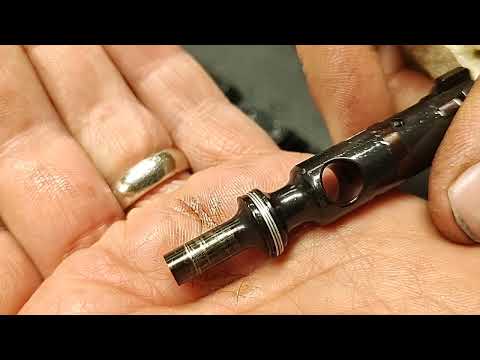
This video provides an abbreviated physical inspection of a BRT Bolt Carrier Group (BCG). It highlights potential issues with the keyway and bolt itself being rough, which can lead to sticky operation when fouled. A key observation is a crookedly seated gold Colt extractor spring, suggesting a potentially undersized spring pocket, which can reduce the spring's service life.
Gun Laws by State
Read firearms regulations for all 50 states + D.C.
Find Gun Dealers
Search licensed FFL dealers near you.