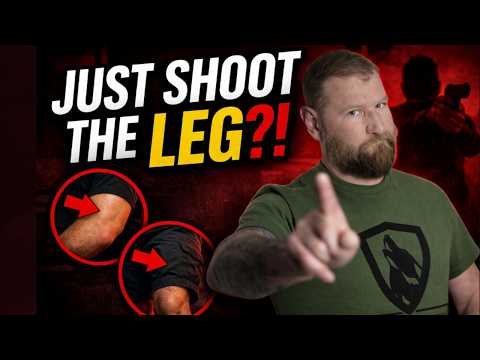
This video from Geauga Firearms Academy debunks the myth of shooting specific body parts like the hand or leg to stop a threat. Instructor Kim explains that the primary goal of using deadly force is to stop the threat, not to kill. He emphasizes that under extreme stress, aiming for small targets like hands or legs is ineffective due to reduced accuracy and the presence of vital arteries in those areas. The instruction highlights that center mass is the recommended target area because it's the largest and most accessible under duress, a principle used by law enforcement and military. The video also stresses the importance of de-escalation and using alternative, less-lethal methods if available before resorting to deadly force.
TheYankeeMarshal, an experienced firearms instructor, strongly advises against appendix carry due to the significant risk of severing the femoral artery. He also expresses a strong aversion to the .38 Super caliber for personal carry, equating accusations of owning either to slander. While acknowledging theoretical exceptions for appendix carry with specific firearm types or unloaded chambers, he maintains a firm stance against the practice for practical, everyday carry.
This GBRS Group video, featuring an expert instructor, delves into the critical concept of 'timers and switches' in threat elimination. It explains how targeting specific physiological points can lead to immediate incapacitation (fast timers) or delayed incapacitation (slow timers), emphasizing that effective training prioritizes decisive threat neutralization over speed.
This video discusses a self-defense incident in California where a store owner shot an assailant during an after-hours robbery. It highlights California's 10-round magazine limit and the legal complexities of self-defense, emphasizing that aiming for the leg is not always a guaranteed non-lethal outcome due to potential arterial damage. The video also promotes USCCA for legal protection and training.
This video critically examines the practice of appendix carry, arguing it's generally an unsafe method due to the inherent risk of self-inflicted injury to vital areas like the femoral artery and genitals. The speaker, TheYankeeMarshal, emphasizes that while risks can be mitigated with specific firearm choices (revolvers, manual safeties) or practices (no round in chamber), these are concessions to an unnecessary risk. He contends that the perceived benefits of faster draw times are often unsubstantiated and do not outweigh the increased danger, particularly with striker-fired handguns.
This video discusses tactical considerations for engaging a threat, specifically focusing on why torso targeting is standard but also exploring the potential benefits of targeting other areas to create pain compliance. The instructor highlights the femoral artery as a critical area that can buy time if successfully engaged.
This entry synthesizes expert insights from Brandon Herrera on critical firearm safety principles and the dangers of negligent handling. It covers the four fundamental rules of gun safety, the lethal potential of leg shots, the risks of blank ammunition at close range, and the dangers of improvised firearms. Herrera, a recognized firearm manufacturer and safety advocate, uses dark humor to underscore the importance of responsible gun ownership and the severe consequences of firearm negligence.
This video provides an overview of the Kukri knife for self-defense and wilderness survival, presented by former CIA officer Jason Hanson. Hanson highlights its historical use by Gurkha warriors and its practical applications for chopping, shelter building, and as a deterrent in home defense scenarios. He emphasizes its slashing capabilities and ease of use, recommending it for individuals uncomfortable with firearms or concerned about over-penetration.
This video, presented by Brandon Herrera, a prominent 'Guntube' influencer, critically reviews memes related to firearm culture and legalities. It highlights unsafe firearm handling within the CHAZ, discusses the confusing regulatory landscape surrounding pistol braces, and explains the lethal consequences of leg shots due to the femoral artery. The content also touches upon the advocacy efforts of various gun rights groups and state-specific firearm laws.
This video demonstrates the SICH tourniquet's functionality after extreme testing, including freezing, impact, and being driven over. Using a Doppler ultrasound machine, the presenter confirms the tourniquet effectively stops blood flow in both the femoral artery and brachial artery, validating its performance under duress. The SICH tourniquet is presented as a potential heavy-duty option for tactical or emergency use.
This guide assesses the safety and technique of appendix carry, drawing insights from TheYankeeMarshal's critical review. It highlights potential risks associated with body type and common shooting stances, emphasizing muzzle discipline and comparing appendix carry to safer alternatives. The analysis underscores the importance of understanding firearm mechanics and potential hazards for responsible concealed carry.
You've reached the end! 11 videos loaded.
Gun Laws by State
Read firearms regulations for all 50 states + D.C.
Find Gun Dealers
Search licensed FFL dealers near you.