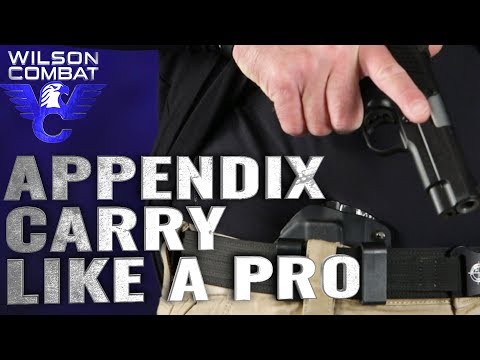
Colion Noir, an expert in concealed carry with years of experience, addresses the debate around appendix carry (AIWB). He acknowledges its performance benefits like superior concealment and faster draws but emphasizes that choosing not to appendix carry is often a deliberate risk assessment, not a sign of being untrained. Noir highlights the inherent mechanical risks of AIWB, particularly concerning the femoral artery, and stresses the importance of a cautious reholstering process. Ultimately, he advocates for personal choice in carry methods based on confidence and risk management, cautioning against dogmatic shaming.
This guide, informed by an experienced practitioner, details why a full-sized 1911 might not be ideal for everyday concealed carry (EDC). It covers assessing the firearm's physical footprint, comparing it to subcompacts, evaluating concealability issues like 'printing,' and considering the practical implications of .45 ACP recoil versus 9mm. The speaker suggests that while not optimal for EDC, the 1911 can still be a viable option for open carry during training or outdoor activities.
This video explains the functionality of camming bars on AIWB and IWB holsters, specifically mentioning the CERTUM3 and VELO5 models from Tenicor. It details how the three heights of camming bars allow users to fine-tune holster rotation for optimal concealment. The VELO5 model is highlighted for its additional slot enabling further vertical adjustment of the camming bar. The video also promotes Tenicor's social media presence and website.
This video highlights a critical failure in law enforcement firearm handling during a traffic stop. Host Colion Noir, an attorney and firearms advocate, expresses strong criticism over an officer's negligent discharge while disarming a compliant citizen. The incident underscores the need for improved training protocols for officers interacting with legally armed individuals, emphasizing proper holster manipulation and trigger discipline to prevent preventable injuries and uphold constitutional rights.
This guide, presented by Hop from TFB TV, debunks five common myths surrounding appendix (AIWB) concealed carry. It demonstrates practical techniques for drawing, reholstering, and maneuvering while carrying appendix, emphasizing safety and accessibility. The video also includes a practical application of a shooting drill to illustrate draw efficiency.
This guide details the safe reholstering technique for appendix carry, as demonstrated by Mike Seeklander. It emphasizes using purpose-built holsters and firearms with manual safeties or heavy double-action triggers. The process involves a deliberate sequence to ensure safety, focusing on muzzle discipline and visual inspection of the holster. Seeklander, founder of the American Warrior Society and an experienced competitor, highlights the critical risks associated with appendix carry, particularly negligent discharges when seated or bending.
This guide details the '300th Parallel' technique for appendix concealed carry, specifically addressing the challenges faced by larger individuals. Developed with insights from John Lovell of Warrior Poet Society, it emphasizes adapting holster placement and utilizing the 'Lift and Tip' method for comfort and effective concealment. The approach aims to make appendix carry feasible and practical for a wider range of body types, including firearms like the Glock 34 and Smith & Wesson M&P Shield.
This video from Haley Strategic Partners emphasizes the importance of a high standard for concealed carry, regardless of the weapon. It covers challenges of summer carry with lighter clothing, the necessity of a stable foundation for EDC (especially without a belt), and the mechanics of a secure IWB holster like the Incog. The expert instruction highlights thorough testing of any carry setup to ensure performance and safety.
This guide assesses the safety and technique of appendix carry, drawing insights from TheYankeeMarshal's critical review. It highlights potential risks associated with body type and common shooting stances, emphasizing muzzle discipline and comparing appendix carry to safer alternatives. The analysis underscores the importance of understanding firearm mechanics and potential hazards for responsible concealed carry.
This guide details the technique for safely carrying a pistol in a chest-mounted holster, as demonstrated by Nutnfancy. It emphasizes that this method is suitable for experienced shooters and highlights the importance of decocking DA/SA pistols before holstering. Proper training and trigger discipline are crucial for safe operation.
You've reached the end! 10 videos loaded.
Gun Laws by State
Read firearms regulations for all 50 states + D.C.
Find Gun Dealers
Search licensed FFL dealers near you.