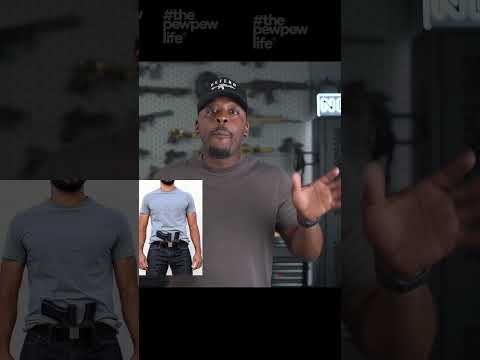
This guide details the critical steps for safely reholstering a handgun, emphasizing discipline and deliberate action over speed. It highlights common mistakes like rushing the process, which can lead to accidental discharges due to clothing or other obstructions entering the trigger guard. The technique focuses on clearing the garment, visually confirming the holster opening, and slowly guiding the firearm back into place.
This video emphasizes critical mistakes to avoid when carrying a handgun, focusing on safe practices during drawing and reholstering. It highlights that negligent discharges often occur during routine handling, not just in high-stress encounters. Key takeaways include maintaining proper trigger finger discipline during the draw, reholstering slowly and deliberately while visually confirming the holster is clear, using a rigid holster, ensuring proper retention to prevent printing, carrying with a chambered round for immediate readiness, function testing ammunition, and understanding legal no-carry zones and use-of-force laws.
Colion Noir, an experienced appendix carrier, discusses the valid safety concerns associated with this carry method, particularly the risk of pointing a firearm at oneself. He emphasizes that while appendix carry offers performance benefits like better concealment and faster draws, it requires a heightened awareness of safety protocols, especially during reholstering. The video highlights that choosing a different carry position due to these inherent risks is a legitimate risk management decision, not necessarily a sign of fear or lack of training.
Colion Noir, an expert in concealed carry with years of experience, addresses the debate around appendix carry (AIWB). He acknowledges its performance benefits like superior concealment and faster draws but emphasizes that choosing not to appendix carry is often a deliberate risk assessment, not a sign of being untrained. Noir highlights the inherent mechanical risks of AIWB, particularly concerning the femoral artery, and stresses the importance of a cautious reholstering process. Ultimately, he advocates for personal choice in carry methods based on confidence and risk management, cautioning against dogmatic shaming.
This video emphasizes the importance of proper firearm education and practice for new gun owners, particularly women living alone. It strongly advises against receiving a firearm as a gift without proper training and highlights the risks associated with firearms lacking external safeties, like Glocks, for beginners. The expert recommends hands-on experience at a range, trying various firearms, and prioritizing safety and familiarity over specific brand recommendations.
This guide, presented by Shortshot Tony, an experienced shooter and content creator, details a safe reholstering technique. It emphasizes that reholstering should only occur when the situation is secure or behind cover, directly contradicting the 'never look at your holster' dogma. The focus is on preventing accidental discharges by ensuring the holster is clear of obstructions, a critical safety measure when handling firearms like the Sig Sauer P320.
This video, from firearms instructor Joel Park, outlines essential skills and safety practices a student should master before attending a shooting class. The focus is on safe and competent handling of a firearm, including loading, unloading, malfunction clearing, drawing, and reholstering, to ensure students can absorb new information without being overwhelmed by basic operations. The instructor emphasizes that proficiency in these fundamentals allows for better learning during the class.
This video provides a detailed breakdown of how to properly draw a concealed pistol from a hip holster, emphasizing efficiency and safety. Key techniques include simultaneous hand movement, establishing a firm grip early, and a controlled reholstering process. The instructor highlights the benefits of Kaidex holsters for a faster, more reliable draw.
This drill, guided by former Tier 1 Special Operations instructors from GBRS Group, focuses on the 'smooth is fast' philosophy for weapon manipulation while moving. It emphasizes continuous footwork and fluid transitions between rifle and pistol, reloads, and reholstering without halting movement. The instruction highlights the importance of mastering fundamental mechanics at a controlled pace before increasing speed.
This video from TENICOR aims to clarify the correct terminology between 'holstering' and 'reholstering' firearms. While no specific firearms or calibers are mentioned, the title and description clearly indicate a discussion focused on the proper procedures and language used when inserting a firearm into its holster. The content is likely aimed at gun owners and those interested in firearm safety and handling, with a focus on technical accuracy in terminology.
This video provides a detailed instructional guide on how to safely unholster and reholster a pistol from both appendix and hip carry positions. It aims to clarify common practices and ensure safe handling of firearms for everyday carry. The video features Jeff from TENICOR, highlighting their expertise and potentially their products.
This video discusses the utility and safety considerations of pocket pistols and their associated holsters. It emphasizes the importance of having a firearm accessible, even if it's a smaller pocket pistol. The instructor highlights safe reholstering techniques for pocket holsters, stressing the need to separate the gun from the holster before reholstering to prevent accidental discharges. The discussion also touches on the nuances of firearm safety rules in practical defensive scenarios.
Gun Laws by State
Read firearms regulations for all 50 states + D.C.
Find Gun Dealers
Search licensed FFL dealers near you.