This video emphasizes the critical importance of consistent everyday carry (EDC) for firearms, warning against common mistakes like prioritizing comfort over capability. It advises building a practical, comfortable EDC kit, choosing firearms that offer sufficient capability, and rigorously training with the chosen setup and ammunition. The instructor stresses that a firearm not carried or not trained with is ineffective, urging viewers to seek professional instruction to ensure readiness.
Clint Morgan discusses the AR-15's suitability for home defense, emphasizing its capability and the 'bill of rights' over 'bill of need' principle. He highlights the importance of choosing the right tool for the job, referencing personal anecdotes like deterring a bobcat and discussing the effectiveness of various calibers like 5.56 NATO and 300 Blackout for defensive scenarios, while also acknowledging PCCs as a viable alternative.
This video argues that firearm capability and round performance are more critical than shot placement, especially in self-defense scenarios. While shot placement is important, a round must have sufficient power to penetrate and incapacitate a threat. The speaker emphasizes choosing a capable firearm and ammunition combination before focusing on marksmanship, suggesting that underpowered rounds can be ineffective even with perfect accuracy. The discussion highlights the importance of adequate wound channels and penetration to overcome barriers like clothing or bone structure.
This video demonstrates the capability of the North American Arms NAA-22S Mini-Revolver in .22 Short caliber. From a first-person perspective, the shooter performs a controlled rapid fire, discharging five rounds into a vehicle windshield to showcase the firearm's performance. The demonstration highlights proper cocking technique for a single-action revolver and clear focus on target impact.
This lesson emphasizes that while concealability is important for new concealed carriers, the capability of the firearm to be effectively operated by the user should be prioritized. The instructor uses the Sig Sauer P365 and P365X Macro as examples, highlighting how a slightly larger grip and longer sight radius can significantly improve shooting performance, which is crucial in a self-defense scenario.
This video demonstrates the long-range capabilities of the PSA M110A1 rifle, pushing it to 1100 yards during the day and 716 yards at night with night vision. The instructor highlights the effectiveness of SNB 308 168gr HPBT ammunition and the Lupold Mark 5 HD optic. The video also showcases the rifle's performance with a PVS30 night vision device, emphasizing its versatility and accuracy.
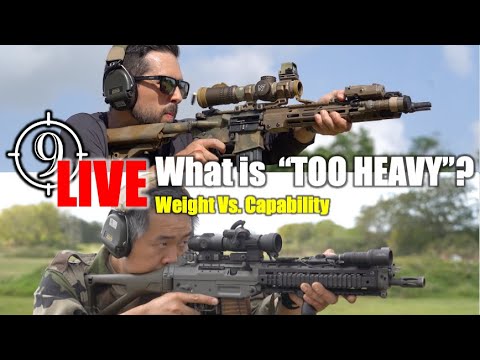
This discussion delves into the complex relationship between firearm weight and capability, challenging the notion that heavier is always worse. The hosts explore how accessories, intended use, and environment significantly influence the ideal weight for a rifle. They emphasize that while weight can be a detractor for mobility, it can also enhance stability and shooting performance in static or defensive roles, highlighting the importance of balance and context over arbitrary weight limits.
This video, titled 'When you know the capability of your firearm #firearmsafety', focuses on the importance of understanding firearm capabilities within the context of safety. The description reinforces this by highlighting firearm safety. While no specific firearms, calibers, or manufacturers are explicitly mentioned, the core theme revolves around responsible firearm ownership and awareness of a weapon's potential. This understanding is crucial for safe handling and operation in various scenarios.
This YouTube video title, translated as "Can a .22 caliber firearm be used for self-defense?", directly addresses a common question within the firearms community regarding the efficacy of smaller caliber handguns for personal protection. The content likely explores the capabilities, limitations, and effectiveness of .22 caliber firearms in self-defense scenarios. Viewers can expect a discussion or demonstration that might cover aspects like stopping power, reliability, and suitability for various defensive situations.
The Yankee Marshal argues that bullet performance is more critical than shot placement for self-defense, especially against motivated threats. While shot placement is important, an incapable round, even in a vital area, may not stop an attacker. Conversely, a high-performance round, even with less-than-ideal placement (e.g., hip or foot), can be more effective. He emphasizes that a firearm must first be capable of stopping a threat before accuracy becomes the primary concern, advocating for a balance between the two.
You've reached the end! 10 videos loaded.
Gun Laws by State
Read firearms regulations for all 50 states + D.C.
Find Gun Dealers
Search licensed FFL dealers near you.