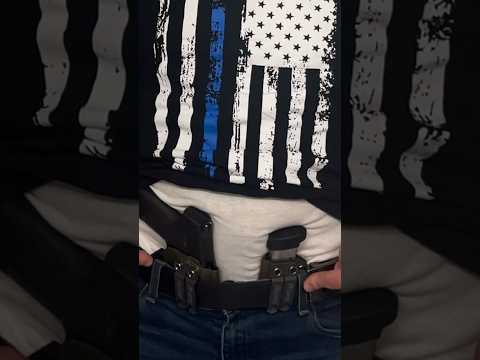
This guide details the principles of appendix carry, a concealed carry method favored for its speed and accessibility. It highlights three key reasons for its adoption: exceptionally fast draw times, maximum accessibility in various scenarios (including vehicle or ground fighting), and its role as a motivator for maintaining physical fitness. The technique emphasizes proper holster placement and drawing mechanics.
This guide details an effective AIWB (Appendix Inside the Waistband) concealed carry adjustment technique demonstrated by an experienced EDC enthusiast. By shifting a Kore Essentials belt buckle one loop to the side, users can optimize holster and magazine placement for significantly improved comfort and reduced muzzle-to-leg pressure. The method is shown to work well with a Smith & Wesson Shield 9mm in Eclipse holsters.
This guide details the practical application and advantages of two primary concealed carry positions: appendix and 3 o'clock. Expert analysis from GBRS Group highlights the efficiency of appendix carry in confined spaces and the draw stroke benefits of the 3 o'clock position during physical altercations. The video emphasizes understanding your carry method's strengths for realistic scenarios.
John Lovell, drawing on extensive force-on-force training experience, argues for the superiority of appendix carry in dynamic situations. He highlights that appendix carry provides better access when pinned or cornered, a critical advantage often overlooked by those focusing solely on static range drills. This practical insight emphasizes the need for realistic training scenarios to truly assess defensive firearm effectiveness.
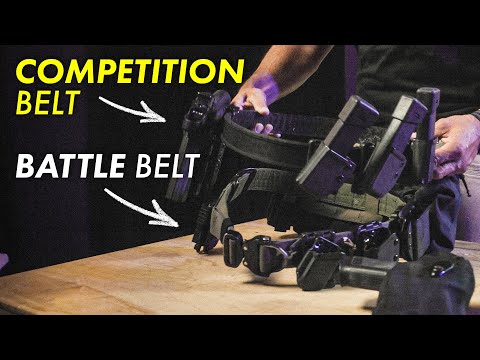
This video from FieldCraft Survival explains the differences between competition belts, duty belts, and tactical belts, advocating for a competition-style two-belt system as the most cost-effective entry point for new firearms trainees. The instructor emphasizes that skills are paramount and equipment should support, not inhibit, training, noting that competition belt setups translate directly to duty belt configurations for consistent muscle memory.
This short emphasizes the critical importance of consistent grip acquisition in dynamic shooting scenarios. It highlights how subtle shifts in body position can alter holster placement, potentially compromising a perfect grip during a gunfight. The instruction focuses on establishing a deliberate grip by aiming slightly low and sliding the hand forward to ensure optimal hand placement regardless of minor positional variations.
This guide, informed by GBRS Group instructors DJ Shipley and Cole Fowlke, focuses on optimizing holster placement for efficient firearm manipulation. It emphasizes that gear should adapt to the user's biomechanics, not the other way around. Improperly positioned gear, such as a low-slung drop-leg holster, can force inefficient body movements and hinder a proper master grip, impacting overall performance.
This video explores the pros and cons of carrying a firearm in the small of the back (6:00) position. While offering excellent concealment and discretion, it presents significant challenges in accessibility, comfort when seated, and drawing speed, especially under pressure. The instructor personally advises against this method due to these drawbacks, emphasizing safety and practical considerations.
This video delves into the nuances of concealed carry, particularly focusing on appendix carry and its challenges for different body types. It emphasizes the importance of practicing draw strokes from your chosen carry position and discusses various methods for holstering a firearm safely. The discussion highlights that comfortable and effective carry is highly individual and requires experimentation with different positions and gear.
Ben Stoeger explains his continued use of the Sig P320 despite known issues, citing his role as an instructor who needs experience with various platforms. He details modifications made to mitigate safety concerns, including a KKM barrel for a fully supported chamber and a Sig Armorer disconnector to address potential catastrophic failures. He also mentions an Apex trigger kit with an Agency Arms shoe for personal comfort and a perceived safety enhancement, alongside strategic holster positioning to minimize risk from uncommanded discharges.
This short clip addresses common concerns about appendix carry, specifically the fear of accidentally shooting oneself. The speaker, who appears comfortable and experienced with this carry method, asserts that with proper technique and holster use, there is no risk of self-injury. The focus is on the safety and practicality of appendix carry for everyday concealed carry.
This video critically examines the practice of appendix carry, arguing it's generally an unsafe method due to the inherent risk of self-inflicted injury to vital areas like the femoral artery and genitals. The speaker, TheYankeeMarshal, emphasizes that while risks can be mitigated with specific firearm choices (revolvers, manual safeties) or practices (no round in chamber), these are concessions to an unnecessary risk. He contends that the perceived benefits of faster draw times are often unsubstantiated and do not outweigh the increased danger, particularly with striker-fired handguns.
Gun Laws by State
Read firearms regulations for all 50 states + D.C.
Find Gun Dealers
Search licensed FFL dealers near you.