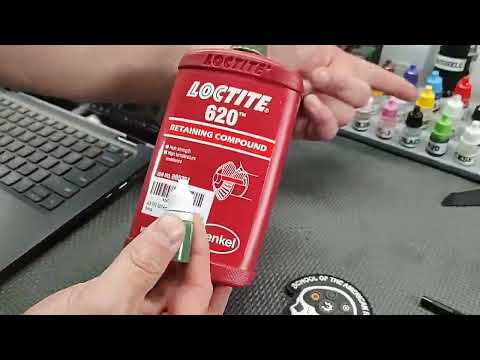
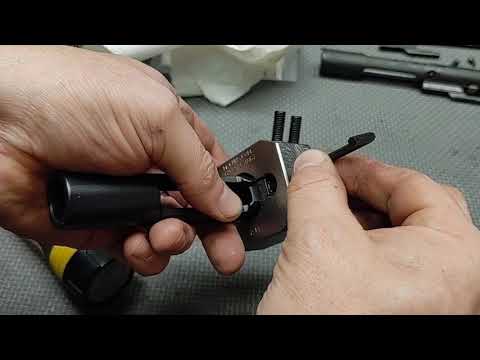
This video details a method for correcting a clocked or canted front sight base on an AR-15 platform rifle, specifically addressing issues found on Ruger AR-556 models. The process involves removing existing pins, using an alignment gauge to position the base correctly, securing it with Loctite 620, and then reaming and fitting oversized taper pins to the newly aligned holes. This guide is for intermediate gunsmithing tasks.
This video details a gunsmithing repair on a Rock River Arms bolt carrier group where the carrier key channel was milled too narrow. The instructor demonstrates how to use a milling machine to correct the channel's dimensions, ensuring proper alignment of the carrier key. The repair involves opening the channel, addressing minor damage, and sealing the new key with Loctite 620 for a functional bolt carrier.
This video demonstrates a technique for improving the fit between an AR-15's upper receiver and barrel using shims. The instructor explains that while not recommended for all builds, this method can tighten a loose fit, especially for precision or match guns. Shims, available in various thicknesses, are cut to size, wrapped around the barrel, and secured with Loctite before installation.
This video from School of the American Rifle demonstrates the application of Loctite 620, a sleeve retaining compound, for specific AR-15 build and maintenance tasks. It details its use in bedding barrels to upper receivers and securing the carrier key to the bolt carrier, noting it as an improvement over standard methods. The instructor emphasizes proper application amounts, cleanup, and cure times for optimal performance and gas system efficiency.
This guide details the autopsy and repair of a Black Rain Ordnance SPEC15 AR-15, focusing on tuning an over-gassed system. Master Gunsmith Chad provides expert-level instruction on replacing key components like the gas tube, buffer spring, and firing pin, using specific torque values and materials like Loctite 620 and Rocksett. The process emphasizes achieving a reliable 4:00 ejection pattern through meticulous adjustments.
This guide details the installation of School of the American Rifle's dimple staking bolts, designed as replacements for standard staking bolts on AR-15 gas keys. It emphasizes the importance of using compatible gas keys (those with angled bolt entry), proper lubrication, and precise torque settings (50-58 inch-pounds) to ensure a secure and durable staking. The video also highlights the limited lifespan of these staking bolts and the benefits of using them on phosphate gas keys over chromed or nitrided ones.
This guide details the process of replacing a damaged or out-of-spec AR-15 gas key and properly staking the new screws to prevent them from backing out. It covers gauging the carrier bore, truing the mounting surface, applying sealant, torquing screws, and performing a 'golf ball' style staking for a secure gas seal. The instruction emphasizes proper torque values and the importance of a well-executed stake for gas system integrity.
You've reached the end! 7 videos loaded.
Gun Laws by State
Read firearms regulations for all 50 states + D.C.
Find Gun Dealers
Search licensed FFL dealers near you.