This video showcases advanced tactical training from GBRS Group, covering a spectrum of skills from fundamental pistol marksmanship to complex CQB, night vision operations, and vehicle interdiction. The instruction emphasizes responsibility and proficiency in various environments, including indoor ranges, outdoor training areas, and simulated urban settings. Expert instructors guide participants through dynamic drills, highlighting the importance of teamwork, weapon system mastery, and tactical decision-making.
The SIG Sauer Academy offers advanced, customized training programs for military and law enforcement professionals. Their extensive 140-acre facility includes specialized areas like a live-fire shoot house, tactical training zones, and advanced range capabilities for low-light and night vision scenarios, all led by experienced instructors.
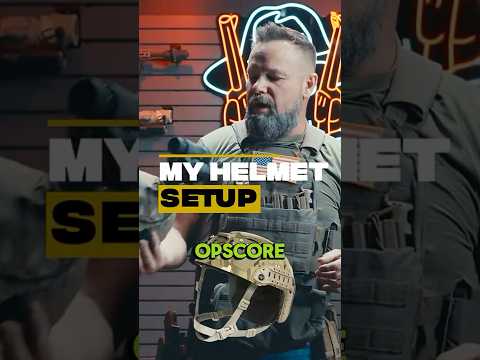
This video provides an expert overview of a tactical helmet setup, featuring the Ops-Core helmet equipped with PVS-31 night vision, a Wilcox mount, and 3M Peltor Comtac VI ear protection. The presenter, demonstrating experienced authority, details the functionality of white light and IR illuminators, their practical applications, and emphasizes the critical need for extensive training with night vision devices.
This video provides a comprehensive, beginner-friendly overview of night vision devices, covering monocular vs. binocular systems, different generations, and essential accessories like helmets and mounts. It emphasizes the significant cost, the importance of proper training, and practical considerations for use, including laser aiming devices and illuminators. The discussion highlights that while night vision is expensive and not a budget item, it offers unique capabilities for specific applications.
This video showcases advanced NVG CQB training conducted by GBRS Group for St. John Parish SWAT. It highlights dynamic room clearing, coordinated team tactics, and aggressive entry techniques under low-light conditions using night vision devices. Operators demonstrate fluid movement, rapid target acquisition, and the effective use of tactical gear including AR-platform rifles with suppressors and optics.
This video tests a prototype military thermal target system, evaluating its durability, visibility at various distances, and water resistance. The instructor, with apparent expertise in tactical gear and firearms, demonstrates the target's performance under live fire and adverse weather conditions. Key findings include its visibility up to 500 yards and its ability to withstand multiple hits without complete failure, though direct hits to critical components can disable it.
This YouTube Short focuses on a specific drill designed for night vision training. While the exact firearm or equipment isn't detailed, the title and hashtags strongly suggest a military or tactical application of night vision technology for operational readiness and skill development in low-light conditions.
This video provides a foundational overview of different night vision device (NVD) types, including monocular PVS-14s, dual-tube systems (like RNVGs), and quad-tube systems. It highlights key differences in field of view, weight, power requirements, and cost, emphasizing that the best choice depends on individual needs and budget. The discussion also touches on active vs. passive aiming and the importance of IR lasers for target acquisition in low-light conditions.
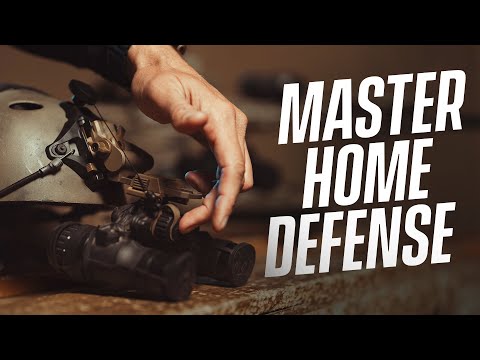
This guide details setting up a helmet-mounted night vision system for home defense. It covers essential components like helmets, mounts, optics, and laser packages, emphasizing proper fit, focus, and accessory integration. The instructor, Mike Od with USCCA, highlights the importance of a holistic approach, ensuring all gear complements night vision capabilities for a tactical advantage.
This video advocates starting personal night vision with white phosphor technology due to its easier integration with lasers, red dots, and passive shooting capabilities. The instructor suggests that mastering navigation and target acquisition with white phosphor first creates a solid foundation before introducing more complex thermal optics. This approach simplifies the learning curve for operating in low-light environments.
This video from Regular Guy Training LLC provides an expert-level comparison of night vision (NV) and thermal optics, emphasizing their complementary roles in a tactical system. Instructor Chris argues against viewing them as an 'either/or' choice, advocating for their integration. He suggests starting with white phosphor night vision due to its superior environmental detail and navigation capabilities, then integrating thermal for enhanced target acquisition and heat signature detection. Professional training is highly recommended for effective implementation.
This YouTube Short focuses on the challenges encountered during night vision training. While the video title itself doesn't explicitly mention firearms, the context of 'training' in relation to night vision often implies tactical applications, which are commonly associated with firearms usage. The description directs viewers to several related channels, including 'Classic Firearms,' 'Outside The Warehouse,' and a 'CF_Podcast,' further reinforcing a connection to the firearms community.
Gun Laws by State
Read firearms regulations for all 50 states + D.C.
Find Gun Dealers
Search licensed FFL dealers near you.