This video details the HK Mk23's impressive durability, specifically its slide's finish. The combination of parkerizing and black lacquer paint was found by HK to be the optimal solution for environmental resistance, particularly against saltwater and sand.
This guide explains the critical role of barrel finishes on AR-15 platforms, detailing Manganese Phosphate (Parkerizing), Chrome Lining, and Nitride (Melonite/QPQ) treatments. It covers their impact on corrosion resistance, wear, friction, and ease of cleaning, offering recommendations for duty, precision, and high-volume range use. The video emphasizes that the best finish depends on the specific application and user preferences.
This video details the multi-week restoration and reassembly of a 3-inch M5 anti-tank gun. The process involves extensive cleaning, blasting, bodywork, welding, priming, and painting of various carriage components, including the axle, legs, hubs, brakes, and shield. The final stages focus on bottom-up reassembly, installation of functional parts like the traverse mechanism, and the mounting of the gun and its dummy breach. The project is nearing completion for museum display.
This video showcases two custom Browning Hi-Power pistols worked on by MK3 Firearms. One is a restored Mark III with a tightened action, adjusted trigger, and abbreviated beaver tail. The second is a Mark I that received a factory-style restoration, including parkerizing, a polished barrel, and custom sights (gold bead front, Novak cut rear).
This guide details the process of parkerizing a 20mm Mark-11 AutoCannon revolver cylinder and its internal parts. The video visually demonstrates the application of a fresh parkerized finish to these specialized military firearm components. Proper cleaning, solution preparation, submersion, neutralization, and oiling are crucial steps for achieving a durable and uniform finish. This process enhances corrosion resistance and provides a distinct matte appearance to the firearm parts.
This video provides an in-depth look at U.S. Ordnance's manufacturing processes for heavy machine guns like the M2 Browning and M60E6, as well as the MK19 grenade launcher. It highlights advanced techniques in automated barrel production, precision grinding, and quality control measures like Magnaflux inspection. The content also touches upon the company's role in supplying movie props and their extensive collection of historical firearms.
This video details the repair process for a broken lug on a Mark Serbu RN-50 rifle. Lead Firearms Instructor and SEO Strategist Mark Serbu walks through the steps of removing the barrel, welding the lug back on, and refinishing the receiver with parkerizing. The repair is demonstrated to be successful through test firing, highlighting the importance of proper gunsmithing techniques for firearm longevity and safety.
This guide details the industrial manufacturing process for machine gun links, as demonstrated by Ian McCollum at the Arex Defense facility in Slovenia. The multi-stage process involves high-speed stamping of sheet steel, heat treatment (hardening and annealing), quenching, and a final corrosion-resistant finishing step. The facility boasts an impressive annual production capacity of 100 million units.
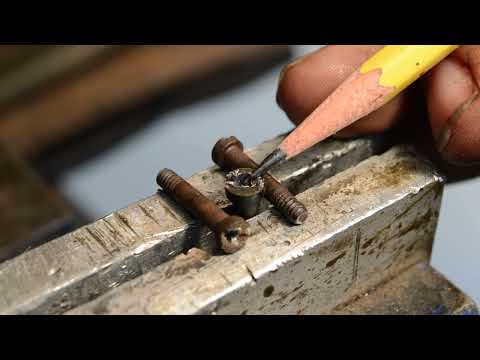
This guide details the repair and restoration of bayonets, specifically focusing on M14 and Garand models. It covers techniques for removing seized screws using an 'easy out' after drilling, repairing damaged screw heads with TIG welding, cleaning and reassembling internal mechanisms, and applying a parkerizing finish. The process emphasizes preserving original components where possible and restoring functionality and appearance to neglected bayonets.
This guide details the process of Parkerizing and restoring a Colt 1911, drawing on the expertise of Mark Novak. It covers complete disassembly, surface preparation via bead blasting, the chemical Parkerizing process using Brownells Zinc Phosphate solution, post-treatment, lubrication with Freedom Lube and Lucas Oil, and reassembly. The video emphasizes the importance of meticulous cleaning and preparation for a durable and historically accurate finish, suitable for a high-quality shooter grade firearm.
This guide details how to easily calibrate and whiten the elevation knob on an M1A rifle. It demonstrates a simple method using a white Crayola crayon to fill the etched markings for improved visibility, making sight adjustments at different ranges more straightforward. The process also covers the correct procedure for adjusting and locking the elevation knob to a specific sighted-in position, emphasizing a method that avoids the need for external tools to tighten the adjustment screw.
This video details the process of repairing and test-firing Mark Serbu's RN50 heavy barrels after a parkerizing issue. The process involved disassembling the firearms, removing the barrels, sandblasting, re-parkerizing, reassembling, and then test-firing the repaired components. The test firing included a high-speed camera examination of a 50 caliber round impacting an old fan.
Gun Laws by State
Read firearms regulations for all 50 states + D.C.
Find Gun Dealers
Search licensed FFL dealers near you.