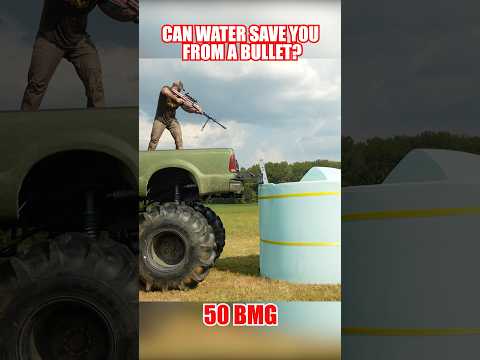
This video tests the myth of water being bulletproof by firing various firearms, from 9mm handguns to a .50 BMG rifle, into a water tank. Results show that even high-powered rounds like the .50 BMG are significantly slowed or stopped by water, failing to penetrate to the target. The tests demonstrate water's effectiveness in dissipating projectile energy.
This guide details the deployment of the Taser X12 shotgun using the XREP less-lethal projectile. The Taser X12, a collaboration between Taser and Mossberg, is designed for law enforcement. The XREP shell is a self-contained unit fired from a 12-gauge shotgun, featuring barbs for target acquisition and an electrical connection mechanism. The video emphasizes the projectile's design for effective range and reliable circuit completion.
This video explores the fascinating and potentially dangerous phenomenon of two bullets colliding in mid-air. While the title suggests a focus on the physics and visual aspects of this rare event, the description is absent, leaving the exact content to interpretation. It's likely to be a visually driven experiment, possibly involving slow-motion footage to capture the impact and aftermath of such a collision, which is highly improbable in real-world shooting scenarios but a compelling theoretical concept.
This short YouTube video aims to explain the concept of Hydrostatic Shock, a term often used in discussions about firearm ballistics and terminal performance. While the video doesn't specify particular firearms or calibers, the topic itself is directly relevant to ballistics, projectile physics, and the effects of ammunition upon impact. It likely delves into the physics behind how a projectile's energy transfer causes tissue damage beyond the direct wound channel, a key consideration for self-defense and hunting applications.
This video conducts a ballistic test to determine if a standard coin can effectively stop a .22 caliber bullet. The experiment aims to provide a definitive answer to a common curiosity, presented in a format that likely appeals to viewers interested in the physics of firearms and projectile behavior.
This guide details an experiment to measure the vertical flight time of arrows shot from different bow types, as demonstrated by Edwin Sarkissian. It covers the setup, equipment, and recording process, highlighting how arrow velocity impacts flight duration. The experiment emphasizes safety and the use of specialized whistling arrow tips for better tracking.
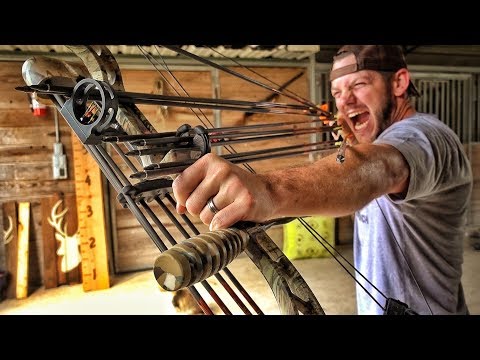
This guide details how to modify a compound bow for shooting multiple arrows simultaneously, inspired by video games. It covers the removal of the arrow rest using specific tools and emphasizes safety precautions. The content is presented by Matt Carriker, demonstrating experienced authority in projectile testing and bow mechanics.
This video debunks the myth that a near miss from a 50 BMG round can be lethal due to shockwave effects. Through controlled experiments with drones and a house of cards, the demonstration shows that 50 BMG projectiles, designed for aerodynamic efficiency, create minimal air disruption and thus negligible shockwaves capable of causing harm at a distance. The presenter, identified as a gun expert, highlights that the projectile's design prioritizes speed and range over air displacement.
This video poses a question about the ballistic resistance of refrigerator doors, hinting at an experimental approach to test how many doors are needed to stop a bullet. The description provides links to the creator's website and Instagram, suggesting a focus on practical demonstrations and potentially DIY or science-experiment style content related to projectiles and barriers.
You've reached the end! 9 videos loaded.
Gun Laws by State
Read firearms regulations for all 50 states + D.C.
Find Gun Dealers
Search licensed FFL dealers near you.