This video provides an expert legal analysis from William Kirk of Washington Gun Law on how to respond when your vehicle is surrounded by a mob. It outlines legal options, the definition of lethal force, and the criteria for using force in self-defense, emphasizing that protecting property alone does not justify lethal force, but imminent threats to life or serious bodily injury do.
This video, featuring Super Lawyer Ian Friedman and Geauga Firearms Academy, breaks down the four essential elements for a valid self-defense claim in Ohio: Imminence, Proportionality, Necessity, and not being the Initial Aggressor. It emphasizes that self-defense must address an immediate threat of serious bodily harm and that the response must be proportionate to the threat, with no reasonable alternatives available. Emotional reactions are cautioned against, stressing the need to separate personal feelings from legal justification.
This video features criminal defense attorney Ian Freedman discussing critical legal aspects of firearm ownership and self-defense in Ohio. He emphasizes avoiding situations, understanding the four elements of self-defense (imminence, proportionality, necessity, not being the initial aggressor), and the distinct burdens of proof in criminal versus civil cases. Freedman also covers crucial post-incident procedures, including limited communication with law enforcement and the prohibition of using deadly force solely for property defense.
This video from Active Self Protection analyzes a violent encounter where a cook used a knife against an angry customer, resulting in a fatality. Instructor John Correia emphasizes that deadly force must be a last resort and discusses the legal ramifications for both parties. The analysis highlights the importance of proportionality in self-defense and suggests OC spray as a potentially more appropriate tool than a knife in such situations.
This discussion explores the tension between proportionality and utility in the context of violence and warfare. Proportionality acts as a moral constraint, ensuring harm is weighed against valuable goals, while utility focuses on effectiveness. The video emphasizes that unchecked utility can lead to a 'might makes right' scenario, and proportionality can be corrupted by viewing individuals unequally. Developing a true understanding of proportionality and appropriate force is best achieved through practical experience and training, not just abstract thought.
This video from Active Self Protection analyzes a self-defense incident where an argument over keys escalated to a physical altercation and subsequent shooting. John Correia, founder of Active Self Protection, provides an authoritative breakdown, emphasizing the critical legal and moral principle of proportionality in the use of deadly force. He highlights that responding to a punch with lethal force is often legally indefensible and stresses the importance of de-escalation and less-lethal options.
William Kirk, President of Washington Gun Law, provides an expert legal analysis on when it is permissible to use lethal force against an unarmed attacker. He emphasizes that legality hinges on the objective and subjective reasonableness of the threat, focusing on the principles of necessity, reasonableness, and proportionality. The discussion highlights 'disparity of force' and non-traditional threats as key factors in justifying lethal force, distinguishing legal rights from tactical decisions.
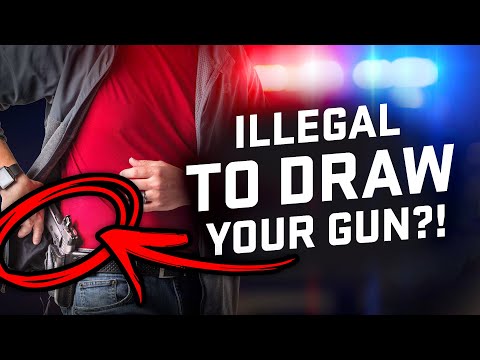
This video, featuring former law enforcement officer Chip Eberhard, provides expert guidance on the legalities of drawing a firearm for self-defense. It breaks down the five pillars of justified force: Innocence, Imminence, Avoidability, Proportionality, and Reasonableness, emphasizing that legal knowledge is as critical as firearm proficiency. The content stresses understanding self-defense laws, utilizing resources like the USCCA app, and applying these principles to real-world scenarios.
This video provides a concise overview of Washington State's general self-defense laws, focusing on the use of force to protect oneself, others, or property. It clarifies that the use of force must be necessary, reasonable, and proportional, drawing distinctions between general self-defense and the 'shopkeeper's exception' for detaining unlawful occupants. The explanation emphasizes the legal standard for assessing self-defense claims, incorporating both subjective and objective elements.
This video analyzes a self-defense scenario involving an armed robbery at a convenience store. It breaks down the legal justification for using deadly force based on the five elements of self-defense: innocence, imminence, proportionality, avoidance, and reasonableness. The analysis highlights how the situation evolves and how legal interpretations can change based on the aggressor's actions and the defender's response, emphasizing the importance of decisive action within legal boundaries.
This video, 'Calling the Shots' from Alien Gear Holsters, features Andrew Branca of Law of Self Defense discussing the five core elements of self-defense law: Innocence, Imminence, Proportionality, Avoidance, and Reasonableness. Branca emphasizes that understanding these elements is crucial for lawful use of force and avoiding criminal liability. He explains each element in detail, providing examples and clarifying common misconceptions, stressing that self-defense is a binary concept with no middle ground. The discussion highlights the importance of acting within legal boundaries to ensure protection under the law when carrying a firearm.
This video features John Correia and attorney Marc Victor analyzing a subway self-defense incident. They discuss the legal ramifications of using pepper spray as an initial assault and the subsequent use of a knife in retaliation. The core lesson emphasizes the doctrine of proportionality in self-defense, stressing that force used must be the minimum reasonably necessary to repel an imminent threat.
Gun Laws by State
Read firearms regulations for all 50 states + D.C.
Find Gun Dealers
Search licensed FFL dealers near you.




![[Legal Discussion] The Brutal Subway Attack](https://i.ytimg.com/vi/OQCxOXg6ESY/hqdefault.jpg)