This guide details the operation of a classic Rolling Block Rifle, as demonstrated by a firearms enthusiast. It covers loading a single 7mm Mauser round, aiming with iron sights, firing, and the manual extraction of spent casings. The demonstration emphasizes safe range practices and the mechanical intricacies of the rolling block action.
This guide details the firing sequence for a Remington Rolling Block Rifle, emphasizing safe loading, firing, and unloading procedures. It highlights the single-shot nature and manual operation of this classic firearm. The demonstration showcases smooth manipulation and controlled recoil management by an experienced shooter.
This Q&A session covers a wide range of firearms topics, from specific historical military rifles and handguns to the challenges of preparing and shooting black powder firearms. The hosts discuss their least favorite and favorite firearms, the complexities of ammunition sourcing, and the nuances of firearm collecting. They also touch upon the practicalities of content creation, museum access, and future episode plans, offering insights into the firearms community and the historical context of various weapons.
This Q&A session from C&Rsenal delves into various firearms-related questions from World War I. The hosts discuss the feasibility of enlisted soldiers purchasing sidearms, the reasons behind the adoption of certain pistols over others by France and Britain, and the weaponry used by sappers in trench warfare. They also touch upon the design of specific pistol triggers, the effectiveness of stocked pistols, the rarity of revolver speedloaders, and the historical use of firearms like the Martini-Henry and rolling block rifles. The discussion extends to reloading obscure cartridges, the design of the Mosin-Nagant bolt, rifle sight adjustments, scope mounting systems, and the balance of various WWI cartridges.
This Q&A session from Forgotten Weapons covers a wide range of firearms topics. Ian McCollum discusses the viability of intermediate cartridges in WWII, the persistence of stripper clips, and the military's response to body armor. He also delves into the history of rotary cannons, the underrated contributions of John Petterson, and the effectiveness of the M1 Garand in modern scenarios. The discussion extends to modern handgun preferences, the nuances of semi-auto machine gun conversions, and the challenges of fake firearms in the collector market.
This video provides a detailed look at the Remington Model 1871 Rolling Block Rifle, also known as the Springfield Model of 1871. Larry Potterfield of MidwayUSA highlights its historical significance as a US Army firearm, its robust construction, and unique operational features. Key aspects discussed include its massive hammer, rolling breech block mechanism, straight grip stock with a steel buttplate, 36-inch barrel, ladder rear sight, and its chambering in .50-70 Government caliber. The video also touches upon its production numbers, the location of the manufacture date, and a clever forend removal mechanism.
This guide details the color case hardening process as demonstrated by Larry Potterfield of MidwayUSA. It covers the specific charcoal mixture ratios, packing techniques for steel canisters, furnace temperatures, heating times, and quenching methods using aerated water. The process hardens the metal surface while imparting beautiful, unique colors, often used in firearm restoration and customization.
This guide details how to perform a chamber cast using Cerrosafe alloy, a technique demonstrated by Larry Potterfield of MidwayUSA. This method is crucial for accurately identifying the chambering of older firearms, like the Remington Rolling Block rifle discussed, when original markings are unclear or absent. The process involves cleaning the bore, plugging it, melting and pouring Cerrosafe, and then measuring the resulting cast to determine the exact cartridge dimensions.
Larry Potterfield, an expert gunsmith from MidwayUSA, provides a detailed guide on how to properly crown a rifle barrel. This process involves precisely cutting the barrel to its final length using a bandsaw and lathe, then carefully creating a radius crown with a custom-ground tool bit. The final steps include polishing the crown with progressively finer grits of emery cloth and cleaning the bore. This technique is crucial for improving rifle accuracy and performance.
This guide details the advanced gunsmithing technique of inletting a wooden buttstock for a Remington Rolling Block Rifle, as demonstrated by expert Larry Potterfield. It covers initial machining with a milling machine, precise channel cutting, and critical hand-fitting using chisels and inletting black to achieve a perfect fit between wood and metal components.
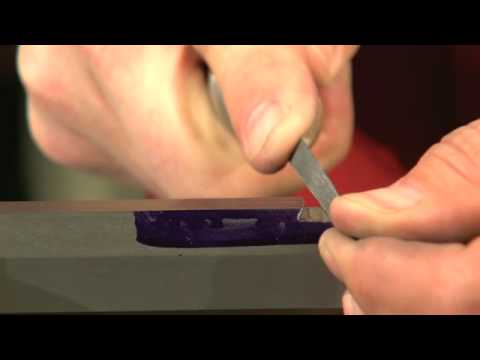
Larry Potterfield, founder and CEO of MidwayUSA, demonstrates the expert-level technique of hand-filing a sight dovetail for a Beech front sight on a replica Custer's Rolling Block rifle. This detailed guide covers layout, initial cutting to a precise depth, and the use of specialized tools like a safe-edge file for undercuts, culminating in fitting the sight.
This guide details the expert process for removing a barrel from an old Rolling Block rifle, presented by Larry Potterfield. It emphasizes thorough preparation, including soaking threads in penetrating oil and using heat, followed by proper tool setup with an action wrench and barrel vise, and concludes with the technique for breaking the barrel-receiver bond.
Gun Laws by State
Read firearms regulations for all 50 states + D.C.
Find Gun Dealers
Search licensed FFL dealers near you.