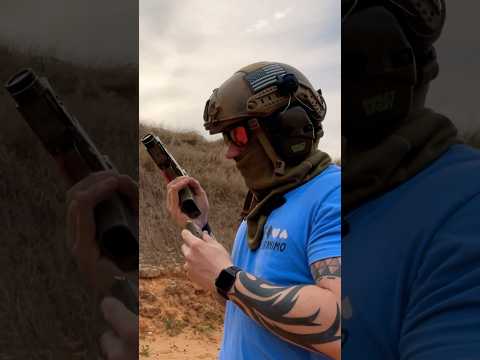
This video addresses a negligent discharge incident at Top Guns range in Tero, Indiana. Instructor Steve Ellis explains how a leather holster flap entered the trigger guard, causing an accidental discharge when the firearm was holstered. He emphasizes the importance of inspecting holsters and demonstrates a technique to mitigate potential injury during reholstering by angling the body and firearm away from the leg.
This guide details safe pistol reholstering techniques as demonstrated by GBRS Group instructors. It emphasizes clearing cover garments to prevent snagging on the trigger guard, which can lead to accidental discharges. The process involves visually inspecting the holster and the firearm's path before seating the pistol securely. Proper technique is crucial, especially for firearms without external safeties.
This video demonstrates a fundamental handgun training drill focused on the draw stroke and trigger press. The instructor emphasizes a deliberate sequence: 'slack out,' then 'press,' followed by reassessment and safe reholstering. The drill is designed to build good habits for new shooters and reinforce proper technique through repetition with a shot timer.
This guide details safe reholstering techniques for appendix carry, emphasizing visual control and body positioning to prevent self-injury. Expert Jeff from Tenicor, with over 25 years of daily carry experience, demonstrates the 'muzzle wedge' method, crucial for appendix inside-the-waistband (AIWB) holsters. The advice is geared towards intermediate carriers looking to refine their safety protocols.
This guide details safe firearm reholstering techniques for concealed and outside-the-waistband carry. Key steps include clearing garments, physically touching the holster, maintaining muzzle discipline, and visually confirming a clear path into the holster. The instructor emphasizes developing a consistent ritual to prevent accidental discharges and self-muzzling.
This guide, based on instruction from Phuc Long of Firepower United, details safe reholstering techniques, emphasizing the dangers of speed reholstering. It highlights common training scars where speed and style override safety, leading to potential accidental discharges. The video demonstrates the correct method of visually confirming the holster and carefully guiding the firearm back into place, a crucial skill for all firearm owners.
John Lovell, a former Army Ranger and professional firearms instructor, provides an expert guide to the safety of appendix carry. He debunks common myths regarding the femoral artery and muzzle direction, emphasizing the critical role of high-quality holsters with robust trigger guard support. The guide details safe drawing and reholstering techniques, stressing the importance of visual confirmation and maintaining proper finger discipline to prevent accidental discharges.
This guide, based on insights from an experienced competitive shooter and instructor, outlines the essential steps for aspiring IDPA and USPSA participants. It covers fundamental readiness tests, critical safety protocols like muzzle discipline and safe reholstering, understanding range commands, and basic movement and reloading techniques. The advice emphasizes a safety-conscious and encouraging approach to entering the sport.
This video features Chris Baker of Lucky Gunner Ammo explaining his return to Double Action/Single Action (DA/SA) pistols, like the Beretta 92FS, for their enhanced safety features. He highlights the importance of the long, heavy first trigger pull for preventing accidental discharges, especially during high-stress situations or appendix carry. Baker also demonstrates the critical 'thumb on hammer' technique for safe reholstering, a method endorsed by experts like Ernest Langdon and the late Todd L. Green.
This video provides expert instruction on safe reholstering techniques, emphasizing a slow, deliberate, and reluctant approach. It highlights common mistakes, such as rushing the process or not visually confirming the holster is clear, which can lead to negligent discharges. The instruction, delivered by experienced firearms professionals, stresses the importance of maintaining finger discipline, using the non-dominant hand to secure the holster, and visually inspecting the path into the holster to prevent accidents. The content is crucial for anyone carrying a concealed firearm.
You've reached the end! 10 videos loaded.
Gun Laws by State
Read firearms regulations for all 50 states + D.C.
Find Gun Dealers
Search licensed FFL dealers near you.