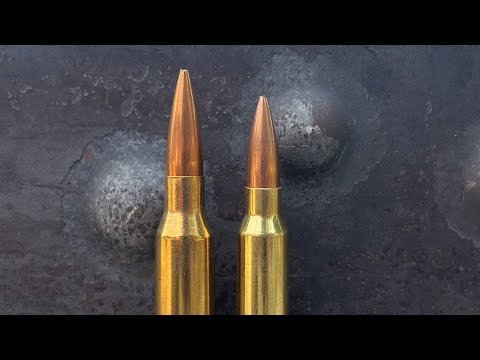
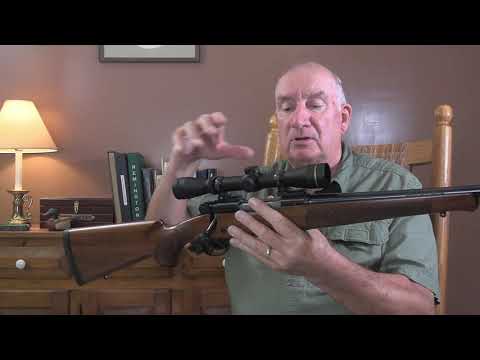
This video provides an expert-level comparison of four popular rifle calibers: .243 Winchester, 6.5 Creedmoor, 7mm-08, and .308 Winchester, utilizing empirical data from controlled ballistic tests. The host, demonstrating high authority in firearms and ballistics, employs professional chronographs and detailed analysis of sectional density and muzzle energy to evaluate performance across various scenarios, including penetration through wood, steel, and concrete, as well as hydrostatic shock.
This video explains how sectional density is a crucial factor in determining ammunition effectiveness. While other variables also play a role, sectional density is highlighted as a key consideration for projectile performance. The description also includes general hashtags related to firearms, ammunition, and specific calibers like 300 Blackout, along with social media links for the GUNBROS brand.
This video discusses the impact of bullet weight on ballistic performance, particularly velocity loss at distance. The speaker plans a future test comparing heavy (208gr) and light (150gr) bullets in .30-06 Springfield, loaded to similar muzzle velocities and then to maximum potential. The core argument is that comparing bullets of significantly different weights for caliber (e.g., light 9mm vs. heavy .40 S&W) leads to skewed results, as heavier bullets generally offer better penetration due to higher sectional density, while lighter bullets can achieve higher velocities and potentially more expansion.
This video features an "Ultimate Barrier Testing" competition between 300 Blackout and 5.56x45mm ammunition, conducted by Banana Ballistics. The host, demonstrating high expertise with structured comparative testing and ballistic data, evaluates each round's performance against various barriers including lumber, sand, concrete, and steel plates. Ultimately, 300 Blackout is declared the winner of the competition due to its superior performance across most barrier types, despite 5.56's advantage against steel.
This video from GUNBROS showcases the Winchester Model 70 rifle chambered in the potent .375 H&H Magnum. The expert instructor highlights the cartridge's historical significance and versatility for hunting large game in both North America and Africa. Key ballistic data, including bullet weight and muzzle energy, is presented, along with an explanation of how sectional density contributes to deep penetration on tough-skinned animals.
This video provides an expert-level comparison of the .338 Lapua Magnum and .300 Winchester Magnum cartridges, focusing on their penetration capabilities against mild steel. The analysis, conducted by Banana Ballistics Host, utilizes precise measurements and chronograph data to demonstrate that while the .338 Lapua Magnum generally offers superior energy and penetration, the .300 Winchester Magnum performs surprisingly close, especially considering its lower energy output. The content highlights the importance of kinetic energy and sectional density in terminal ballistics.
This guide outlines a ballistics test comparing the .270 Winchester and .308 Winchester against mild steel plates. It details the setup, ammunition, testing procedure, and data analysis, emphasizing the importance of kinetic energy over velocity or sectional density for steel penetration. The test utilizes specialized equipment like the 'Steel Sledge 4.0' and precision measurement tools.
Keith Ford from Brownells discusses various 6.5mm rifle cartridges, highlighting their historical significance and performance characteristics. He covers iconic rounds like the 6.5x55mm Swedish, 6.5x54mm Mannlicher-Schönauer, and the more modern 6.5 Creedmoor, detailing their applications from military use to hunting and precision shooting. The video emphasizes the inherent advantages of the 6.5mm bore diameter, such as high ballistic coefficients and sectional density, making them effective for long-range engagements and deep penetration.
This entry analyzes the ongoing relevance of the .308 Winchester cartridge against the rise of the 6.5 Creedmoor, drawing on expert insights from Iraqveteran8888. It details ballistic performance, historical context, and practical applications, concluding that while .308 remains viable, 6.5 Creedmoor offers superior long-range performance due to advanced projectile design and ballistic efficiency. The analysis highlights SOCOM testing data and reloading considerations, providing a comprehensive overview for firearms enthusiasts.
This guide focuses on selecting appropriate rifles and cartridges for elk hunting, emphasizing practical considerations over marketing hype. It delves into the history of elk hunting firearms, the importance of bullet construction and sectional density for ethical takedowns, and advises on practical cartridge choices like the .270, .30-06, and .300 Winchester Magnum. The speaker stresses ethical shooting practices, advocating for shots within 400 yards to ensure a high probability of a clean kill and minimize wounded game.
This segment from Gun Talk Radio discusses the introduction of the new 6.8 Western cartridge. Key technical details include its comparison to the .270 WSM, a faster 1:7.5 twist rate in the barrel, and its ability to stabilize longer, heavier bullets. The discussion highlights how these features improve ballistic coefficient and sectional density, leading to reduced wind drift and enhanced penetration for long-range shooting and hunting applications.
Gun Laws by State
Read firearms regulations for all 50 states + D.C.
Find Gun Dealers
Search licensed FFL dealers near you.