This video from GUNBROS explores the initial differences men and women may face when learning to shoot, particularly with an AR-style rifle. The speaker, demonstrating experienced authority, highlights that while men might initially overcome poor mechanics with strength, women's success hinges on mastering proper form and mechanics due to generally less natural strength. The core message emphasizes that proficiency ultimately transcends gender, with mechanics being key.
This guide, drawing on the expertise of an experienced instructor, details a method for diagnosing shooting problems using video analysis. It emphasizes that shooting improvements are an ongoing process and that focusing on one habit at a time is crucial due to limited conscious attention. By recording and meticulously reviewing footage, shooters can identify the root causes of issues like grip problems or improper recoil management, leading to more effective training and skill development.
Instruction from Jeff Gurwitch of Tenicor focuses on achieving instant stability in shooting. The core principle involves two steps: first, ensuring the firearm is securely supported by the barricade, and second, supporting the shooter's body to the ground. Following this specific order is crucial for immediate stability, utilizing bone structure or the barricade for body support.
The GBRS Group's Knowledge Transfer Entry (KTI) course is designed for individuals with no prior firearm experience. It covers essential classroom topics like firearm breakdown, cleaning, storage, and equipment setup, including sling attachment. The course progresses to range time, focusing on becoming comfortable with live fire, developing shooting mechanics, and building a solid foundation for safe and proficient firearm handling.
Joel Park, a firearms instructor, emphasizes the importance of a structured training plan for range sessions, highlighting that live fire should reinforce dry fire practice. He advises shooters to focus on specific training conditions and self-critique to identify and improve subtle shooting mechanics, rather than relying solely on standard drills. This approach is crucial for intermediate shooters aiming for significant improvement.
This video from Tenicor introduces the 'Grandmaster's Triangle' concept, a framework for understanding the trade-offs between Mobility, Durability, and Stability in shooting positions. The instructor, demonstrating high authority, explains that optimizing one aspect often means compromising another. The guide focuses on applying this concept to positional shooting, emphasizing the need to gain adequate stability or durability when sacrificing mobility, such as when moving to a kneeling position.
The GBRS Group's Knowledge Transfer Intro (KTI) is a two-day course designed for complete novices to become proficient shooters. It combines classroom instruction on firearm mechanics, cleaning, and storage with practical range time focused on developing foundational shooting skills and safe handling practices. The course aims to build a strong base for independent training and progression.
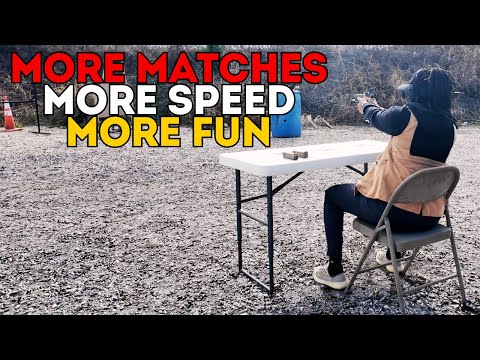
This video provides insights into competitive shooting performance at IDPA matches, featuring an experienced shooter's analysis of her Glock 19x setup, including a PMM compensator and Holosun red dot. The content covers practical application during both outdoor and indoor stages, highlighting malfunction clearing, grip techniques, and self-reflection on progress. It's valuable for intermediate competitive shooters looking to improve their skills and understand gear optimization.
John Lovell, demonstrating high authority and expertise, critiques the 'horse stance' for its severe limitations in mobility, recoil management, and directional pivots. He emphasizes the necessity of offsetting feet for a stable and adaptable shooting platform, crucial for effective tactical engagement. This guide provides actionable steps to transition away from the ineffective horse stance.
This video emphasizes the importance of having a clear purpose when training at the range to improve shooting skills. It advises seeking mentorship from experienced shooters, utilizing dry fire practice for cost-effective repetition, and verifying learned techniques through research. The core message is that consistent, purposeful practice is key to mechanical improvement.
This video compares the Mosin Nagant and the M1 Garand, highlighting their respective calibers, strengths, and shooting characteristics. The Mosin Nagant fires 7.62x54R, while the M1 Garand uses the larger .30-06 Springfield cartridge. The Mosin Nagant is noted for its bayonet lug and potentially greater range, while the M1 Garand is slightly heavier but offers a more satisfying shooting experience, including the iconic 'Garand ping'.
This video explains Ben Stoeger's training philosophy of shooting 'uncomfortably fast' to identify and correct technical flaws. The approach involves pushing speed beyond current capabilities, observing what breaks down, and then adjusting technique to improve performance under pressure. This method is presented as more effective for development than simply slowing down to achieve accuracy.
Gun Laws by State
Read firearms regulations for all 50 states + D.C.
Find Gun Dealers
Search licensed FFL dealers near you.