This video provides a historical overview of the smoothbore musket era in the U.S. Army, from its origins in the Revolutionary War through the Civil War. It details the evolution of muskets, including the adoption of French designs, the development of American manufacturing capabilities with interchangeable parts, and the transition from flintlock to percussion ignition. Expert insights from NRA Publications and museum curators highlight key models and their significance.
This video explains the origin of the leaning-back shooting stance, which is necessary for flintlock rifles due to the large spark and smoke produced near the shooter's face. It also highlights the craftsmanship of a specific Lancaster rifle made by fifth-generation gunsmith Wally Hart.
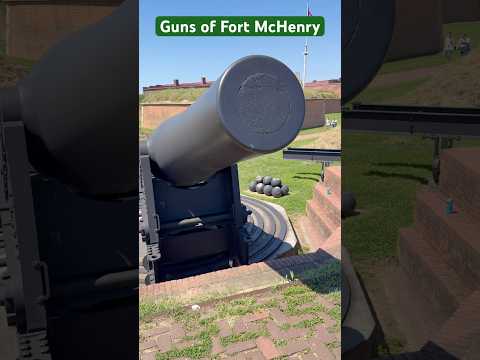
This video explores the historical firearms and fortifications at Fort McHenry, site of the War of 1812 battle that inspired "The Star-Spangled Banner." It highlights the presence of both Revolutionary War-style and Civil War cannons, including a 10-inch Rodman gun, and discusses their historical context and capabilities.
This video showcases a rare Evans Flintlock, a firearm with historical significance dating back to the 1700s. Approximately only 1500 of these were produced. The description highlights its issuance to the Pennsylvania Militia during the Revolutionary War and the War of 1812, and notes the presence of interesting initials carved into the firearm. It also promotes the creator's Patreon, podcast 'Flak & Fubar', and Instagram account.
This video celebrates the charm of old muzzleloaders, specifically referencing the year 1814 and the War of 1812. The title suggests a fondness for these historical firearms and the use of black powder. The content likely showcases or discusses muzzle-loading firearms from this era, appealing to enthusiasts of historical weaponry and black powder shooting.
This video explores the history of military awards for valor, from early badges of merit established by George Washington to the Medal of Honor. It highlights the National Firearms Museum's exhibit, "By Resolution Of Congress," showcasing rare swords, rifles, and medals awarded for extraordinary bravery throughout American history. The exhibit emphasizes the significance of these honors and the historical context of recognizing exceptional service.
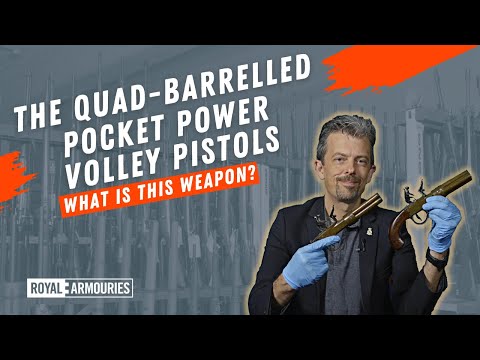
This video examines a pair of unique four-barrel flintlock pistols, identified as 'volley pistols,' featuring a box lock mechanism and an innovative safety system. The pistols are linked to Lieutenant Colonel Thomas B. Van Horn, an American officer who served in the War of 1812, with markings indicating the year 1812. The expert discusses the historical context, the maker Robert Wheeler, and the significance of these artifacts as fighting pistols for self-defense or close-quarters combat.
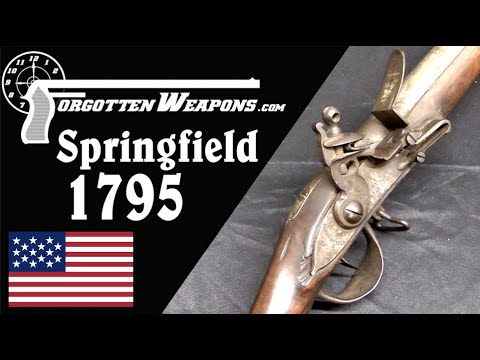
This guide provides an overview of the Springfield Model 1795 Musket, America's first standardized military long arm. It details its historical context, design based on the French Charleville pattern, key identification markings, technical specifications, and significant service history. The information is presented with high authority, drawing on detailed knowledge of historical manufacturing and military context.
This video details the Hall Model 1819 Flintlock Rifle, a significant firearm in American history. It highlights its role in the Battle of Plattsburgh, its revolutionary breech-loading and interchangeable parts design, and its unique status as a rifle officially awarded by Congress to civilians, specifically to Smith Bateman for his bravery. The presentation emphasizes the rifle's historical context and technical innovation.
This entry details the Chambers Flintlock Machine Gun, a significant early automatic weapon developed by Joseph Chambers in the 1790s. Expert analysis covers its unique multi-barrel design, superimposed charge system, and historical adoption by the US Navy during the War of 1812, highlighting its innovative but ultimately unreliable nature.
This video explores the historical significance of the Battle of New Orleans, the final major land engagement of the War of 1812, detailing the British attempt to seize the city and control of the Mississippi River, which resulted in a decisive American victory with heavy British casualties. It also delves into a later struggle concerning the community of Fazendeville, located on the battlefield. The description mentions the intro music "Battle of New Orleans" by Johnny Horton.
You've reached the end! 11 videos loaded.
Gun Laws by State
Read firearms regulations for all 50 states + D.C.
Find Gun Dealers
Search licensed FFL dealers near you.