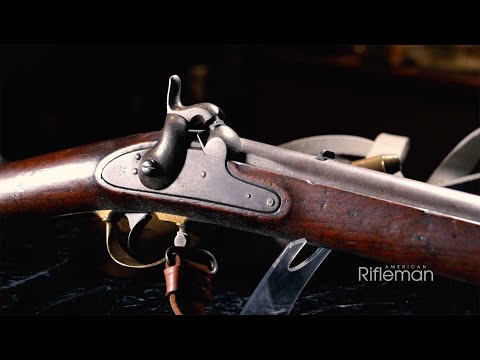
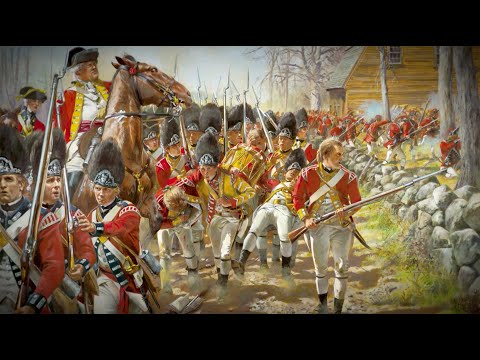
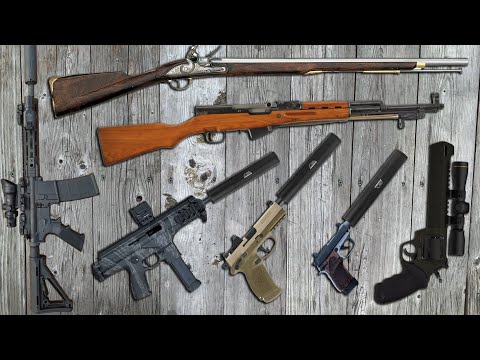
This video provides a historical overview of the smoothbore musket era in the U.S. Army, from its origins in the Revolutionary War through the Civil War. It details the evolution of muskets, including the adoption of French designs, the development of American manufacturing capabilities with interchangeable parts, and the transition from flintlock to percussion ignition. Expert insights from NRA Publications and museum curators highlight key models and their significance.
This video demonstrates a historical firearms training drill focusing on the Napoleonic-era standard of firing three rounds per minute with a flintlock musket. Administrative Results, an established firearms content creator, showcases the manual of arms, including loading and firing procedures, under simulated pressure. The drill emphasizes proficiency and speed in handling historical weaponry.
This video provides a historical overview of the American Revolutionary War, focusing on key figures like George Washington and Benjamin Franklin, and detailing the types of firearms used by American, French, and British forces. It highlights the evolution of weaponry from early flintlocks to the more powerful blunderbuss, emphasizing their historical context and capabilities.
This video details the process of restoring a rusted flintlock musket that was not functioning. The presenter walks through the disassembly, thorough cleaning using specialized solvents and brushes, lubrication, and reassembly of the firing mechanism. The guide culminates in successfully firing the musket after addressing rust and fouling, demonstrating proper loading and priming techniques for black powder firearms.
This video showcases a humorous, custom modification combining an AR-15 platform with a flintlock musket, resulting in a unique patriotic firearm. The build involves integrating modern AR-15 components, including the receiver and an optic, onto a traditional wooden musket stock and barrel. The result is presented as a "most American thing" for a 4th of July celebration, highlighting creative gunsmithing with a satirical tone.
This video details the historical significance and operational mechanics of six firearms that shaped American history. It provides a practical demonstration of loading and firing a flintlock musket, emphasizing the multi-step process involving paper cartridges, black powder, and a ramrod. The instructors highlight the tactical implications of slow reload times and the unique firing delay inherent in flintlock technology, offering a deep dive into the evolution of firearms and their impact on warfare and society.
This video explores historical firearms from the American Revolutionary War era, showcasing over 250-year-old weapons. Dragonman details the historical context of the war, the challenges faced by George Washington's Continental Army, and the crucial role of French support. The display features various flintlock muskets and a blunderbuss, highlighting their calibers and historical use.
This video provides a detailed look at the Model 1841 rifle, often called the Mississippi rifle. It highlights its transition from flintlock muskets to percussion priming, its role as a 'rifleman's rifle' for skirmishing, and its distinctive features like the brass patch box. The discussion covers its caliber evolution and its historical significance in the Mexican-American War.
This video explores the firearms used by American militia and British regulars during the Battles of Lexington and Concord, 250 years later. It highlights that militia primarily used "fowling pieces," which were long-barreled hunting guns, often with English forms but French-style butts and parts. The loading process for muskets, both British and American, is detailed, emphasizing the speed and technique required. The video also discusses the archaeological findings that support the prevalence of smaller bore fowling pieces among the militia and examines Captain John Parker's fowling piece, noting its bore size and historical modifications.
This video showcases a unique and visually striking juxtaposition of historical weaponry, specifically a Flintlock Musket and a Sabre, alongside modern tactical gear like a helmet with NVGs and a plate carrier. The content creator, Nikko Ortiz, expresses significant enthusiasm for this aesthetic pairing, labeling it a 'smash,' highlighting its appeal within the tactical and firearms community for its unconventional and impactful visual presentation.
This guide details the traditional loading and firing procedure for a Pedersoli Brown Bess flintlock musket, as demonstrated by Misha. It emphasizes proper black powder measurement, ball and patch seating, and priming the flash pan for safe and effective operation of this historical firearm. The demonstration highlights the meticulous steps required for muzzleloader use.
Dragonman showcases his extensive collection of original firearms from the American Revolutionary War and Civil War eras at the Colorado Springs Military Museum. The display features over 110 black powder, ball and cap rifles, with pieces ranging from 160 to 300 years old. He highlights specific weapons like the Spencer repeating rifle, used at Little Bighorn, and various flintlock muskets and blunderbusses, explaining their historical context and operational differences.
Gun Laws by State
Read firearms regulations for all 50 states + D.C.
Find Gun Dealers
Search licensed FFL dealers near you.