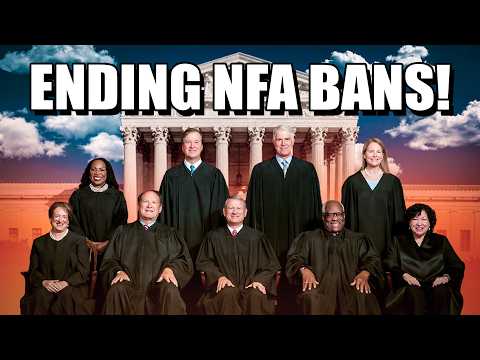
BIG 2A SUPREME COURT NEWS: The Secret Weapon to END Biden's Plan to Destroy 2A

Published on October 29, 2023
Duration: 17:46

This video analyzes the US Supreme Court case United States v. Rahimi, focusing on a legal strategy proposed by the Firearms Policy Coalition. The strategy argues that 18 USC 922 G8, which prohibits individuals subject to domestic violence restraining orders from possessing firearms, is unconstitutional because Congress lacked the authority under Article One of the Constitution to enact it. The argument bypasses Second Amendment considerations by challenging the law's foundation on enumerated powers, specifically the Commerce Clause and the Militia Clause, citing precedents like US v. Lopez and US v. Morrison.

Quick Summary

The Firearms Policy Coalition proposes a legal strategy in US v. Rahimi to invalidate 18 USC 922 G8 by arguing Congress lacked constitutional authority under Article One to enact the law. This approach bypasses Second Amendment debates by challenging the statute's foundation on enumerated powers, citing precedents like US v. Lopez and US v. Morrison.

Chapters

  1. 00:00Introduction: Merrick Garland's Plan and the Rahimi Case
  2. 00:33Host Introduction: Mark Smith, Constitutional Attorney
  3. 00:50The Danger of US v. Rahimi for Second Amendment Rights
  4. 01:34Rahimi's Case and Potential Outcomes
  5. 03:06The Firearms Policy Coalition's 'Secret Weapon'
  6. 03:35The Core Argument: Lack of Congressional Authority
  7. 04:05Understanding 18 USC 922 G8
  8. 05:01Article One and Enumerated Powers
  9. 06:11Abuse of the Commerce Clause
  10. 07:16FPC's Legal Brief and Article One Analysis
  11. 08:49Power vs. Authority in Government
  12. 09:12The Militia Clause Argument
  13. 10:29The Interstate Commerce Clause Argument
  14. 11:59US v. Lopez and its Relevance
  15. 14:01US v. Morrison and its Relevance
  16. 15:23Federalism and Congressional Authority
  17. 16:28Potential Supreme Court Ruling on Article One Grounds
  18. 17:13Conclusion and Call to Action

Frequently Asked Questions

What is the main legal strategy proposed by the Firearms Policy Coalition in the US v. Rahimi case?

The Firearms Policy Coalition's strategy is to argue that 18 USC 922 G8, the law prohibiting individuals under domestic violence restraining orders from possessing firearms, is unconstitutional because Congress lacked the authority under Article One of the Constitution to enact it. This approach aims to invalidate the law without directly challenging Second Amendment rights.

How does the Firearms Policy Coalition's argument in US v. Rahimi differ from typical Second Amendment challenges?

Instead of focusing on whether 18 USC 922 G8 violates the Second Amendment, the FPC's argument challenges the law's very existence by asserting that Congress exceeded its enumerated powers under Article One when it passed the statute. This means the law could be struck down on procedural grounds before even reaching Second Amendment interpretations.

Which constitutional clauses are central to the FPC's argument against 18 USC 922 G8?

The FPC's argument primarily focuses on Article One of the Constitution, specifically questioning Congress's authority under the Militia Clause and the Commerce Clause. They contend that neither clause provides a legitimate basis for federal regulation of domestic violence restraining orders and firearm possession.

What Supreme Court precedents are cited to support the FPC's argument against 18 USC 922 G8?

The FPC's brief cites United States v. Lopez (1995), which struck down the Gun-Free School Zones Act, and United States v. Morrison (2000), which invalidated the Violence Against Women Act. Both cases found that Congress had exceeded its Commerce Clause powers by legislating in areas traditionally reserved for states.

Related News

All News →

More 2nd Amendment & Law Videos You Might Like

More from The Four Boxes Diner

View all →