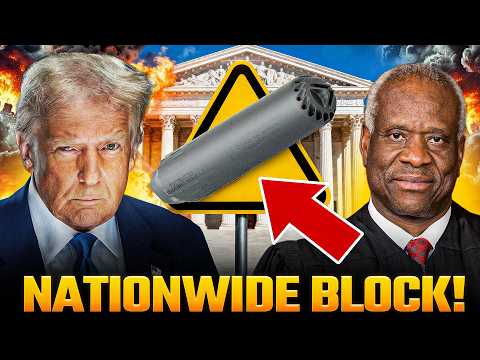
BREAKING 2A NEWS: SCOTUS CRUSHES THE ATF...

Published on June 28, 2024
Duration: 12:36

This video features Mark Smith, a constitutional attorney and author, discussing the Supreme Court's decision to overturn the Chevron doctrine. This ruling significantly curtails the power of administrative agencies, like the ATF, to interpret federal statutes and effectively create law, returning that authority to Congress. The decision is framed as a major victory for individual liberty against an overreaching regulatory state.

Quick Summary

The Supreme Court has overturned the Chevron doctrine, ending the practice where federal agencies like the ATF could interpret ambiguous statutes to expand their own power. This ruling, championed by constitutional attorney Mark Smith, returns legislative authority solely to Congress, curbing the influence of unelected bureaucrats and the regulatory state.

Chapters

  1. 00:00Supreme Court crushes the ATF
  2. 00:46Mark Smith and Israel Disarmed
  3. 01:13Chevron doctrine and the deep state
  4. 02:21How the Chevron Doctrine Worked
  5. 03:52Federal regulatory power reduction
  6. 04:20ATF example and interpretation of laws
  7. 05:16Roberts ends unelected power grab
  8. 06:26Chevron creates fourth branch of government
  9. 07:57ATF power and statutory ambiguity
  10. 09:19Agency authority vs. power
  11. 11:14Power and authority distinction

Frequently Asked Questions

What is the significance of the Supreme Court overturning the Chevron doctrine?

The Supreme Court's decision to overturn the Chevron doctrine eliminates the precedent that allowed federal agencies, like the ATF, to interpret ambiguous federal statutes and effectively create law. This returns the power to legislate exclusively to Congress.

How did the Chevron doctrine affect the ATF's power?

Under the Chevron doctrine, the ATF could claim expertise on firearms law and interpret ambiguities in statutes like the Gun Control Act of 1968 to expand its own power and regulatory reach, often without explicit congressional authorization.

What is the difference between 'power' and 'authority' for administrative agencies?

An agency may have the 'power' to act, but 'legal authority' comes only from powers explicitly delegated by Congress through enacted laws. The Supreme Court ruling ensures agencies can only exercise legally delegated authority, not assumed power.

Who is Mark Smith and what is his expertise on this topic?

Mark Smith is the host of The Four Boxes Diner, a constitutional attorney, a member of the United States Supreme Court bar, and the author of 'Israel Disarmed.' His background provides expert insight into legal challenges against administrative agencies.

Related News

All News →

More 2nd Amendment & Law Videos You Might Like

More from The Four Boxes Diner

View all →