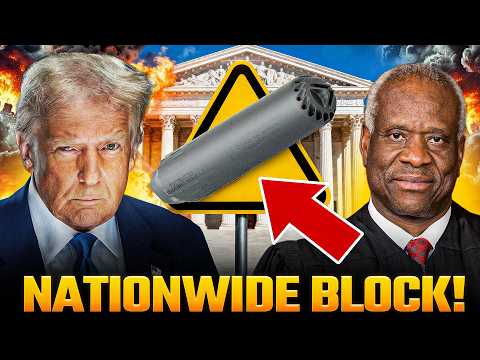
BREAKING 2A NEWS: SCOTUS CRUSHES THE ATF...

Published on June 28, 2024
Duration: 12:36

This video discusses the Supreme Court's decision to overturn the Chevron doctrine, significantly impacting the power of administrative agencies like the ATF. Expert constitutional attorney Mark Smith explains how this ruling curtails the ability of unelected bureaucrats to interpret and expand federal statutes, returning lawmaking authority to Congress. The decision aims to reduce the 'deep state' and restore a clearer distinction between agency power and legal authority.

Quick Summary

The Supreme Court has overturned the Chevron doctrine, ending the practice of federal courts deferring to administrative agencies' interpretations of ambiguous statutes. This decision significantly curtails the power of agencies like the ATF, ensuring they can only exercise powers explicitly delegated by Congress, not those assumed through interpretation.

Chapters

  1. 00:00Supreme Court Tosses Chevron Doctrine
  2. 00:46Introducing Mark Smith, Host
  3. 01:13Chevron Doctrine & The Deep State
  4. 02:21How Chevron Doctrine Worked
  5. 03:52Federal Regulatory Power Reduction
  6. 04:20ATF Example & Law Interpretation
  7. 05:16Roberts Ends Unelected Power Grab
  8. 06:26Chevron Created Fourth Branch
  9. 07:57ATF Power & Statutory Ambiguity
  10. 09:19Agency Authority vs. Power
  11. 11:14Power and Authority Distinction

Frequently Asked Questions

What is the Chevron doctrine and why was it overturned?

The Chevron doctrine required federal courts to defer to administrative agencies' interpretations of ambiguous federal statutes. The Supreme Court overturned it, arguing it allowed unelected bureaucrats to create law and expand their power beyond congressional intent.

How does the Supreme Court's decision affect the ATF?

The decision significantly limits the ATF's ability to interpret ambiguous provisions in firearms laws like the Gun Control Act of 1968 to expand its own regulatory power. Agencies must now rely solely on powers explicitly granted by Congress.

What is the difference between agency power and authority after the Chevron ruling?

The ruling clarifies that agencies possess only the legal authority delegated by elected officials through enacted laws. Mere 'power' or the ability to act does not equate to legal authority, preventing agencies from making law.

What is the 'deep state' in the context of the Chevron doctrine?

The 'deep state' refers to the network of unelected bureaucrats within federal administrative agencies who, under the Chevron doctrine, could wield significant power by interpreting laws, effectively acting as a 'fourth branch of government'.

Related News

All News →

More 2nd Amendment & Law Videos You Might Like

More from The Four Boxes Diner

View all →