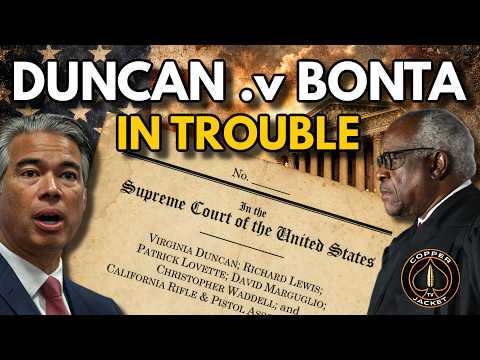
BREAKING NEWS: ATF SUPREME COURT SHOWDOWN JUST STARTED!

Published on December 27, 2024
Duration: 12:05

This video analyzes the legal case Reese v. ATF, focusing on the Second Amendment rights of individuals aged 18-21 to purchase firearms from Federal Firearms Licensees (FFLs). It highlights the historical context, including the Militia Act of 1792, and the legal burden on the government to prove historical restrictions on this age group's firearm acquisition. The outcome could significantly redefine who is considered 'the people' under the Second Amendment.

Quick Summary

The Reese v. ATF case challenges federal laws prohibiting Federal Firearms Licensees from selling firearms to individuals aged 18-21. The legal battle centers on the Second Amendment's scope, historical context like the Militia Act of 1792, and the government's burden to prove historical firearm acquisition restrictions for this age group.

Chapters

  1. 00:00Introduction to Gun Violence Statistics
  2. 00:42Legal Showdown: Reese v. ATF Case Overview
  3. 01:24Key Players: Young Adults vs. ATF
  4. 01:44The Core Question: Legal Gun Purchase Age
  5. 02:00The Second Amendment's Role
  6. 02:22Historical Context: Militia Act of 1792
  7. 03:01The Government's Legal Burden
  8. 03:17Potential Impact on 'The People' Definition
  9. 03:34Path to the Supreme Court
  10. 04:25Why This Case Matters
  11. 04:46Historical Context Revisited
  12. 05:40Interpreting 'Keep and Bear'
  13. 06:11If Young Adults Win: A New Level Unlocked
  14. 07:07Legal Background: Federal Regulations
  15. 07:35Challenging Regulations Under the 2nd Amendment
  16. 08:09Historical References and Burden of Proof
  17. 09:03The Battlefield: Legal and Historical Context
  18. 09:33Potential Impact on the Second Amendment
  19. 10:03New Rules for Firearm Owners
  20. 10:40Ancillary Rights in Balance
  21. 11:13Reese v. ATF: Opening Act for Broader Rights
  22. 11:50Understanding Rights in the 21st Century

Frequently Asked Questions

What is the central legal issue in the Reese v. ATF case?

The central legal issue in Reese v. ATF is whether individuals aged 18 to 21 have a Second Amendment right to purchase firearms from Federal Firearms Licensees (FFLs), challenging existing federal age restrictions.

What historical law is cited as relevant to the Reese v. ATF case?

The Militia Act of 1792 is a key historical reference, as it mandated that individuals aged 18 to 20 acquire their own firearms for militia duty, suggesting historical acceptance of firearm ownership for this age group.

What is the government's burden of proof in cases challenging firearm restrictions?

In such legal challenges, the government bears the burden of proving that historically, the age group in question was not allowed to acquire firearms, a difficult task when historical evidence suggests otherwise.

What is the potential impact of the Reese v. ATF ruling on the Second Amendment?

A favorable ruling for the plaintiffs could redefine who is considered 'the people' under the Second Amendment, potentially granting broader firearm acquisition rights to individuals aged 18-21.

Related News

All News →

More 2nd Amendment & Law Videos You Might Like

More from Best Iron

View all →