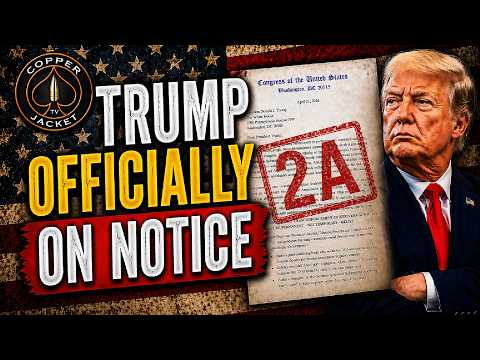
BREAKING NEWS: TRUMP DOJ SUPPORTS HANDGUN PURCHASE BAN AGAINST NON-RESIDENTS...

Published on August 14, 2025
Duration: 19:08

This video discusses a legal challenge against the federal law prohibiting non-residents from taking possession of handguns purchased from an FFL in a state where they are not a resident. The Department of Justice argues this law is constitutional, while plaintiffs contend it burdens the Second Amendment right to keep and bear arms. The discussion also touches on the DOJ's arguments regarding infringement and the historical justification for such regulations, as well as the concept of associational standing.

Quick Summary

The DOJ supports a federal law, originating from the 1968 Gun Control Act, that prevents non-residents from taking possession of handguns purchased from an FFL in a state where they don't reside. The DOJ argues this is a constitutional regulation of commercial transactions, not an infringement on Second Amendment rights, while plaintiffs contend it burdens the right to bear arms.

Chapters

  1. 00:00Breaking News: DOJ Supports Non-Resident Handgun Ban
  2. 00:49Introduction: Mark Smith, Host of The Four Boxes Diner
  3. 01:18Case Overview: Elite Precision Customs LLC v. ATF
  4. 01:35The Federal Law: Non-Resident Handgun Acquisition Rule
  5. 02:31Plaintiffs' Argument: Violation of Second Amendment
  6. 03:26DOJ's Response: Law is Constitutional
  7. 04:30DOJ Argument: Not a Restriction, Second Amendment Not Implicated
  8. 05:26Definition of 'Infringe' and Its Implications
  9. 06:16Bruen Methodology and Textual Analysis
  10. 07:17DOJ's Core Argument: No Infringement at Textual Level
  11. 07:44DOJ's Commercial Transaction Regulation Argument
  12. 08:05Critique of Historical Analogies (Selling Arms to Indians)
  13. 09:30Distinction: Selling to Peaceable Citizens vs. Enemies
  14. 10:14Heller Footnote and Dicta
  15. 10:52Consumer vs. FFL: Impact on Second Amendment Rights
  16. 11:00Consumer Protection vs. Gun Control Laws
  17. 12:29Purpose of Modern Laws: Restricting Access, Gun Control
  18. 13:33Why Historical Laws and Modern Laws Differ
  19. 14:25Prediction: Second Amendment Movement Likely to Win
  20. 14:30Importance of Understanding Other Areas of Law
  21. 14:50DOJ Argument on Injunctive Relief and Named Plaintiffs
  22. 15:32The Concept of Associational Standing
  23. 16:10Supreme Court Precedent on Associational Standing
  24. 16:43Clarence Thomas and Article 3 Concerns
  25. 17:19DOJ's Motivation: Thwarting Lawfare Lawsuits
  26. 18:36Ripple Effect on Second Amendment Rights
  27. 18:44Follow and Subscribe Information

Frequently Asked Questions

What is the federal law that prohibits non-residents from purchasing handguns?

The federal law, stemming from the Gun Control Act of 1968, states that you cannot take possession of a handgun from a federally licensed firearms dealer (FFL) in a state where you are not a resident. The firearm must be shipped to your home state.

What is the main argument of the DOJ in the Elite Precision Customs LLC v. ATF case?

The DOJ argues that the federal law restricting non-resident handgun possession is constitutional. They contend it's a regulation on commercial transactions and does not infringe upon the Second Amendment right to keep and bear arms.

How do plaintiffs argue the non-resident handgun ban violates the Second Amendment?

Plaintiffs argue that the law 'unquestionably burdens' the fundamental right to keep and bear arms by making it impossible for peaceable, non-prohibited citizens to purchase a handgun from an FFL unless it's in their home state.

What is associational standing and why is it relevant to this case?

Associational standing allows an organization to sue on behalf of its members. The DOJ is arguing against it, suggesting only named plaintiffs should benefit from a ruling, which could impact members of gun rights groups if they win the case.

Related News

All News →

More 2nd Amendment & Law Videos You Might Like

More from The Four Boxes Diner

View all →