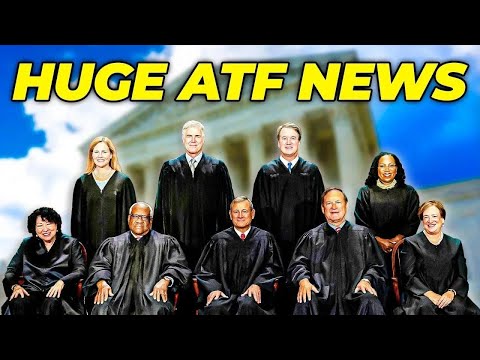
Gun Rights Activist NAILS How Bad The Cargill Decision DESTROYS The ATF & Status Quo... PERFECT

Published on June 17, 2024
Duration: 8:23

This video discusses the Supreme Court's decision in Garland v. Cargill, emphasizing that the ruling focused on the ATF exceeding its statutory authority rather than Second Amendment rights. It highlights how the decision reinforces the principle that executive agencies cannot unilaterally redefine laws and that Congress must legislate directly, holding elected officials accountable for policy decisions. The analysis suggests this ruling has broader implications for ATF regulations beyond bump stocks.

Quick Summary

The Supreme Court's decision in Garland v. Cargill ruled that the ATF exceeded its statutory authority in reclassifying bump stocks as machine guns. This victory emphasizes the rule of law and separation of powers, asserting that executive agencies cannot unilaterally redefine laws, and Congress must legislate directly.

Chapters

  1. 00:00Introduction & Amy Swearer's Analysis
  2. 00:55Sponsor: TacPack
  3. 01:49The Cargill Decision Explained
  4. 02:51ATF's Habit of Overstepping
  5. 03:56Supreme Court Ruling on Bump Stocks
  6. 04:34Future of Bump Stock Legislation
  7. 05:58Victory for Rule of Law
  8. 06:37Reversion to Congressional Law
  9. 06:51No End-Run Around Congress
  10. 07:37Accountability for Representatives
  11. 08:14Conclusion & Viewer Input

Frequently Asked Questions

What was the main point of the Supreme Court's decision in Garland v. Cargill?

The Supreme Court ruled that the ATF exceeded its statutory authority by reclassifying bump stocks as machine guns. The decision primarily focused on the ATF's overreach and the importance of the rule of law and separation of powers, rather than Second Amendment rights.

How does the Cargill decision impact the ATF's regulatory power?

The Cargill decision significantly limits the ATF's ability to unilaterally redefine laws through administrative interpretation. It reinforces that Congress must pass legislation for such changes, holding elected officials accountable for policy decisions and preventing bureaucratic overreach.

What are the broader implications of the Cargill ruling for gun control?

The ruling suggests that future attempts to ban items like bump stocks will require congressional action. It also implies potential impacts on other ATF regulations, such as those concerning pistol braces and 'ghost guns,' by emphasizing the need for legislative authority.

Why is the Cargill decision considered a victory for the rule of law?

It's a victory because the Supreme Court affirmed that laws mean what their text says, not what unelected bureaucrats believe they ought to say. This upholds the separation of powers and ensures that legislative changes are made through the proper democratic process.

Related News

All News →

More 2nd Amendment & Law Videos You Might Like

More from Langley Outdoors Academy

View all →