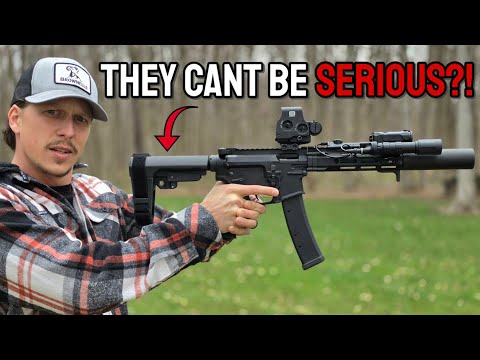
How the ATF Will Set Their Amnesty Registration Trap

Published on September 16, 2022
Duration: 8:24

This video explains how the ATF might use their pistol brace amnesty registration period as a trap. The speaker, William Kirk, details how the ATF's proposed amendments to Form 1, requiring photos and specific measurements, could be used in conjunction with their Form 49.99 scoring criteria to reclassify registered pistol brace firearms as Short-Barreled Rifles (SBRs), thus disqualifying them from amnesty registration and potentially leading to legal issues for owners.

Quick Summary

The ATF's pistol brace amnesty registration may be a trap where amended Form 1 requirements, including photos and specific measurements, are used with Form 49.99 scoring criteria. This could lead to firearms being classified as Short-Barreled Rifles (SBRs), disqualifying them from amnesty and potentially creating legal issues for owners.

Chapters

  1. 00:00Introduction: Pistol Brace Amnesty Trap
  2. 01:01Historical Context of Pistol Brace Rule
  3. 01:37ATF Budget Request and Form 1 Amendment
  4. 02:17ATF Budget Request Language on Photos
  5. 02:44The Trap: Form 1 Amendment and Scoring
  6. 03:20How the Trap is Set: Photo Requirements
  7. 03:55Form 49.99 Scoring Criteria Breakdown
  8. 03:57Accessory Design Scoring
  9. 04:12Rear Surface Area Scoring
  10. 04:27Adjustability Scoring
  11. 05:05Stabilizing Support Scoring
  12. 05:15Length of Pull Scoring
  13. 05:58Attachment Method Scoring
  14. 06:19Brace Modifications & Peripheral Accessories
  15. 06:44Conclusion: How ATF Sets the Trap
  16. 07:09Prediction: Most Won't Qualify for Amnesty
  17. 07:32Future Developments and Contact Information

Frequently Asked Questions

How is the ATF's pistol brace amnesty registration potentially a trap?

The ATF may use amended Form 1 requirements, including photos, to score pistol brace firearms against their Form 49.99 criteria. If a firearm scores as a Short-Barreled Rifle (SBR) rather than an AR pistol, it might be disqualified from amnesty registration, leading to potential legal consequences for owners.

What specific criteria does the ATF use to classify firearms under Form 49.99?

The ATF's Form 49.99 scoring criteria includes factors like Accessory Design (type of brace/stock), Rear Surface Area, Adjustability, Stabilizing Support, Length of Pull, Attachment Method, Brace Modifications, and peripheral accessories. Photos and specific measurements are key to this evaluation.

What information will the ATF require for pistol brace amnesty registration?

The ATF is amending Form 1 to require photos of the firearm to prove it utilizes a pistol brace. They will also likely require specific measurements and details about the brace and its configuration to score the firearm against their classification criteria.

What is the significance of 'Length of Pull' in pistol brace classification?

Length of Pull is the distance from the trigger to the rear of the brace when fully extended. A critical measurement, it significantly influences whether a firearm is classified as an AR pistol or a Short-Barreled Rifle (SBR) under ATF guidelines.

Related News

All News →

More 2nd Amendment & Law Videos You Might Like

More from Washington Gun Law

View all →