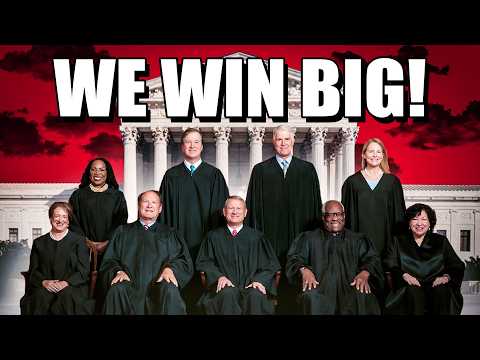
HUGE BREAKING NEWS: TRUMP WINS BIG IN FRONT OF THE SUPREME COURT!

Published on April 5, 2025
Duration: 19:50

This video features Mark W. Smith, a constitutional attorney and member of the US Supreme Court Bar, discussing a significant legal victory for Donald Trump concerning the use of taxpayer grants. Smith explains how the Supreme Court's ruling in Department of Education v. California, et al. prevents the misuse of federal funds for left-wing agendas and clarifies legal procedures for financial disputes, emphasizing the importance of these rulings for Second Amendment rights.

Quick Summary

The Supreme Court ruled that disputes over federal grant money should be heard in the U.S. Court of Federal Claims, not lower district courts, preventing immediate disbursement of funds. This decision, influenced by Justice Barrett, clarifies that monetary compensation alone does not constitute 'irreparable harm,' limiting the use of preliminary injunctions and impacting the 'Deep State's' ability to fund certain agendas.

Chapters

  1. 00:00Trump's Supreme Court Victory
  2. 00:50Speaker Introduction
  3. 01:03Deep State Agenda and Second Amendment
  4. 02:00Debunking Fake News on Trump's Legal Cases
  5. 03:00Supreme Court's Procedural Rulings
  6. 04:05Department of Education v. California Case Origin
  7. 05:20Legal Maneuvering and Trump's Appeal
  8. 07:13Supreme Court Justices and Precedent
  9. 08:00Money Fights Belong in Federal Claims Court
  10. 09:49Taxpayer Money Used Against Deep State
  11. 10:14Tucker Act and Irreparable Harm
  12. 12:50Justice Barrett and Roberts' Stance
  13. 14:20Bond Requirements for Injunctions
  14. 16:36Key Takeaways and Future Implications

Frequently Asked Questions

What was the significance of the Supreme Court's ruling on April 4, 2025, regarding Donald Trump's lawsuits?

The Supreme Court ruled in favor of Donald Trump, clarifying that disputes over federal grant money should be handled in the U.S. Court of Federal Claims, not lower district courts. This decision prevents the immediate use of taxpayer funds for certain programs and impacts how legal challenges against the administration are pursued.

How did the Supreme Court address the issue of preliminary injunctions in the recent ruling?

The Court recognized that lower courts were mischaracterizing preliminary injunctions as TROs to prevent appeals. The ruling emphasized that monetary compensation does not constitute 'irreparable harm,' thus limiting the grounds for granting such injunctions in cases primarily about money.

What is the role of the U.S. Court of Federal Claims in these types of disputes?

The U.S. Court of Federal Claims is designated for cases involving monetary claims against the federal government. By directing grant disputes there, the Supreme Court ensures these cases involve long-term litigation focused on financial damages rather than immediate injunctive relief.

How does this Supreme Court decision relate to Second Amendment rights?

The speaker argues that by preventing the 'Deep State' from using taxpayer money to fund potentially anti-constitutional agendas in schools and institutions, the ruling indirectly protects Second Amendment rights. It limits the flow of funds that could be used to promote ideologies contrary to constitutional liberties.

Related News

All News →

More 2nd Amendment & Law Videos You Might Like

More from The Four Boxes Diner

View all →