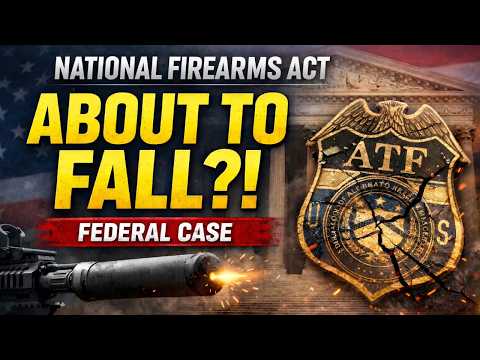
IT BEGINS: HOUSE JUST ENDED 2nd Amendment Fight With NEW SHOCKING Law

Published on July 2, 2024
Duration: 12:02

The Fifth Circuit Court of Appeals vacated the ATF's final rule reclassifying pistols with stabilizing braces as short-barreled rifles. The ruling cited the ATF's failure to adhere to the Administrative Procedure Act's notice and comment requirements, deeming the final rule an unlawful overreach. This decision impacts millions of braced firearm owners and highlights the importance of procedural fairness in regulatory actions.

Quick Summary

The Fifth Circuit Court of Appeals, in Mock v. Garland, vacated the ATF's rule reclassifying pistols with stabilizing braces as short-barreled rifles. The court found the ATF violated the Administrative Procedure Act by failing to provide adequate notice and comment, deeming the rule an unlawful overreach and not a logical outgrowth of the proposed regulation.

Chapters

  1. 00:00Introduction to Gun Rights and New Law
  2. 00:22Pivotal Federal Firearms Legislation: NFA & GCA
  3. 00:54The Controversy Over Stabilizing Braces
  4. 01:17ATF's Proposed Rule and Point System
  5. 01:36ATF's Final Rule and Legal Challenges
  6. 01:57Arguments Against the Final Rule: APA Violations
  7. 02:22District Court Denies Injunctive Relief
  8. 02:28Appeals to the Fifth Circuit
  9. 02:39Fifth Circuit Reverses District Court, Grants Injunction
  10. 02:53Court's Decision: Final Rule as Legislative Rule
  11. 03:06ATF's Final Rule Lacked Logical Connection to Proposed Rule
  12. 03:29Procedural Deficiencies Lead to Rule Being Set Aside
  13. 03:49Importance of Procedural Fairness in Rulemaking
  14. 04:12ATF's Pistol Brace Rule Overturned: Mock v. Garland
  15. 04:35Judge O'Connor's Ruling: APA Violations and Arbitrary Action
  16. 04:43Background: Boulder Shooting and ATF's Stance Change
  17. 05:14William Mock Files Lawsuit Against ATF
  18. 05:22Appeals Court Rules in Favor of Plaintiffs
  19. 05:34Rule Declared Unlawful and Mandated to be Set Aside
  20. 05:38Judge O'Connor's History and Federalist Society Affiliation
  21. 06:02Plaintiffs' Claims: APA Violations, Arbitrary Action, Extended Authority
  22. 06:39Final Rule Failed APA Procedural Requirements
  23. 06:56Significant and Prejudicial Error Found
  24. 07:00Community Reaction: Critics and Supporters
  25. 07:12Critics Argue Overreach of Executive Power
  26. 07:24Supporters Argue for Stricter Regulations
  27. 07:47Future Legal Battles Expected
  28. 08:04ATF May Revise Rulemaking Process
  29. 08:14Ongoing Legal Tug of War Over Firearms Regulation
  30. 08:27ATF's Overreach Struck Down
  31. 08:31Court Focused on Procedural Overreach
  32. 08:48Scathing Critique of ATF's Arbitrary and Capricious Action
  33. 09:01Two Main Reasons for Invalidation
  34. 09:22Lack of Transparency and Due Process
  35. 09:36Neglect of APA Requirements
  36. 09:49Procedural Failings Central to Decision
  37. 09:53Firearms Policy Coalition Celebrates Victory
  38. 10:12FPC President Brandon Combs' Statement
  39. 10:34Vindication for Firearms Rights Advocates
  40. 10:47Challenging Path for Potential ATF Appeals
  41. 11:03Relief for Owners of Braced Firearms
  42. 11:18Vacated Rule and Reaffirmed Procedural Importance
  43. 11:28Legal Skirmish: Regulatory Agencies vs. Individual Rights
  44. 11:35Pivotal Moment in Curbing Overreach
  45. 11:49Role of Advocacy Groups like FPC
  46. 11:58Conclusion and Next Steps

Frequently Asked Questions

What was the ATF's pistol brace rule and why was it controversial?

The ATF's rule reclassified pistols with stabilizing braces as short-barreled rifles (SBRs), subjecting them to stricter regulations under the National Firearms Act. This was controversial because it reversed the ATF's prior stance and potentially criminalized millions of firearm owners.

Which court case overturned the ATF's pistol brace rule?

The ATF's pistol brace rule was overturned in the case of Mock v. Garland by the Fifth Circuit Court of Appeals. The court ruled that the ATF violated the Administrative Procedure Act's requirements for notice and comment.

What were the main legal arguments against the ATF's pistol brace rule?

Plaintiffs argued the ATF violated the Administrative Procedure Act by not providing adequate notice and comment, that the final rule was not a logical outgrowth of the proposed rule, and that the agency acted arbitrarily and capriciously.

What is the significance of the Mock v. Garland ruling for firearm owners?

The ruling provides significant relief to owners of approximately 10 million braced firearms, who were at risk of becoming felons. It reaffirms the importance of procedural fairness in regulatory actions affecting Second Amendment rights.

Related News

All News →

More 2nd Amendment & Law Videos You Might Like

More from Best Iron

View all →