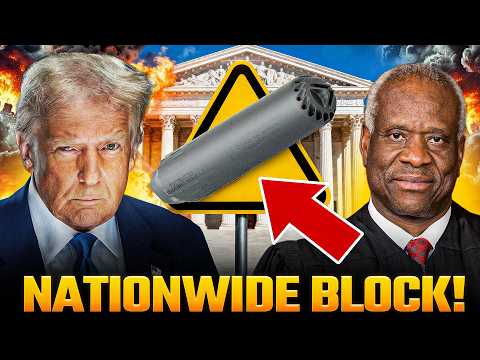
LIVE: Supreme Court Hears Bump Stock Case! (Cargill v. Garland)

Published on February 28, 2024
Duration: 108:29

This video covers the Supreme Court hearing of Cargill v. Garland, focusing on the ATF's reclassification of bump stocks as machine guns. The discussion highlights the legal arguments concerning the definition of 'machine gun' under the National Firearms Act, the concept of 'single function of the trigger,' and the broader implications of administrative agency overreach. The case is framed not just as a Second Amendment issue, but as a critical separation of powers case.

Quick Summary

The Cargill v. Garland case before the Supreme Court examines whether bump stocks are machine guns under the National Firearms Act. The ATF reclassified them as machine guns, arguing they allow automatic fire with a single trigger function. Opponents contend bump stocks require manual shooter input and don't meet the NFA's definition, raising questions about administrative overreach and statutory interpretation.

Chapters

  1. 00:23Introduction and Welcome
  2. 01:11Cargill v. Garland Bump Stock Case Begins
  3. 01:19ATF Overreach vs. Second Amendment Issue
  4. 02:06Focus on Amy Coney Barrett's Role
  5. 02:36Recall: West Virginia v. EPA Case
  6. 03:00Administrative Agencies Making Law
  7. 03:14Trump Administration's Stance on Bump Stocks
  8. 03:30Chevron Deference and its Impact
  9. 04:08Supreme Court Decision Timeline
  10. 04:22ATF's Ability to Redefine Machine Guns
  11. 04:36Bump Stock as a Sliding Piece of Plastic
  12. 04:38Separation of Powers Case
  13. 05:34Question Before the Court
  14. 05:43Congress's Prohibition of Machine Guns
  15. 05:51Definition of Machine Gun (NFA)
  16. 06:16Bump Stock Functionality Explained
  17. 06:27Las Vegas Shooting and ATF Rule
  18. 06:43Fifth Circuit's Ruling on ATF Rule
  19. 07:14Current Status of the Case
  20. 07:19Bump Stock Definition Debate
  21. 07:41Manual Bump Firing Techniques
  22. 08:42ATF's Historical Position on Bump Stocks
  23. 09:50Court Session Begins
  24. 10:10Live Audio Feed Starts
  25. 18:06Argument: Trigger Automation
  26. 18:34Manual Bump Firing vs. Bump Stock
  27. 19:35Shooter's Perspective: Continuous Forward Push
  28. 20:03Recoil Driving the Rifle
  29. 21:10Bump Band Hypothetical
  30. 22:10Intuitive Sympathy vs. Statutory Definition
  31. 22:30Hypothetical: Trip Wire Machine Gun
  32. 23:28Fifth Circuit's Perspective on Bump Stocks
  33. 24:20Why Distinctions Matter for Classification
  34. 25:04Function of the Trigger: Act of Shooter
  35. 25:31Weapons Congress Intended to Prohibit
  36. 26:15Justice Jackson's View on Function
  37. 27:06Statute Enacted in the 1930s
  38. 27:22Government's Past Position on Bump Stocks
  39. 27:31Interpretive Rule vs. Legislative Rule
  40. 28:31Court Correcting Government Mistakes
  41. 29:03Legislative Rule vs. Interpretive Rule
  42. 29:39APA Challenge and Criminal Prosecution
  43. 30:31Shackling the ATF and the Court
  44. 31:04Prosecution of Prior Possessors
  45. 31:41Ambiguity in the Law
  46. 32:07Best Reading of the Statute
  47. 32:38Evasion and Circumvention
  48. 33:06Difference Between Belt and Gun Function
  49. 34:13Mens Rea for Prosecution
  50. 35:00Notice and Comment Rulemaking
  51. 35:35Forced Reset Trigger Example
  52. 36:29Function of the Trigger: Stroke of a Key
  53. 37:011930s Context: Al Capone Era
  54. 37:24Interpreting Old Statutes for New Tech
  55. 38:09Autoglove and Fishing Reel Examples
  56. 39:42Justice Thomas's Questions
  57. 40:49Circuit Court Disagreements
  58. 41:06Function of an Inanimate Object
  59. 42:03Forced Reset Trigger Case
  60. 42:31Contemporary Usage of Terms
  61. 43:30Effects of Different Devices: Rate of Fire
  62. 45:22Bump Stocks Didn't Exist in 1934
  63. 46:10Historical Interpretations: Bush, Obama Admin
  64. 46:52ATF's Early Classification Letters
  65. 47:35Informal Classification Letters vs. Formal Rules
  66. 48:19Attorney General Sessions and Barr's Review
  67. 48:48Justice Jackson on Function Point
  68. 50:23Mr. Mitchell's Argument: Bump Stocks Outside Definition
  69. 50:40Two Reasons Bump Stocks Aren't Machine Guns
  70. 50:54Trigger Function: Focus on the Trigger Itself
  71. 51:26Bump Stock Rifle Doesn't Fire Automatically
  72. 52:36Government's Argument: Prohibition of Carnage
  73. 53:21Statute Focuses on Trigger's Function, Not Shooter's
  74. 54:21Function: What it Achieves
  75. 55:31Single Discharge Produces One Shot
  76. 56:04Machine Moving vs. Trigger Function
  77. 56:40Statute Turns on Automatic Firing
  78. 57:39Category of Prohibition: High Rate of Fire
  79. 58:12Statute Written for 1934 Weaponry
  80. 58:17Weapons Not on Radar in 1934
  81. 59:24Hypothetical: One Button and Holding Trigger
  82. 60:43Difference Between Two Buttons and One Button/Hold Trigger
  83. 61:11Trigger Initiates Firing
  84. 62:09Conceivable Possibility vs. Primary Function
  85. 63:03Trigger Function: Mechanical Action Inside Weapon
  86. 64:39Shooter's Choice on M16: Semi vs. Auto
  87. 65:35Shooter's Actions vs. Automatic Nature
  88. 66:21Circumvention Principle
  89. 67:31Anti-Circumvention Devices in Statute
  90. 68:11Interpreting the Word 'Trigger'
  91. 68:45Motorized Trigger Device (US v. Camp)
  92. 69:00Modification Pieces and Machine Guns

Frequently Asked Questions

What is the Cargill v. Garland case about?

The Cargill v. Garland case concerns the legality of bump stocks, accessories that increase a semi-automatic rifle's rate of fire. The Supreme Court is reviewing an ATF rule that classifies bump stocks as machine guns under the National Firearms Act, a decision that could criminalize possession of these devices.

What is the ATF's definition of a machine gun under the NFA?

The National Firearms Act defines a machine gun as any weapon that fires automatically more than one shot without manual reloading by a single function of the trigger. This definition also includes parts intended to convert a weapon into a machine gun.

What is the main legal argument against bump stocks being classified as machine guns?

A primary argument is that bump stocks do not meet the 'single function of the trigger' requirement. Opponents argue that continuous firing still necessitates manual actions by the shooter, such as manipulating the rifle, and that the trigger itself only fires one shot per function.

Why is the Cargill v. Garland case considered a separation of powers issue?

The case is seen as a separation of powers issue because it questions whether the ATF, an administrative agency, has the authority to effectively create new law by reinterpreting existing statutes through interpretive rules, rather than Congress passing new legislation.

What is the significance of Chevron deference in the bump stock case?

Chevron deference requires courts to defer to an agency's interpretation of a statute it administers. If the Supreme Court limits or overturns Chevron deference, it could significantly reduce the power of administrative agencies like the ATF to make law through their interpretations.

Related News

All News →

More 2nd Amendment & Law Videos You Might Like

More from Guns & Gadgets 2nd Amendment News

View all →