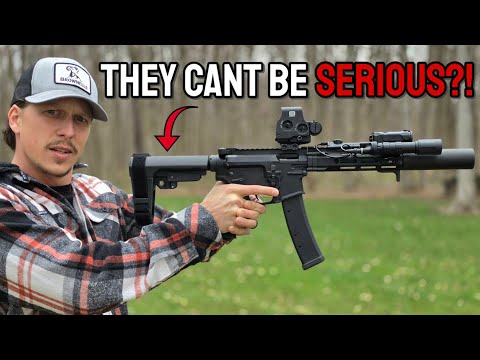
Nationwide Block of Suppressor & SBR Tax Restriction Passes In Congress! Registry Block Now Pushed!

Published on December 8, 2025
Duration: 8:59

This video provides an in-depth analysis of recent legislative and legal developments concerning suppressors and Short-Barreled Rifles (SBRs) under the National Firearms Act (NFA). It details how HR1's reduction of the NFA tax to $0 has spurred legal challenges, including the Jensen v. ATF case, arguing the unconstitutionality of NFA registration requirements when no tax is levied. The speaker, demonstrating high authority in Second Amendment legal news, outlines the plaintiffs' arguments regarding the safety and legality of these items and anticipates the government's defense.

Quick Summary

HR1 has reduced the NFA tax from $200 to $0, prompting legal challenges like Jensen v. ATF. Plaintiffs argue NFA registration requirements are unconstitutional without a tax, and that suppressors and SBRs are safe and constitutionally protected items, not 'dangerous and unusual' weapons.

Chapters

  1. 00:00Introduction and NFA Tax Changes
  2. 01:44Legal Challenges and Jensen v. ATF
  3. 03:06Arguments for Suppressors and SBRs
  4. 04:30Unconstitutionality of NFA Registration
  5. 06:04Anticipated Government Response

Frequently Asked Questions

What is the significance of HR1 regarding NFA items like suppressors and SBRs?

HR1 has reduced the National Firearms Act (NFA) tax from $200 to $0 for certain items. This tax reduction has become a central point in legal challenges arguing that NFA registration and transfer requirements are unconstitutional when no tax is levied.

What is the Jensen v. ATF case, and why is it important?

Jensen v. ATF is a significant lawsuit filed against the ATF challenging NFA regulations. It has been assigned to Judge Matthew Kacsmaryk in the Northern District of Texas, a court known for rulings favorable to Second Amendment rights, making its outcome crucial for NFA item legality.

What are the main arguments used by plaintiffs challenging NFA regulations?

Plaintiffs argue that suppressors are safe devices that protect hearing and improve firearm usability. They also contend that SBRs are protected arms under the Second Amendment and do not qualify as 'dangerous and unusual' weapons, thus challenging their NFA classification and restrictions.

How might the government respond to legal challenges against NFA regulations?

The Department of Justice (DOJ) is expected to argue for the maintenance of NFA restrictions. Their defense may involve citing a 'web of regulation' that supports the ATF's enforcement authority over the industry, even if the direct tax on individual items has been eliminated.

Related News

All News →

More 2nd Amendment & Law Videos You Might Like

More from Armed Scholar

View all →