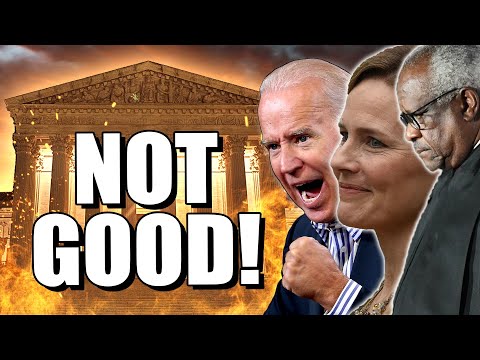
Supreme Court 5-4 Emergency Order Changed The Second Amendment ATF Fight! ATF Now Seeks Total Win!

Published on October 9, 2024
Duration: 10:38

This video provides an expert legal analysis of the Supreme Court's 5-4 emergency order in VanDerStok v. Garland, which stayed a lower court's ruling against the ATF's regulation of 80% receivers. The analysis delves into the ATF's 'readily convertible' policy, judicial questioning regarding statutory text, and potential parallels to the Cargill bump stock case. The speaker, identified as a legal analyst with deep knowledge of 2A litigation, breaks down the arguments and offers insights into the potential implications for firearm regulation.

Quick Summary

The Supreme Court issued a 5-4 emergency stay in VanDerStok v. Garland, allowing the ATF to continue enforcing its regulations on 80% receivers while the case is under appeal. This decision impacts the legal status of unfinished firearm frames and receivers, centering on the ATF's 'readily convertible' policy.

Chapters

  1. 00:00SCOTUS 80% receiver rule hearing
  2. 00:40Kershaw Knives sponsorship and products
  3. 00:58Vanderstok v. Garland case background
  4. 01:36Supreme Court emergency stay decision
  5. 02:34ATF's 'readily convertible' policy claim
  6. 03:22Statutory text and judicial questioning
  7. 04:30Feasibility of conversion and public policy
  8. 06:22Machine gun conversion parallels
  9. 07:24Vanderstok's legal defense arguments
  10. 08:52Comparison to Cargill and predictions

Frequently Asked Questions

What was the Supreme Court's emergency order regarding the ATF's 80% receiver rule?

The Supreme Court issued a 5-4 emergency stay in VanDerStok v. Garland, allowing the ATF to continue enforcing its regulations on 80% receivers while the case is under appeal. This decision overturned a lower court's nationwide injunction against the rule.

What is the ATF's 'readily convertible' policy concerning 80% receivers?

The ATF's policy asserts that unfinished frames or receivers, often called '80% receivers,' are considered firearms if they are 'readily convertible' into a functional firearm. This interpretation is central to the ATF's regulation of these items under the Gun Control Act.

What legal arguments were raised against the ATF's regulation of 80% receivers?

Arguments against the ATF's regulation include claims that the 'readily convertible' language is not explicitly supported by the text of the Gun Control Act and that regulating kits for these receivers exceeds the agency's authority. Concerns were also raised about potential overreach and unintended consequences.

How does the VanDerStok v. Garland case compare to the Cargill bump stock case?

The legal analysis compares the atmosphere and potential outcomes of the 80% receiver case to the Cargill bump stock case. Both involve regulatory challenges to firearm accessories or components, and the speaker notes that initial impressions of the Supreme Court's leanings in oral arguments can differ from the final ruling.

Related News

All News →

More 2nd Amendment & Law Videos You Might Like

More from Armed Scholar

View all →