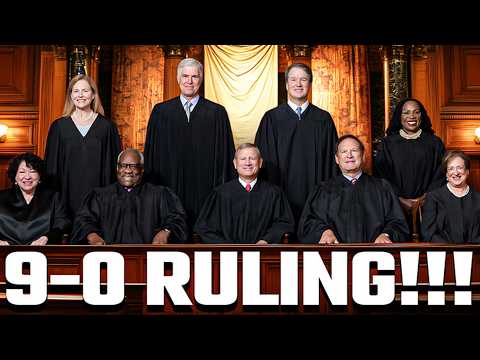
Supreme Court Issues 9-0 Unanimous Decision With Major Nationwide & Constitutional Implications!

Published on November 10, 2025
Duration: 9:40

The Supreme Court issued a unanimous 9-0 decision in US v. Martin, impacting law enforcement accountability nationwide. The ruling clarifies that the discretionary function exception under the Federal Tort Claims Act (FTCA) does not shield the government from all liability in cases of wrongful raids or official misconduct. This decision, alongside the First Circuit's ruling in the Arus case concerning Bivens claims against individual officers, strengthens avenues for citizens to seek redress against federal agencies and agents for violations of constitutional rights.


Quick Summary

The Supreme Court's 9-0 decision in US v. Martin clarifies that the discretionary function exception under the FTCA does not shield the government from all liability in cases of wrongful raids. The ruling narrows the government's ability to avoid lawsuits by claiming broad immunity, reinforcing accountability for federal agencies and officers.

Chapters

  1. 00:00Introduction: Wrong House Raid Scenario
  2. 00:26Supreme Court's 9-0 Unanimous Decision
  3. 01:10US v. Martin Case Overview
  4. 01:57Arus v. Herszison Case (DEA Agents)
  5. 02:43Details of the Martin Case Raid
  6. 03:53Family Sues Under FTCA
  7. 04:27Discretionary Function Exception Explained
  8. 05:04District and 11th Circuit Rulings
  9. 05:25Supreme Court Ruling and Remand
  10. 05:40Key Holdings of the Supreme Court
  11. 06:29Arus Case: First Circuit Ruling
  12. 06:45Arus Case Legal Mechanism (Bivens Claims)
  13. 07:25Impact on Lawsuits and Fourth Amendment
  14. 07:35Relevance to Gun Owners
  15. 08:04Accountability and Broad Immunity
  16. 08:26Conclusion: Critical Cases Moving Forward

Frequently Asked Questions

What was the Supreme Court's unanimous decision in US v. Martin?

The Supreme Court issued a 9-0 unanimous decision in US v. Martin, vacating the 11th Circuit's ruling. The court held that the law enforcement proviso in the FTCA only modifies the intentional tort exception and does not override all FTCA exceptions, remanding the case for further review on the discretionary function exception.

What is the discretionary function exception in the Federal Tort Claims Act?

The discretionary function exception shields the federal government from liability when a wrongful act stems from an official making a decision that involves judgment, choice, or policy considerations. This exception was a key point of contention in the US v. Martin case.

How does the Arus case differ from the US v. Martin case?

The Arus case involves Bivens claims, aiming to hold individual DEA agents accountable for wrongful arrest and excessive force. In contrast, the US v. Martin case focuses on holding the federal agency and government accountable under the FTCA for negligent tort actions.

Why is the Supreme Court's ruling in US v. Martin important for citizens?

The ruling narrows the government's ability to claim broad immunity and avoid lawsuits for wrongful acts. It reinforces that federal agencies and officers can be held accountable for reckless invasions of homes or misuse of power, potentially impacting cases involving law-abiding citizens.

Related News

All News →

More 2nd Amendment & Law Videos You Might Like

More from Armed Scholar

View all →